





























Israeli forces push deeper into Lebanon and raise their flag over Beaufort Castle, a strategic fortress. France condemns the move and demands a UN Security Council meeting.
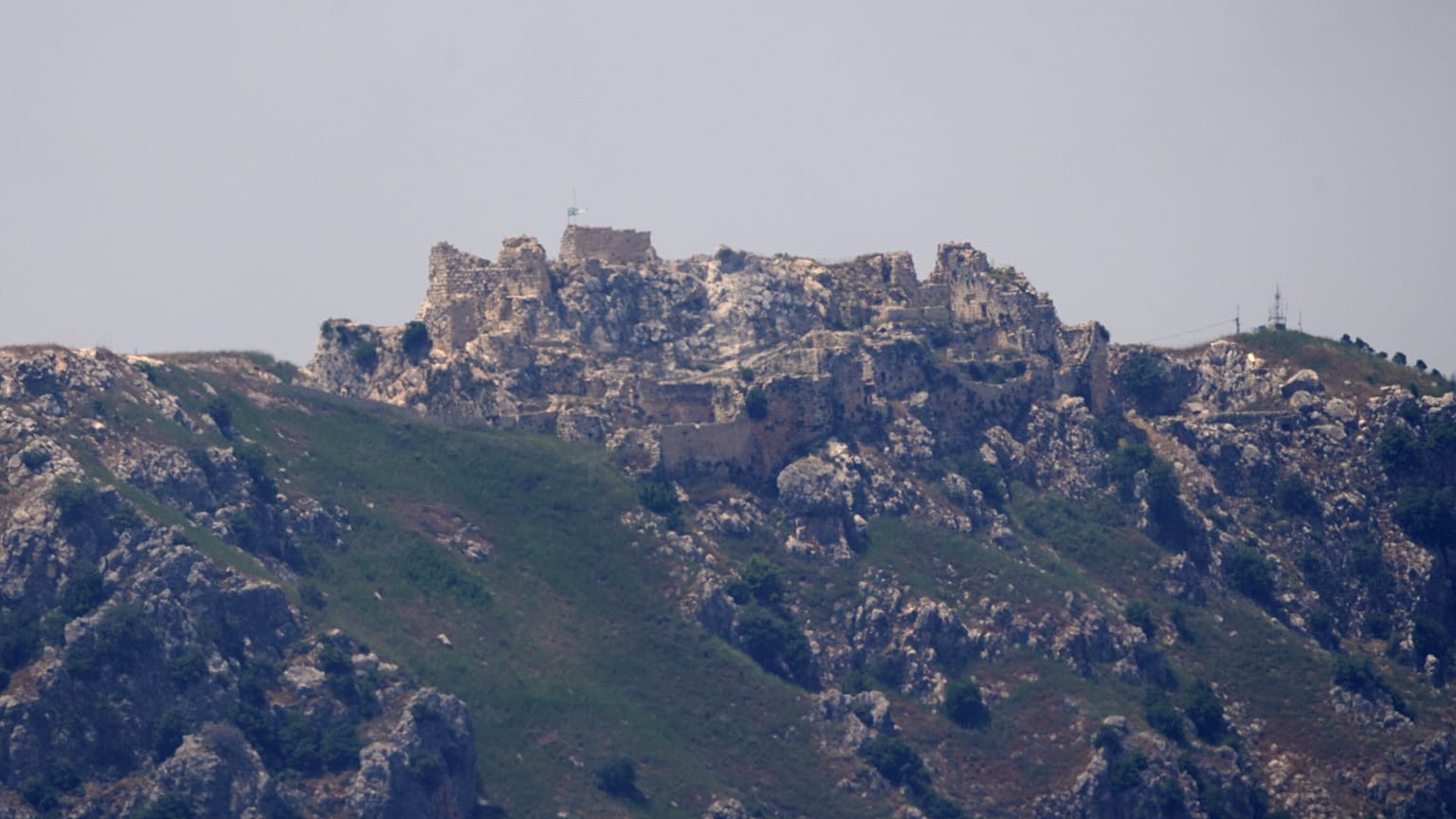
On Saturday night into Sunday, Israeli troops captured a strategic hill on which sits the Crusader-built Beaufort Castle in southern Lebanon. It is the deepest incursion into the country in more than a quarter of a century, the army said. The Israeli flag is now flying over the medieval fortress.
 ADVERTISEMENT
ADVERTISEMENT
ADVERTISEMENT
The capture of the castle, near the city of Nabatiyeh, came after days of air strikes and intense fighting in nearby villages, where Israeli troops clashed with Hezbollah fighters.
Its capture marks an important development in the latest war between Israel and Hezbollah, which began on 2 March when Hezbollah fired rockets into northern Israel, two days after the United States and Israel had struck its main backer, Iran.
Since then Israel has launched a ground invasion, seizing dozens of Lebanese villages and towns near the border. Hezbollah has launched thousands of missiles and drones at Israeli soldiers in southern Lebanon and northern Israel.
The Israeli advance has taken place despite a nominal ceasefire in place since 17 April and just days before the next round of direct talks between Lebanon and Israel, scheduled at the State Department on 2 and 3 June.
Netanyahu: "Dramatic turning point in Israel's campaign"
Israeli Prime Minister Benjamin Netanyahu said that the capture of Beaufort Castle in southern Lebanon marks a "dramatic turning point" in Israel's campaign against Hezbollah in Lebanon.
"Today we have returned to Beaufort in a different way. We have returned united, determined and stronger than ever," Netanyahu said in a video statement.
"The capture of Beaufort is a dramatic phase and a dramatic turning point in the policy we are pursuing. We have broken the barrier of fear. We are seizing the initiative, we are operating on all fronts: in Syria, in Gaza, in Lebanon," Netanyahu added.
The Israeli army's Arabic-language spokesperson, Avichay Adraee, posted a photograph on X showing Israeli troops walking outside the castle, and Defence Minister Israel Katz wrote on X that they had hoisted an Israeli flag over the structure. Israeli troops had previously captured the castle in 1982 and held it until their withdrawal from Lebanon in 2000.
Israel expands invasion in Lebanon
In a statement, the Israeli army said it had launched an operation a few days ago on the Beaufort ridge and in the Suluki valley further south, with the aim of dismantling Hezbollah's infrastructure and removing direct threats to Israeli civilians. The statement said the army was ready "to expand the operation if necessary".
In recent days, Israel has widened the scope of its operations in Lebanon, sending troops beyond the Litani River, which previously served as a de facto border, and telling residents to leave much of southern Lebanon.
Israel has designated the area from the Litani to the Zahrani River as a combat zone. Some residents have already left the region because of the heavy strikes of recent days, but many people remain in numerous towns in the area.
Israeli troops have been advancing for days through villages near Beaufort Castle. They are now about 5 kilometres from the city of Nabatiyeh, a major centre in southern Lebanon, and have urged all its residents to evacuate, as well as residents of the coastal city of Tyre, the country's fourth-largest city, and its surroundings.
Cross-border exchanges of fire continue
Overnight from Saturday to Sunday, Hezbollah claimed responsibility for two attacks against Israeli troops and a Merkava tank in the south-western town of Bayada, near the border. In recent days, the group has said it has clashed with Israeli troops in several towns just north of the river, near Nabatiyeh and the strategic castle. On Saturday, Hezbollah fired salvos of rockets into northern Israel, including Kiryat Shmona, the largest town in the area.
Lebanon's state-run National News Agency reported air strikes on various villages in southern Lebanon, saying they had caused casualties without providing a detailed toll. On Sunday, the Lebanese Health Ministry said that an Israeli strike near a hospital in Tyre, in southern Lebanon, wounded 13 members of staff.
"The Israeli enemy launched an air strike near Hiram hospital in Tyre, wounding 13 members of the hospital staff and causing significant damage," the ministry said in a statement, urging "the international community to put an end to the ongoing escalation and the expansion of Israeli attacks".
Hezbollah's use of fibre-optic drones that are hard to detect has proved deadly for the Israeli army, which is struggling to respond. In the past 24 hours there have been almost 200 alerts for Israeli civilians across northern Israel warning of drones and missiles, according to the Israeli army.
The latest round of fighting between Israel and Hezbollah has reportedly killed 3,350 people in Lebanon and displaced more than one million.
According to the office of Israeli Prime Minister Netanyahu, at least 25 Israeli soldiers and one defence contractor have been killed in or near southern Lebanon, including one on Saturday. Two civilians have also been killed in northern Israel.
Paris calls for emergency UN Security Council meeting
France has meanwhile requested an emergency meeting of the United Nations Security Council after Israeli forces captured the medieval Beaufort Castle, the French foreign minister said on Sunday.
"I have requested an emergency meeting of the United Nations Security Council because, while recognising Israel's right, like that of all countries, to self-defence... nothing can justify the continuation of Israeli military operations in Lebanon and its ever deeper occupation of Lebanese territory," Jean-Noël Barrot told the BFMTV channel.
The history of Beaufort Fortress
Beaufort is a symbolic site across the region, including in Israel, where it was one of the best-known positions held by Israelis during the 18-year occupation. One of Israel's best-known war films, "Beaufort", explores the moral issues, doubts and futility of war in the final days before the troops withdrew.
Perched atop the gentle, green hills of Lebanon and overlooking the Litani River, Beaufort Fortress has been a strategic military asset for many armies for almost a thousand years.
Built as a Crusader castle around the 12th century on top of earlier fortifications, it was used by the Crusaders, by Saladin's army of Jerusalem, by the Mamluks, the Ottomans, the French Mandate, the Palestine Liberation Organization and the Israeli army until 2000, when it was partially restored and opened to visitors. The Crusaders called it Beaufort, which in Old French means "beautiful fortress".
The castle's capture in 1982 from the Palestine Liberation Organization was a major victory for the Israeli army, then led by Defence Minister Ariel Sharon, who later became the country's prime minister. At the time, the Israeli army pushed further north and occupied Beirut.
During the previous war between Israel and Hezbollah in 2024, UNESCO granted enhanced protection to 34 cultural sites in Lebanon, including Beaufort Castle, to safeguard them from potential damage.
The castle lies a few kilometres north of the Israeli border and commands wide swathes of southern Lebanon and northern Israel. In Arabic it is called Al-Shaqif Castle, an ancient Syriac word referring to the formidable rocky area.