

















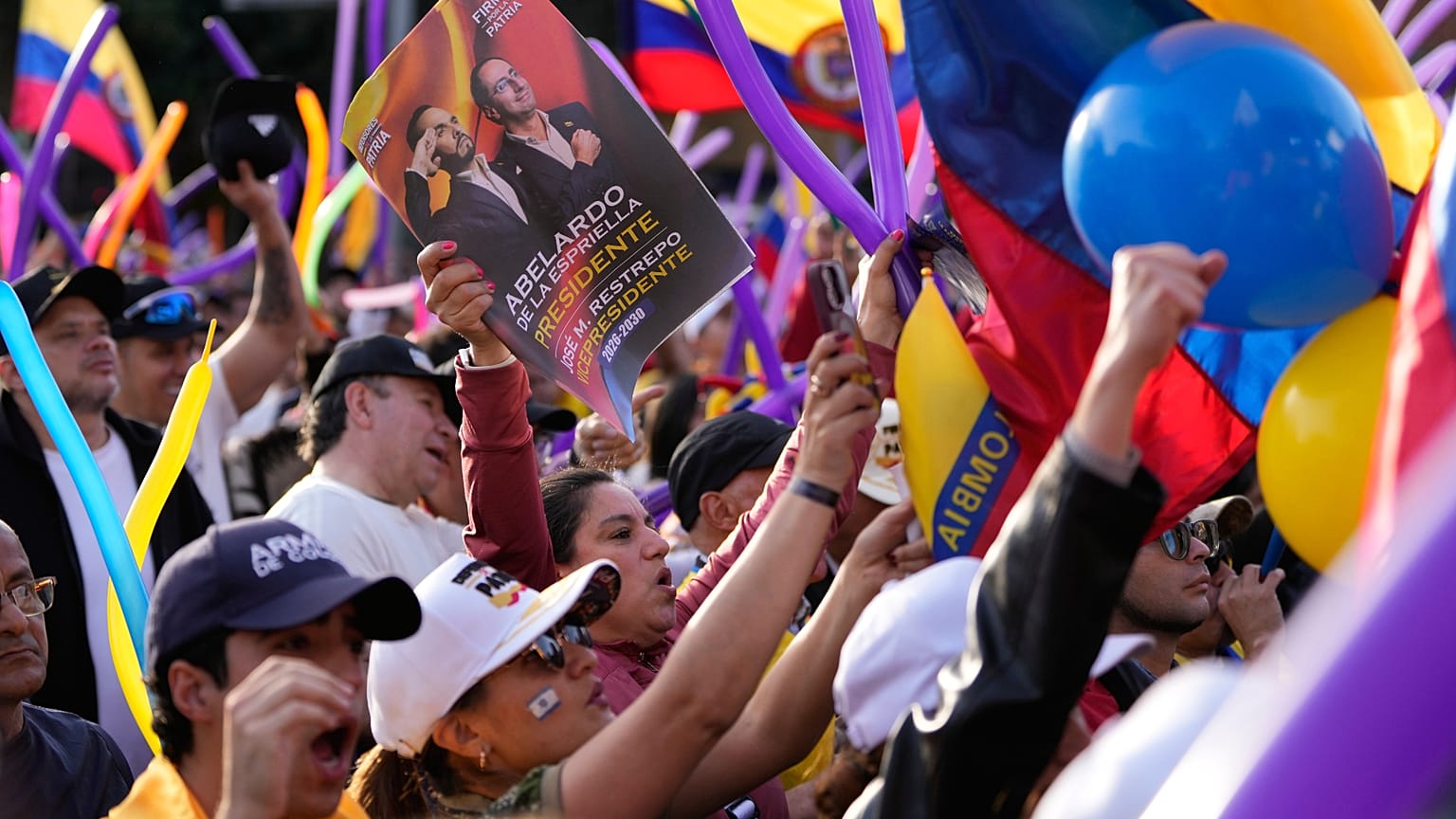













Political polarisation, voter fatigue and the rise of new populist rhetoric are shaping Colombia’s presidential race. Two analysts tell Euronews what's at stake.
Colombians go to the polls this Sunday in presidential elections marked by a deeply polarising campaign.
 ADVERTISEMENT
ADVERTISEMENT
ADVERTISEMENT
The vote comes amid a sensitive regional and international backdrop, with the rise of new populist right-wing forces and growing political fragmentation in Latin America.
The campaign has pitted a governing camp seeking to keep the left in power after Gustavo Petro’s historic victory in 2022 against a divided opposition, in which new outsider figures have focused on security, political confrontation and rejection of the traditional elites.
“We are in an election that brings together two things: a global climate of tension, polarisation and the emergence of new, more populist strands of the right, and something very specific to Colombia, which is alternation in power – something new for Colombians,” Laura Bonilla, deputy director of the Peace and Reconciliation Foundation and an analyst specialising in armed conflict and political violence, said in an interview with Euronews.
Sergio Guzmán, director of Colombia Risk Analysis and a specialist in political risk and geopolitics, believes the elections are unfolding in a climate of growing public discontent, marked by concerns around “security, corruption, the economy and everything to do with the health system".
Below, we examine some of the key factors shaping the political and social climate surrounding the elections.
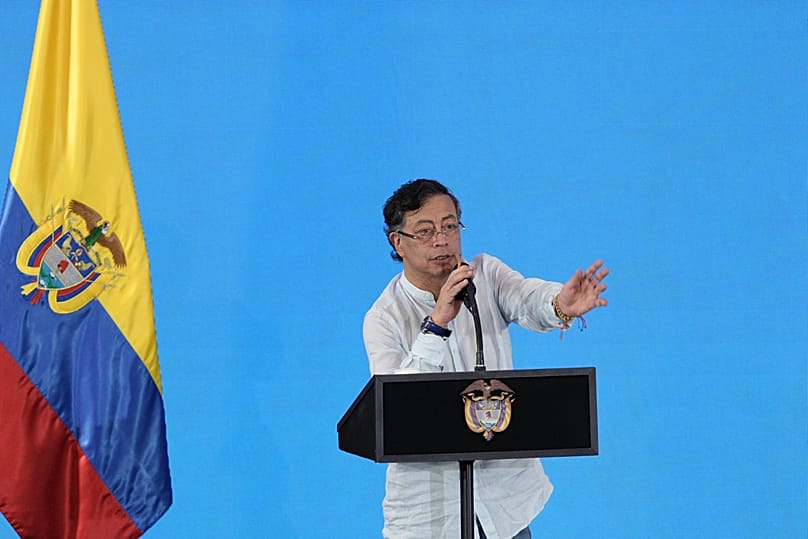
1. A hotly contested, emotional campaign
The campaign is unfolding in an increasingly polarised environment, dominated by ever more emotional rhetoric.
“The main emotion they are trying to awaken in people is fear,” Bonilla said.
She argued that the absence of debates between candidates and the dominance of social media have made it harder to have a discussion focused on concrete policy proposals.
“Citizens have very little public information to guide them,” she continued. “There have been no debates.”
Bonilla also warned about the impact of algorithms and so‑called digital echo chambers on public conversation.
“People mostly engage with those with whom they feel the strongest emotional affinity,” she said.
Guzmán agreed that part of the success of some candidates was thanks to their ability to connect emotionally with voters, saying: “What people want is someone who connects with their emotions".
2. Rejection of traditional political elites
One of the threads running through the campaign is the growing rejection of traditional parties and of the historic political elites.
“The big losers in this presidential race are the traditional political parties,” Bonilla told Euronews.
Guzmán, for his part, noted that the support still enjoyed by Petro’s political project also reflected a previously unseen ideological identification for part of the Colombian electorate: “There is an ideological affinity that, for the first time, gave the left a face and put it on the political map.”
Bonilla also believes that part of the success of the governing camp and of new political forces comes from a demand for representation from sectors that have historically felt excluded from traditional power structures.
Both analysts agreed that much of today’s discontent has to do with growing distrust of institutional politics and a feeling that traditional structures have failed to address the country’s longstanding problems.
3. Security, corruption and a sense of decline
Corruption and security rank among voters’ main concerns ahead of the election, according to several polls.
“People’s main frustration with the political system is corruption,” Bonilla said.
Guzmán argued that part of the electorate also blames the government for the deterioration in security and the strengthening of armed groups in recent years.
“There are people who attribute to President Petro both the increased strength of armed groups and the ‘total peace’ policy,” he said.
Security also occupies a central place in the discourse of the new populist right. “Security has become a much more prominent issue,” Bonilla explained.
She believes that part of the appeal of these narratives lies in their simple, hardline proposals on law and order: “The right has the easy line of: ‘I’m going to militarise cities’, which in reality does nothing, but people believe it does.”
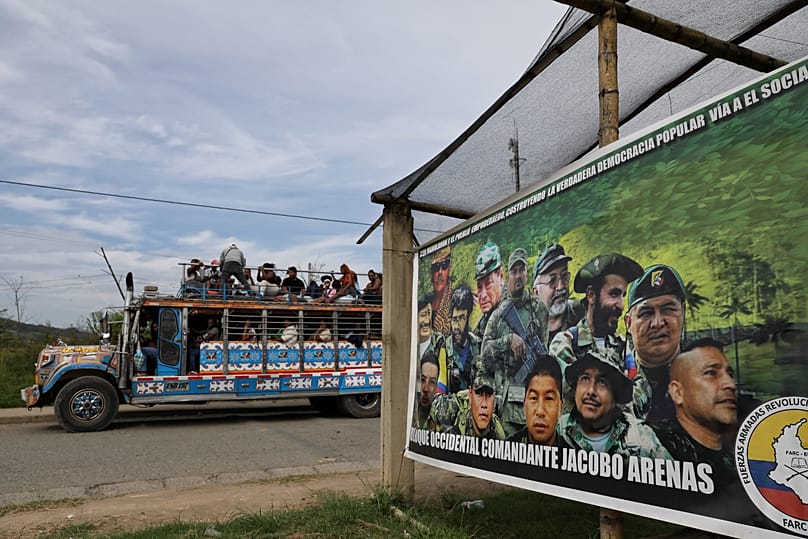
She added that the debate on security conflates two distinct dimensions: the country’s historic armed conflict and people’s everyday perception of insecurity. In her view, both are feeding tougher rhetoric on public order.
At the same time, economic perceptions among part of the public are more complex and less uniform than some political narratives suggest.
“A lot of people say: ‘Well, I personally haven’t done that badly under Petro’,” the analyst noted.
However, according to Guzmán, parts of the business and investor community remain wary about the direction of Petro’s economic policy.
“International investors have less and less confidence in Colombia because of the Petro government’s policies. In that context, it is difficult to understand why Petro and his candidate remain so popular,” he said.
4. New ‘outsider’ candidates
Polls point to an increasingly open contest within Colombia’s right, marked by the rise of outsider figures and the weakening of more traditional candidates.
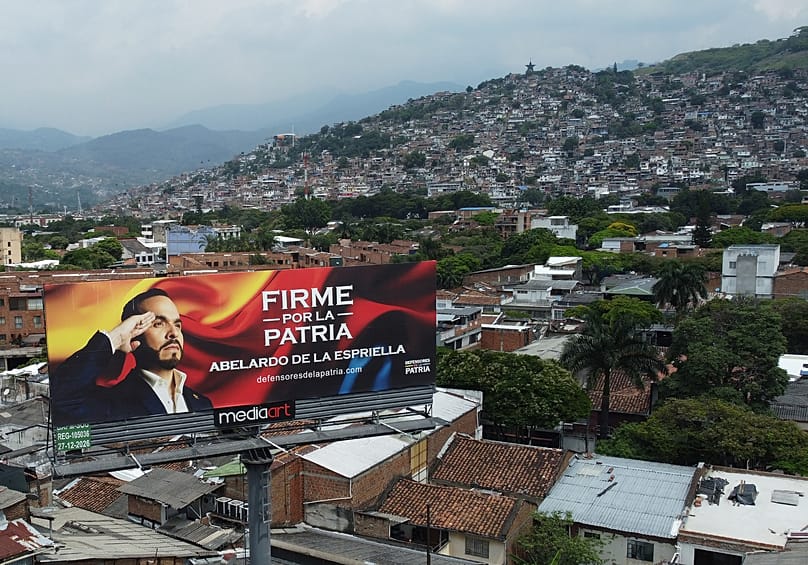
Guzmán explained that current polling places Iván Cepeda as the frontrunner, followed by Abelardo de la Espriella, while figures such as Paloma Valencia have lost ground.
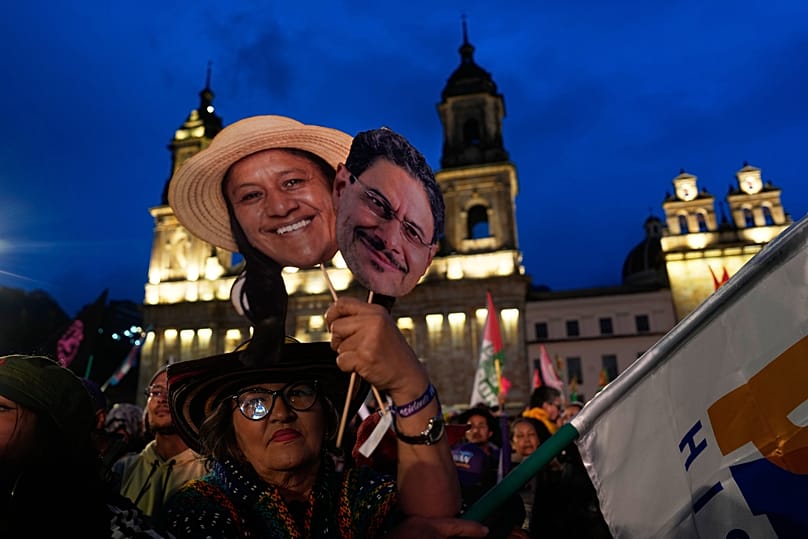
“The polls suggest three things: that Iván Cepeda leads in voting intention, that he is followed by Abelardo de la Espriella, and that he has now left Paloma Valencia and many of the centrist candidates far behind,” he said.
According to the political analyst, part of De la Espriella’s growth in support is down to a more confrontational campaign than that of other traditional conservative sectors.
“He has run a stronger campaign, because he has been more forceful,” said Guzmán, who believes that some voters are deserting more institutional options in favour of more disruptive candidacies.
Bonilla agreed that one of the major shifts in this election is the rise of more personalised, populist leaderships.
She described Abelardo de la Espriella as “a populist right-wing outsider” whose campaign seeks to mobilise “people’s anger and indignation”.
For Bonilla, this phenomenon also reflects a deeper crisis of political representation in Colombia, and a growing disconnect between parts of society and the structures of power.
The two experts also believe that growing mistrust of opinion polls is changing the way many citizens follow the election campaign.
“When people do not have reliable polls, they turn to betting markets or social media to look for information,” warned Guzmán, who pointed to “information distortion” as a major problem.
In an analysis published by Colombia Risk Analysis, the consultancy headed by Guzmán argued that the reduction in polling “has created a vacuum of reliable information that has encouraged political speculation and shifted part of the focus towards parallel betting markets”.
5. Colombia’s place in the region
International affairs are also key to the campaign, particularly in a context of rising geopolitical tension and the reshaping of alliances in Latin America.
Bonilla believes that some decisions and statements by US President Donald Trump ultimately played into the Petro government’s hands, reinforcing the governing camp’s narrative of alleged external pressure. She also argued that a significant part of Colombian society rejected attempts to link Petro to drug trafficking.
Guzmán added that relations between Bogotá and Washington went through periods of acute tension following recent clashes between Trump and Petro, although he believes the two governments ultimately found areas of understanding away from the public eye.
Beyond Colombia, the election could have broader implications for the regional political balance.
Bonilla warned that a victory for the new populist right would alter the current balance of power in Latin America, where progressive or centre-left governments predominate. “If the populist right wins the election, that balance is lost,” she said.
The analyst also argued that Europe has been steadily losing political leverage in the region, while actors such as China and Russia have expanded their economic and political influence.
“Europe has largely lost its place,” Bonilla said, whilst also criticising the lack of continuity in Europe’s strategy towards Latin America.
Guzmán believes the international context could carry greater weight in a potential second round, particularly depending on how relations between Washington and the next Colombian government evolve.