































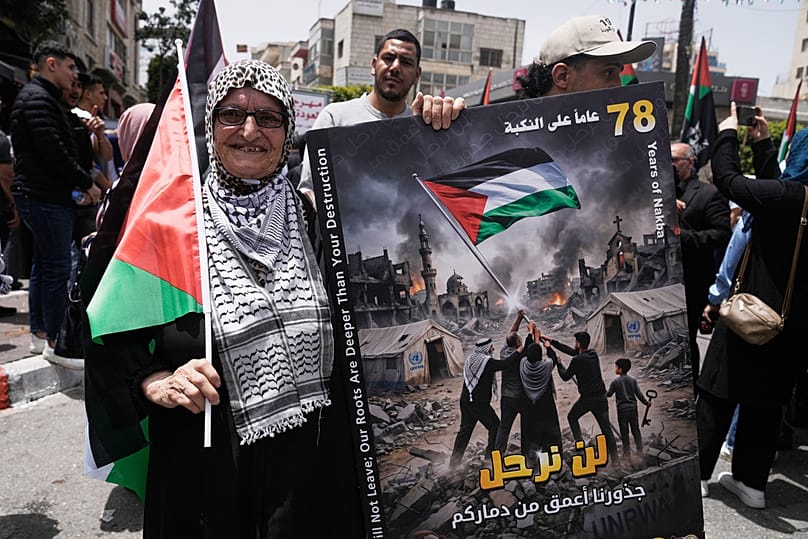
Palestinians in the occupied West Bank and the Gaza Strip marked the 78th anniversary of the Nakba, a defining moment in Palestinian history dating back to 1948, when hundreds of thousands of people were forced to flee their homes, villages and land, becoming refugees.
In Ramallah, the headquarters of the Palestinian Authority (PA), hundreds of Palestinians gathered in the city centre to commemorate the anniversary, while mosques across the city sounded a 78-second siren, a symbolic reference to the 78th anniversary of the Nakba.
 ADVERTISEMENT
ADVERTISEMENT
ADVERTISEMENT
A mass march started from the grave of the late Palestinian President Yasser Arafat towards Manara Square, during which participants raised Palestinian flags and played drums, while scout music and bagpipes played in the streets that were filled with crowds.
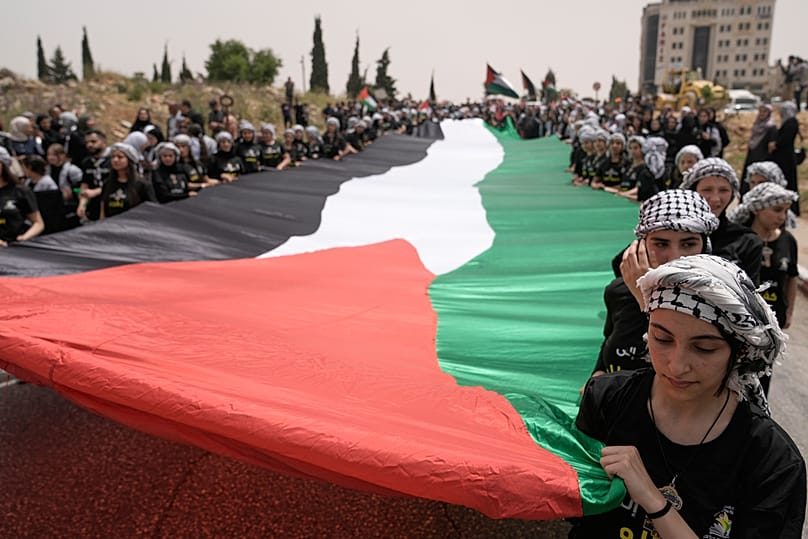
Palestinian flags were raised in the squares and streets, while participants raised victory signs during the well-attended events. While a crowd travelled through the city's streets carrying a huge Palestinian flag.
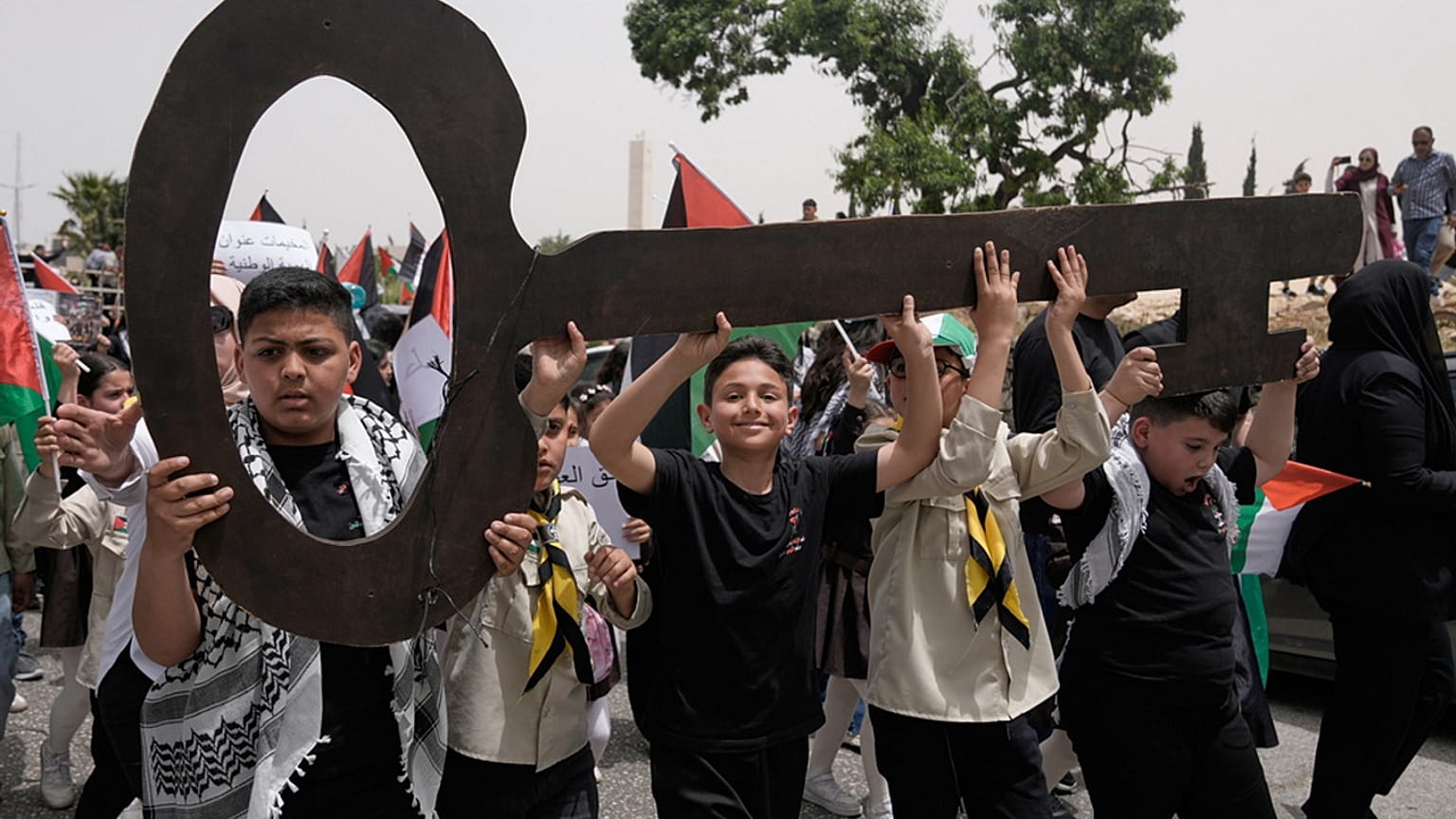
In symbolic scenes repeated during the commemoration, protesters carried a large key symbolising the "right of return", while banners demanding the return to "historic Palestine" were raised, emphasising Palestinians' commitment to their right to return to the cities and towns from which they were displaced.
Upholding the 'Right of Return'
During the events, participants stressed that the Nakba remains an open wound in Palestinian memory, arguing that the effects of displacement and dispossession did not end with the passage of time, but are still present in the lives of Palestinians inside the Palestinian territories and in refugee camps.
One Palestinian present at the gathering in Ramallah, Abdel Kareem Abu Arqoub, told the Associated Press: "This day first reminds us of a national tragedy that befell the Palestinian people many decades ago, and the right of return must be restored to its rightful owners, and justice must be achieved for the Palestinian people by returning to the homes from which they were displaced."
Meanwhile, Jihad Dar Ali also present in Ramallah reiterated the Palestinian fight on the "right to return" calling it "a sacred right that is not subject to statute of limitations. On this day, we demand that Britain, which was the cause of our Nakba and our suffering, compensate us morally and materially for the years of loss and displacement it caused. The United Kingdom, a Western colonial power, gave our homeland, Palestine, the land of our ancestors, to the Jewish people," he said.
From the Balfour Declaration to Resolution 194
An estimated 750,000 Palestinians were either driven from their homes or fled during the Nakba. However, the origin of the Nakba dates back to before 1948, specifically to 1917, when British Foreign Secretary Lord Balfour issued his famous promise in which the British government pledged to support the establishment of a national home for the Jews in Palestine, which was later placed under a British mandate after the collapse of the Ottoman Empire.
In 1947, the United Nations proposed a plan to partition Palestine into two states, giving more than half of the land to the prospective Jewish state, which was rejected by Palestinians and Arab countries. With the end of the British mandate and the declaration of the establishment of Israel in May 1948, large waves of violence and displacement began, including more than seventy documented massacres of Palestinian civilians, including Deir Yassin, Tantura, and Haifa.
After the declaration of the establishment of Israel, forces from Egypt, Syria, Jordan, Lebanon, Lebanon, Saudi Arabia, and Iraq entered the Palestinian territories in an attempt to stop the Israeli military advance, but the military operations ended with the defeat of the Arab armies, while Israel was able to expand its control to areas larger than those allocated to it by the partition plan.
In December 1948, the UN General Assembly passed Resolution 194, which stipulated the right of Palestinian refugees to return to their homes "as soon as possible", along with compensation for those who did not wish to return or who suffered damages. Although the resolution remains a key legal reference in the Palestinian case, it has not been implemented to date, while Israel continues to prevent the return of Palestinian refugees.
The Nakba is a central focus of the Palestinian national struggle, and Nakba Day events are organised annually across the occupied West Bank and Gaza Strip, as well as in diaspora countries where millions of Palestinian refugees live. Since then, the "right of return" has become an essential part of the Palestinian identity and the historical narrative of the conflict, handed down to children and grandchildren from generation to generation.