



























Education City students in Qatar turned war-time alerts and evacuations into a story of resilience, keeping studies online and now celebrating graduation.
National emergency alerts and evacuation orders came to Qatar residents without warning, as the Iran war turned everyday campus life into a test of resilience.
 ADVERTISEMENT
ADVERTISEMENT
ADVERTISEMENT
In the halls of Qatar Foundation’s Education City, students packed their bags, moved out of student housing and logged into online classrooms, determined to keep learning even as uncertainty loomed.
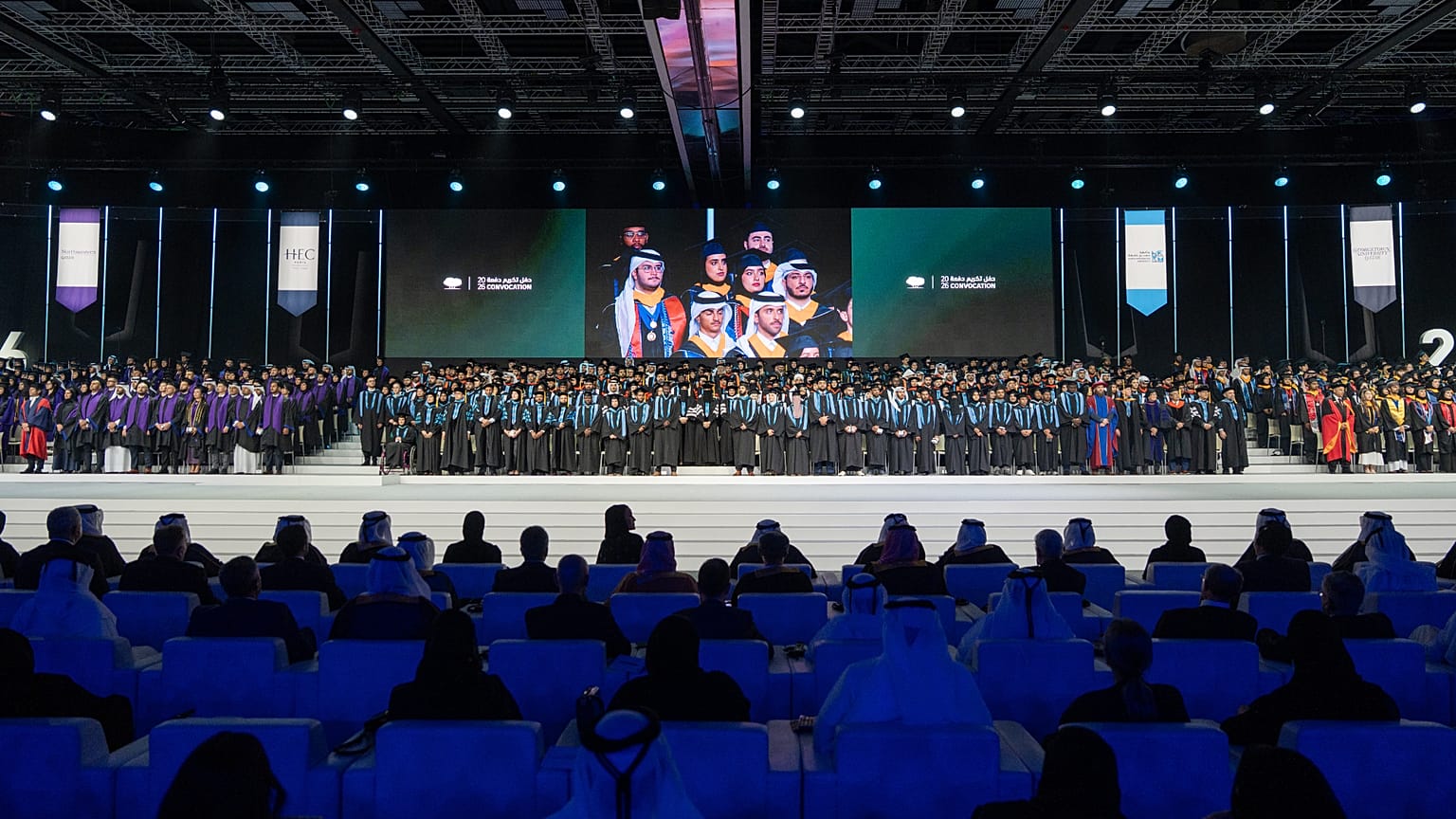
This week, the same campus hosts its convocation week, with graduates gathering not in the shadow of disruption, but as proof that even at the height of the crisis, education never stopped.
As soon as the safety of civilians was compromised, Qatar Foundation, along with its eight partner universities jointly pivoted to online classes and continued access to learning, and even laboratories for courses needing hands-on work.
“There was a collective, almost stubbornness, that education must continue,” said Dr Samah Gamar, Director of Academic Affairs at Qatar Foundation.
“There wasn’t a paralysis that happened during this time. Everyone was committed to figuring out which options could protect students in their continuity,” she explained.
In addition to switching to online classes and issuing shelter-in-place advisories, the universities also organised evacuation flights for international students.
Talyta Venacio Franca, a 24-year-old graduate from Northwestern University in Qatar’s Bachelor of Journalism and Strategic Communication programme, had tried to keep her family in Brazil from knowing the full extent of the situation.
“They had no idea how serious things were in Qatar,” she shared. “They're so far away. If they panic, it's just going to be bad for them because they cannot pay a ticket to come here, and they cannot pay for me to go all the way there,” Franca added.
Eventually, she decided to temporarily evacuate to Italy, where her relatives are residing.
“In the beginning, I was trying to adjust to being in a different country and doing classes online. It was my first time doing classes online, so it was a bit weird. But after the first week, we were able to keep track of the classes and the assignments. The professors, being quite understanding, gave us extensions,” Franca said.
Despite having to evacuate student housing twice due to threats against US universities in the region, 23-year-old Kareem Janous, who has earned a doctorate in medicine from Weill-Cornell Medicine Qatar, found that clear communication and support from the Qatar Foundation were a game-changer.
As an assistant resident hall coordinator, Janous felt he was the one who could help students worried about leaving their dorms in a hurry, as well as their parents.
“All the relationships that we've been building over the past four years, all the training that we received to handle these crisis situations really paid off and everything was smooth and efficient as it could have been during this period,” Janous recalled.
First fear, then focus
Qatari graduate Khawla Al-Essa could clearly remember what transpired on 28 February and the days that followed.
21-year-old Al-Essa was pulling an all-nighter for her thesis in graphic design at VCUArts Qatar, and slept through most of the alerts and messages when the first missiles in Qatar were intercepted.
While the honour roll graduate felt immediately supported by her professors and coursemates checking up on each other, in the back of her mind, there was a lingering doubt about whether a graduation ceremony would take place.
“I would love for my hard work to be recognised, because those four years were all behind the scenes. But everyone in Qatar Foundation was trying to make it happen. We were so happy when we received our graduation gowns. It felt then that we were actually graduating,” Al-Essa said.
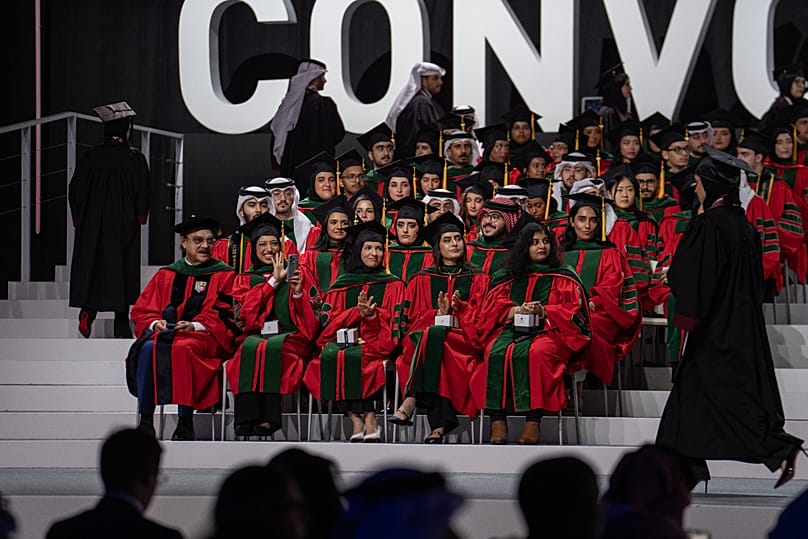
Meanwhile, another Qatari graduate, 22-year-old Zeina Mahmoud from Carnegie Mellon University Qatar said she never once felt that her education was at risk of being derailed.
“I felt scared but I didn't feel like my life was over. I felt confident both in my university as well as the government because they were supporting us, even though the alerts were scary at 7 am,” Mahmoud said.
“But hey, it woke me up for class. I think that was good,” she added, tongue-in-cheek.
A network of support and resilience
While infrastructure and planning formed the backbone of Qatar Foundation’s coordinated response, collective resilience became a source of strength for Education City’s unique ecosystem.
“There was an incredible communal and mutual support model,” Dr Gamar said. “We had deans and leadership who supported students who are not from their own university. The community feeling was incredibly important during this,” she added.
Most of the graduates agreed, each recalling their own experiences.
“I'd talk to not just my friends in Carnegie Mellon University Qatar, but also my friends at Northwestern University in Qatar, VCUArts Qatar, and Georgetown University in Qatar. We went out a couple times, had a few dinners. And just knowing that I have that community in Qatar Foundation made me feel very thankful and grateful,” Mahmoud shared.
“It's made us all stronger. It's true that it was a time of uncertainty, but it did bring us all together. We became more connected with each other,” Al-Essa echoed.
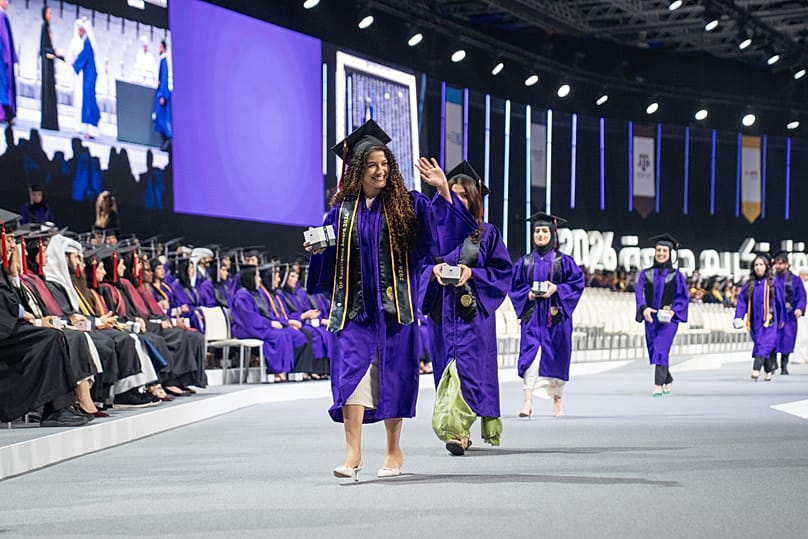
This year’s convocation ceremony is particularly sweet for Franca and Al-Essa, both of whom are among 16 awardees of Qatar Foundation’s Excellence Award, which recognises exceptional academic record, leadership, creativity and community engagement.
For Franca, who grew up in a favela in Rio de Janeiro, receiving the award is a surreal and life-changing moment.
“Even though I came from a different starting point, I was able to arrive here. It was already an achievement. Now, being able to graduate with an Excellence Award is... I don't even know how to put it in words. It's really amazing. It really makes all the struggle and challenges worth it,” she reflected.
In Dr Gamar’s parting message to graduates, she said she hoped that they leave with so much more than a piece of paper.
"Remember that what you learned here, what you practised here, was designed so that you can go ahead and not be a novice, but be well on your way to success in the world at large,” she concluded.