






























Kazakhstan, Kyrgyzstan and Uzbekistan are set to launch a joint hydropower plant with a capacity of nearly 2,000 MW.
Three Central Asian countries – Kazakhstan, Kyrgyzstan and Uzbekistan – are set to launch a joint hydropower plant with a capacity of nearly 2,000 MW. The facility will be built on the Naryn River in Kyrgyzstan.
 ADVERTISEMENT
ADVERTISEMENT
ADVERTISEMENT
The critical importance of regional water-energy projects was emphasised by Kyrgyzstan President Sadyr Japarov at the Regional Ecological Summit (RES) in Astana on 23 April.
To understand the scale of the project, a capacity of 2,000 MW is significant, roughly equivalent to the output of two large nuclear reactor units or several thermal power stations. It is enough to power up to 1.5 million homes.
“Kambarata HPP-1, with a capacity of 1,880 MW, is considered a project of strategic importance. Negotiations are now actively under way to finalise an intergovernmental agreement, with support from the World Bank and other financial institutions,” said Japarov.
The next round of negotiations on the construction of the Kambarata hydropower plant-1 is scheduled for April 2026 in Tashkent, Uzbekistan.
Kyrgyzstan is also focusing on small hydropower plants as part of its renewable energy plans. In 2026, the country is set to bring 13 small hydropower plants into operation, with a combined capacity of more than 81 MW.
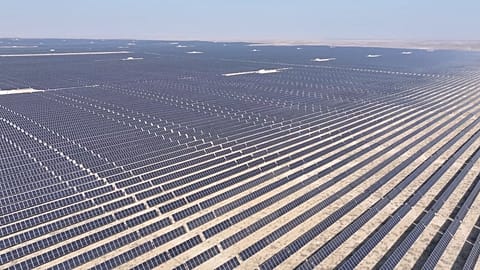
Alongside hydropower, Kyrgyzstan is also developing solar and wind power projects with a combined capacity of 6,050 MW. Last year, the country’s first major solar power plant, with a capacity of 100 MW, was commissioned in the Chuy region.
Kazakhstan’s renewed focus on nuclear energy
Kazakhstan currently operates 162 renewable energy facilities, with a further 10 projects set to come online this year. As of 2025, its share of green energy has reached 7%.
This year, the country will commission 10 new projects, including four wind farms, five solar power plants and one hydropower plant.
At the summit in Astana, Kazakhstan’s Prime Minister Olzhas Bektenov signed an agreement to build a 500 MW wind power plant in the Karaganda region in partnership with a Chinese company.
The project is also expected to deliver significant environmental gains, with annual carbon dioxide emissions reduced by around 1.3 million tonnes. The investment amounts to $645 million (€551m).
Kazakhstan plans to increase its share of renewable energy to 15% by 2030 and reduce emissions from major energy facilities by almost 35%.
Kazakhstan holds the world’s largest uranium reserves and exports it to various countries. With its vast resources in mind, the country has decided to return to nuclear energy.
“As one of the world’s leading uranium exporters, accounting for around 40% of global supply, Kazakhstan also supports the development of carbon-free electricity,” said Kazakh president Kassym-Jomart Tokayev while speaking the RES.
“We are currently working on a project to build our first nuclear power plant,” he added.
Following the approval of nuclear power plant construction in a 2024 referendum, Kazakhstan has decided to build three nuclear facilities. The projects will be developed by China’s National Nuclear Corporation and Russia’s Rosatom.
So, why is Kazakhstan returning to nuclear energy? In fact, nuclear power was already developed in the country during the Soviet period. In the city of Aktau, on the Caspian Sea, a fast-neutron reactor BN-350 operated in the last century.
How glaciers power Tajikistan’s energy balance
Tajikistan is leading Central Asia in the transition to green energy. On a global scale, the country ranks eighth in terms of hydropower potential. Up to 98% of its electricity is generated from renewable sources.
The nation is home to around 13,000 glaciers, which provide more than 60% of the region’s water resources. They form the foundation of almost the entire country’s energy system.
“This has placed Tajikistan among the countries with the lowest levels of carbon emissions. The country’s long-term goal is to become a fully ‘green’ nation by 2037,” said Tajikistan’s Minister of Energy and Water Resources, Daler Juma.
At the same time, Tajikistan, like Kyrgyzstan, is developing small hydropower projects. Dozens of small hydropower plants now supply electricity to remote mountain areas, reducing reliance on central power grids.
Uzbekistan plans to increase its share of renewable energy to over 50% by 2035
Uzbekistan has also been rapidly expanding its green energy sector in recent years, but with a focus on solar and wind power rather than hydropower. Today, the country operates around 15 solar power plants and 5 wind farms.
“We have already met our Paris Agreement commitment to reduce emissions by 35%, and we have set a new target to cut them by half by 2035,” said Uzbekistan’s president Shavkat Mirziyoyev.
In addition, Uzbekistan is developing waste-to-energy projects. The country plans to launch 11 waste incineration plants, which will help process up to 5.5 million tonnes of waste each year and generate more than 2.2 billion kWh of electricity.
Around 30% of Uzbekistan's energy is generated from green sources, with that expected to exceed 50% by the end of the decade.
At the Regional Ecological Summit in Astana, President Mirziyoyev proposed establishing a unified investment portfolio for climate projects in Central Asia.
This, he said, would allow the region to move away from fragmented initiatives towards a more coherent development strategy, increasing partners’ interest in their implementation.
Can Turkmenistan scale up its green energy sector?
Turkmenistan is gradually developing its renewable energy sector, supported by strong solar potential (with more than 300 sunny days a year).
However, renewables are still less developed than in some other Central Asian countries, as the country has large natural gas reserves and has traditionally relied on them as its main energy source.
A hybrid solar and wind power plant with a capacity of 10MW is currently under construction in Turkmenistan’s Balkan province. It is designed to supply electricity to nearby villages.
Last year, Turkmenistan announced cooperation with Azerbaijan on the launch of green energy projects.
The countries discussed the construction of undersea cable lines across the Caspian Sea, the integration of their energy systems, and participation in regional projects aimed at exporting electricity towards Europe.
Why should Central Asian countries unite today?
The region is warming fast. It is becoming one of the world’s "hot spots". Over the past century, temperatures in Kazakhstan have risen by almost 6°C, in Kyrgyzstan by around 2°C, while in Turkmenistan they have passed the threshold of +1.5°C.
At the 2025 International Glacier Conference in Dushanbe, Tajikistan President Emomali Rahmon noted that more than a thousand glaciers have already melted in his country.
Still unresolved are not only energy security issues, but also water security.
Today, Central Asian countries are coming together and launching new joint projects in response to the shared climate challenge.