
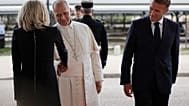





























The messages exchanged in the Middle East reflect a different face of warfare. Religious rhetoric is being employed in an uncommon and increasing way, with symbols of the three major monotheistic religions overlapping: Judaism, Christianity, and Islam in the middle of war.
In the midst of the ongoing war in the Middle East, religious symbols have emerged as a component of the discourse and practice of the parties involved in the conflict. Statements, political messages, and even the nature of some operations make frequent references to religious symbols and meanings that are invoked in the context of military confrontation.
 ADVERTISEMENT
ADVERTISEMENT
ADVERTISEMENT
In this report, we review how these symbols have been used and how they have been employed within the narratives of the war, beyond the direct military dimension to broader symbolic levels.
Religious symbolism in Iranian discourse
The use of religious symbols is clearly visible in Tehran's discourse, for example in official statements or in the naming of the weapons used and others.
Iranian officials frequently invoke religious texts in the context of the war, in an attempt to frame the confrontation within a narrative that goes beyond the political dimension to a broader ideological horizon to appeal to Muslim sentiments.
For example, Ali Larijani, the former head of Iran's Supreme National Security Council, who was killed during this war by a US-Israeli strike, circulated leaflets with religious quotes, including one attributed to Imam Hussein: "I do not see death as anything but happiness, and life with the oppressors as nothing but misery," in the context of a post attached to a propaganda poster about rewards for information on prominent Iranian figures.
Among the Quranic verses that Larijani published before his assassination: "And we will reward those who have patience with the best reward for what they have done."
For his part, Iran's Supreme Leader Mojtaba Khamenei has stepped up his posting of Quranic verses on the X platform, including: "How many small groups have defeated many groups with God's permission, and God is with the patient" and "If God helps you, you will have no victor", in addition to other verses and religious prayers in which he invoked pivotal figures in the Islamic heritage, calling for "fixing hearts" and "strengthening resolve", in a discourse that links military steadfastness to religious faith.
This is not limited to the level of rhetoric, but extends to the naming of the weapons themselves. On 2 March, the Revolutionary Guards announced the introduction of the Khyber Shiken missile to the battlefield, a name that carries a significant symbolic meaning, as it refers to the "Breaker of Khyber", recalling the historical battle of Khyber and the role of Imam Ali ibn Abi Talib in Shiite Islamic consciousness. This name is used in Iranian political discourse to link the current confrontation to a historical context with religious dimensions, giving the weapon a symbolic dimension beyond its military function.
During the month of Ramadan, and before the Nights of Destiny, calls for prayers and supplications to "hasten the appearance of the Mahdi" emerged, referring to the twelfth Shiite Imam, Muhammad bin al-Hasan al-Mahdi, who was born in 868 in Samarra and is believed to have disappeared only ten years later and to be still alive according to these accounts. These calls are linked to the belief that the current war may pave the way for his appearance.
Prayers at the White House
On the other hand, from the very first moment of the war, the front of the confrontation bore a clear religious imprint, represented by the killing of Iran's Supreme Leader, a position that - according to the nature of the "Islamic Republic" system - combines spiritual and political powers - combines spiritual and political powers, and for millions of Shiite Muslims represents a religious leader.
The assassination took place during the month of Ramadan, making the event all the more extraordinary and sparking outrage among the leader's supporters. Thus, the war appeared to be more than just a confrontation over the missile system or the nuclear file, but began with the killing of a religious and political figure at a sensitive time: the month of fasting.
In a remarkable scene that accompanied the escalation, US President Donald Trump was surrounded by a number of religious leaders, some of whom appeared to place their hands on his shoulder on public occasions, while prayers were intensified inside the White House.
During Holy Week - which recalls the last days of Christ before his crucifixion, according to Christian belief, the White House received religious delegations in a celebration of a spiritual nature. Digital platforms circulated a video clip posted on the Trump administration's YouTube channel before it was later deleted, showing an evangelical pastor reciting a prayer that read: "Father, you have raised Donald Trump, you have prepared him for a moment like this, and we pray, Father, to give him victory." The clip, before it was deleted, sparked widespread criticism on social media.
During an Easter event at the White House, US President Donald Trump's religious adviser, Paula White Cane, likened his life path to the religious accounts of Jesus Christ.
"Trump has paid a price that no one else has paid," she said, adding that "he has been betrayed, arrested, and unjustly accused," adding that this pattern is "familiar" and echoes religious narratives.
During a press conference, US Secretary of War Pete Hegseth called for prayers for US soldiers deployed to the Gulf "in the name of Jesus Christ," prompting criticism that the secretary ignored the religious diversity within the military.
Hegseth is known for his frequent quotations from the Bible. At the same conference, he invoked a passage from the Book of Psalms attributed to the prophet David: "Blessed be the Lord, my rock, who teaches my hands to fight and my fingers to war." Since coming to power, he has been organising prayers at the Pentagon, a first for a US defence secretary.
He also told CBC that he is fighting against "religious extremists who seek to acquire a nuclear capability in preparation for Armageddon" - a reference to a biblical concept of an end-time battle between good and evil.
The US Military Religious Freedom Foundation (MRFF) announced on 3 March 2026 that it had received more than 200 complaints from military personnel from various branches of the armed forces - including the Marines, Air Force and Space Force - accusing their commanders of using extremist Christian rhetoric to justify war against Iran.
The Muslim civil rights organisation Council on American-Islamic Relations (CAIR) condemned the Pentagon's use of this rhetoric, describing it as "dangerous" and "anti-Muslim".
Israel: From 'Judas Shield' to 'Assad's Roar'
Since the beginning of the war on Iran, Israel has changed the name of its military campaign from "Judas Shield" to "Lion's Roar", a choice that carries deep symbolic connotations in Jewish religious tradition. In biblical texts, the lion is closely associated with the tribe of Judah, one of the tribes of Israel, and is a symbol of power, sovereignty and leadership. As such, the name conjures up the image of a powerful force making its presence known, and intersects with Israeli discourse that portrays the war on Iran as an existential battle to protect national security.
Prime Minister Benjamin Netanyahu has intensified the use of biblical references in his rhetoric since the outbreak of the war on 28 February, invoking religious symbols to frame the confrontation. For example, just before Passover, he likened the war on Iran to the story of the Israelites' survival from the Pharaoh.
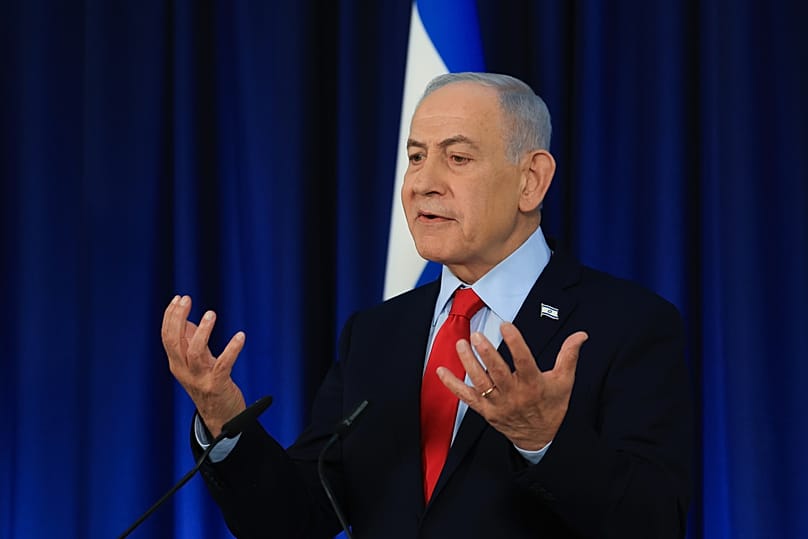
He has previously cited the Torah, comparing Iran to an ancient biblical enemy, the Amalekites, who are known in Jewish tradition as "absolute evil". Netanyahu and other Israeli officials have previously used the term "Amalek" in reference to Palestinians in Gaza during the war on Gaza following the Hamas attack on the south of the Jewish state on 7 October 2023.
In another notable scene, Mike Huckabee, Washington's ambassador to Tel Aviv, told conservative American commentator Tucker Carlson during an interview in February that it was "okay" for Israel to take over "most of the Middle East" because it was promised to it in the Bible.
Geopolitical and geostrategic conflict or what?
Despite this increased presence of religious symbolism and discourse, many researchers and analysts believe that what we are witnessing is not primarily a religious conflict, as the Middle East is mired in a competition for hegemony between global powers, regional actors and ideological blocs, according to them. They argue that this competition may see the emergence of religion as a catalyst, used to sacralise geopolitical interests.
While analysts believe that framing the conflict in this religious form may aim to mobilise public opinion, gain support, and demonise the other, the regional war - in its essence - is not a religious conflict, but rather a competition between regional and global powers.