





























US President Donald Trump said the war in Iran could end in 'two weeks, maybe three', adding that 'whether we have a deal or not, it's irrelevant.' The White House announced Trump will address the nation with an update on Wednesday night.
US President Donald Trump said the war in Iran would end "very soon", giving a timeline of two to three weeks, as the White House announced that Trump will be giving an address to the nation on Wednesday night "to provide an important update on Iran."
 ADVERTISEMENT
ADVERTISEMENT
ADVERTISEMENT
Trump claimed the US will be done with the conflict “within maybe two weeks, maybe a couple of days longer to do the job. But we want to knock out every single thing they have.”
"When we feel that they are, for a long period of time, put into the stone ages and they won't be able to come up with a nuclear weapon, then we'll leave," he said.
"Whether we have a deal or not, it's irrelevant."
He said the US may strike a deal with Iran before the next few weeks are up but said, if not, “We’ll hit some bridges, got a couple of nice bridges in mind. But if they come to the table, that’ll be good.”
Israeli Prime Minister Benjamin Netanyahu said that Israel would press ahead with its military campaign against Tehran, declaring that it would continue to "crush Iran's terror regime".
"The campaign is not over," he said in a televised statement. "We will continue to crush the terror regime."
Netanyahu's comments came shortly after Iran's President Masoud Pezeshkian said his country had the "necessary will" to end the war with Israel and the United States, but was seeking guarantees that the conflict would not be repeated.
"We have remained steadfast in our mission and we have changed the face of the Middle East," Netanyahu added, asserting that despite the ongoing war, Israel had emerged as a "regional power".
Fresh strikes target Iran, Gulf states
A drone attack by Iran and its allies hit a fuel tank at Kuwait International Airport, sparking a fire, authorities said.
The state-run KUNA news agency said the attack early Wednesday sparked a “large fire” at the airport.
It said there were no immediate injuries from the attack and firefighters were working to control the blaze.
Kuwait International Airport has been attacked before by Iran during the war. The KUNA report suggested the attack may have been launched by Iranian-supported militias in Iraq with Tehran’s support.
In another strike, Bahrain said early on Wednesday morning that it was working to extinguish a fire at a business facility that resulted from an Iranian attack, and a tanker came under attack off the coast of Qatar, authorities said.
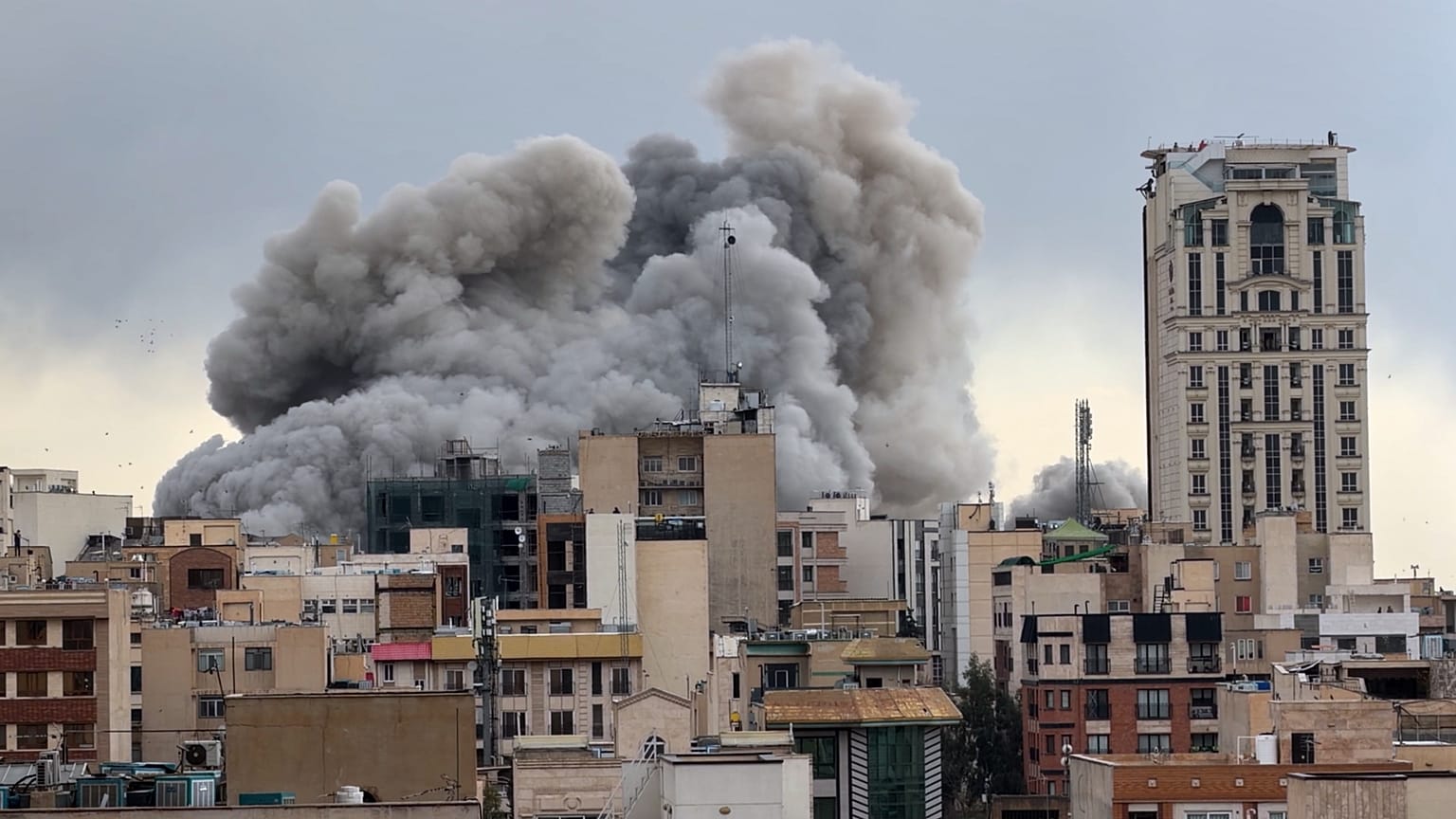
Meanwhile, Iran's state broadcaster IRIB said areas in northern, eastern and central Tehran were under attack on Wednesday.
Rubio says US will 'have to reexamine' NATO relationship
As the United States takes on an increasingly hostile tone towards its allies, Secretary of State Marco Rubio said that his country "is going to have to reexamine" its relationship with NATO once the war against Iran has concluded.
"I think there's no doubt, unfortunately, after this conflict is concluded, we are going to have to reexamine that relationship. We're going to have to reexamine the value of NATO in that alliance for our country," Rubio said to host Sean Hannity on Fox News.
He added that "ultimately" it would be a decision for President Donald Trump to make.
The top US diplomat said he had been "one of the strongest defenders of NATO" while he was in the US Senate because he "found great value in it."
Much of that value was in having military bases in Europe that allowed the US military "to project power into different parts of the world," Rubio said.
"If now we have reached a point where the NATO alliance means that we can't use those bases, that in fact we can no longer use those bases to defend America's interests, then NATO is a one-way street," he added.
Rubio went further, saying that while Washington was not asking NATO allies to conduct airstrikes as part of the war against Iran, "when we need them to allow us to use their military bases, their answer is 'No?' Then why are we in NATO? You have to ask that question."
His comments came after Trump again lashed out at allies who have been unwilling to do more to support the U.S. war effort against Iran, telling them to “go get your own oil” and saying it was not America's job to secure the Strait of Hormuz.