




























Faced with the devastating wrath of climate change, these islanders have put up a victorious fight – and they’re not done yet.
With sugar-like sand, cobalt blue waters, and constant sunshine, the island of Bonaire seems like a picture-postcard destination.
 ADVERTISEMENT
ADVERTISEMENT
ADVERTISEMENT
But for its 20,000 inhabitants, life here is “mentally draining”.
Situated in the southern Caribbean, Bonaire – a special municipality of the Netherlands – has been grappling with the wrath of climate change for years. Rising temperatures from greenhouse gases have been fuelling tropical storms and extreme rainfall, leading to severe flooding and irreversible damage to its famous corals.
This bleeds into every aspect of life on Bonaire, impacting residents’ health, their access to food, and the very land they walk on. Even conservative forecasts predict that parts of the island will be underwater by 2050, as warming waters continue to raise sea levels.
But amidst the bleakness, the people of Bonaire have shown extraordinary resilience – proving that they won’t let their island sink without a fight.
Bonaire’s court victory
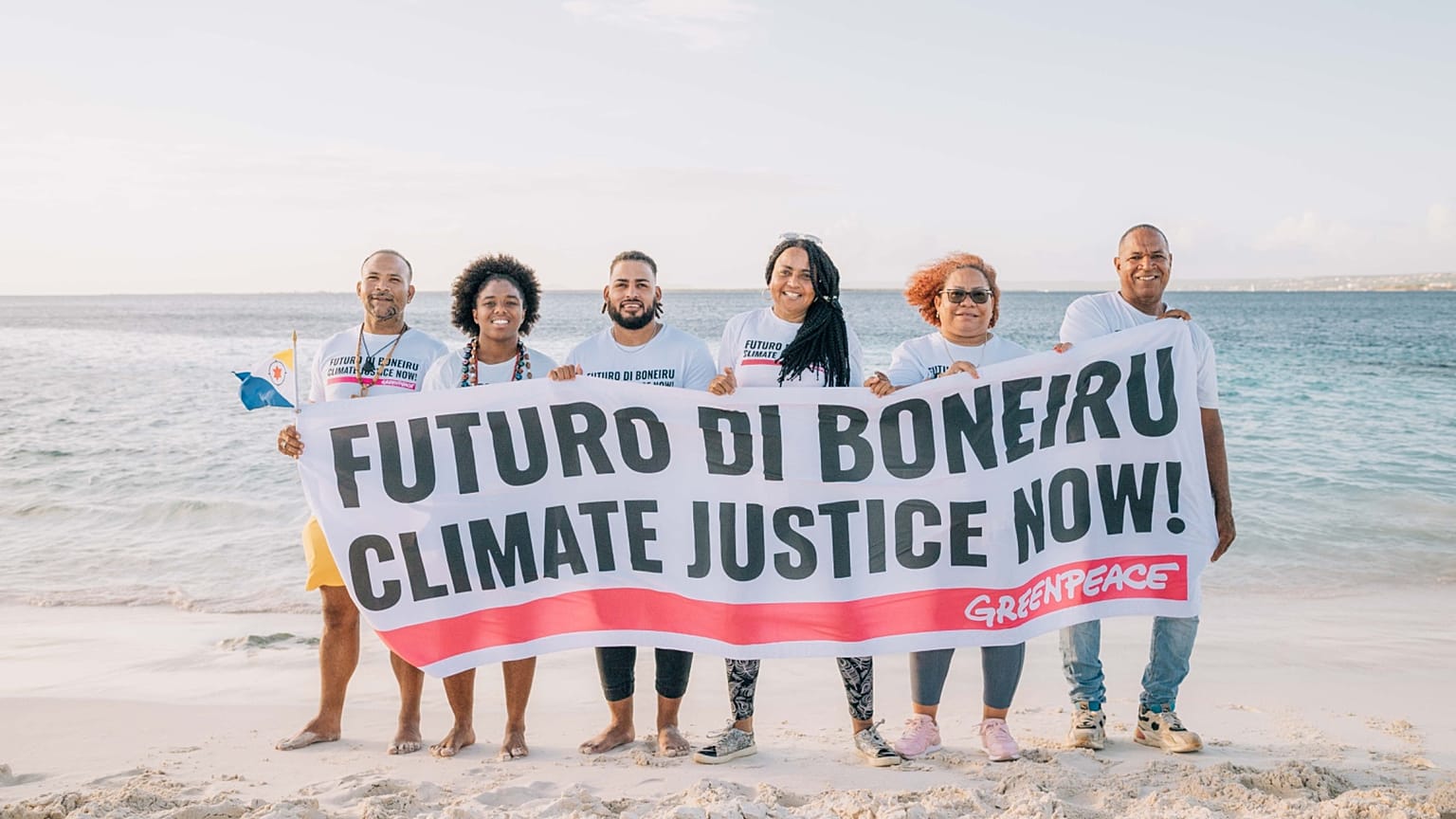
Back in January, eight claimants, along with environmental charity Greenpeace, took the Dutch government to court – demanding that residents be shielded from soaring temperatures and rising sea levels.
In a sweeping victory for the islanders, the Hague District Court ruled that the government discriminated against Bonaire’s inhabitants by not taking “timely and appropriate measures” to protect them from climate change before it’s too late.
The court ordered the Dutch government to set out legally binding targets within 18 months of the ruling to slash greenhouse gas emissions in line with the Paris Agreement, which commits countries to keep global temperature rise from exceeding 2°C compared to preindustrial times.
It was a David vs Goliath victory, one that echoed the landmark Urgenda case of 2019, when the Dutch Supreme Court ruled in favour of climate activists and ordered the government to cut the country’s greenhouse gas emissions.
‘Hope must now turn into action’
“The court ruling in favour of Bonaire is a major milestone – it’s historic,” Jackie Bernabela, one of the original claimants, tells Euronews Earth. “But whether things truly change depends on what happens next.”
Inspired to work with Greenpeace out of a “deep concern” for Bonaire’s future, Jackie became increasingly frustrated with broken political promises while she watched her country suffer.
“For many residents like us, the most painful part is seeing visible changes to nature: coral reefs, beaches and landscapes that are central to both identity and livelihood,” she says.
Still, Jackie is optimistic, pointing out that courts rarely rule “lightly” in climate cases, and such decisions often influence broader policy.
“But climate change is accelerating, and time is limited,” she says.
‘They made fun of us’
For Onnie Emerenciana, a farmer on Bonaire, climate change is making his job almost impossible. Suffering from respiratory problems due to working outside in dusty conditions – and forced to wear long-sleeves to protect his skin from scorching temperatures – Onnie is trying to adapt to the island’s ongoing drought.
“It’s very difficult to do agriculture if you don’t have water,” he says. “You need it to produce crops and to give it to the animals. Because it doesn’t rain, the fields are dry – the soil is very hot – and nothing grows on it.”
Onnie has resorted to growing crops in greenhouses, to prevent food from being consumed by animals like lizards and iguanas, and has created his own grow boxes to produce leafy greens and other small vegetables.
“My biggest problem is water,” he explains. “I buy water from the local water company but they can only bring me six cubes per week with their truck. If the truck is damaged, they don’t bring you water and sometimes it lasts for two weeks – and then I lose all of my investment.”
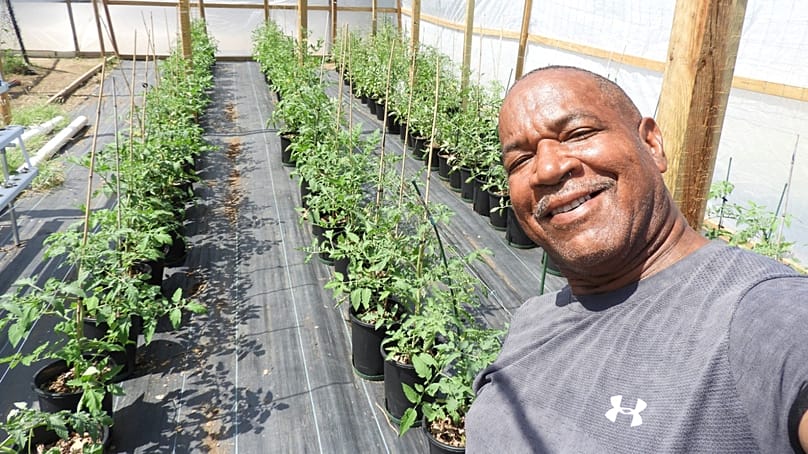
With a love for nature passed on from his native Indian grandmother, Onnie joined the Greenpeace court battle after watching the “happy island disappear” in front of his eyes.
It wasn’t an easy decision, with many residents mocking the plaintiffs and their seemingly slim chances of a victory.
“Some people did not believe us and made fun of us,” Onnie recalls. “They said ‘how can you win a law case against the Netherlands?’ But I was determined.”
As Onnie waits for the Netherlands to outline its plan to protect Bonaire from climate change, he is focusing on things residents can do themselves to improve their everyday life, such as planting trees, separating waste and determining which parts of the island could benefit from dams to collect rainwater.
“I will continue to observe, adapt , and keep everyone aware of changes,” he adds. “Like I already said there is one planet Earth, we have to protect it or it will be the end of us all.”
‘Living on Bonaire isn’t easy’
Meralney Bomba, who was not a plaintiff in the court case but works for Greenpeace, says it has been “mentally draining” to pass the coasts of Bonaire, knowing that in the future they may not exist.
“Being born, raised and living on Bonaire is not an easy thing to deal with,” Meralney tells Euronews Earth, and yet she remains optimistic.
“I hope things will change,” Meralney says. “I will never lose hope – but as we on Bonaire have known for years, changes don’t happen easily and adapting to the changes must come from everyone.”
All Meralney wants is for residents to be heard and respected. She says they’re tired of organisations visiting the island for research and investigations that never turn into action.
“The ruling will and has definitely helped to kick things up,” she adds. “This is not the end. It’s literally just the beginning; the work continues daily towards a just and right world for everyone.”