
















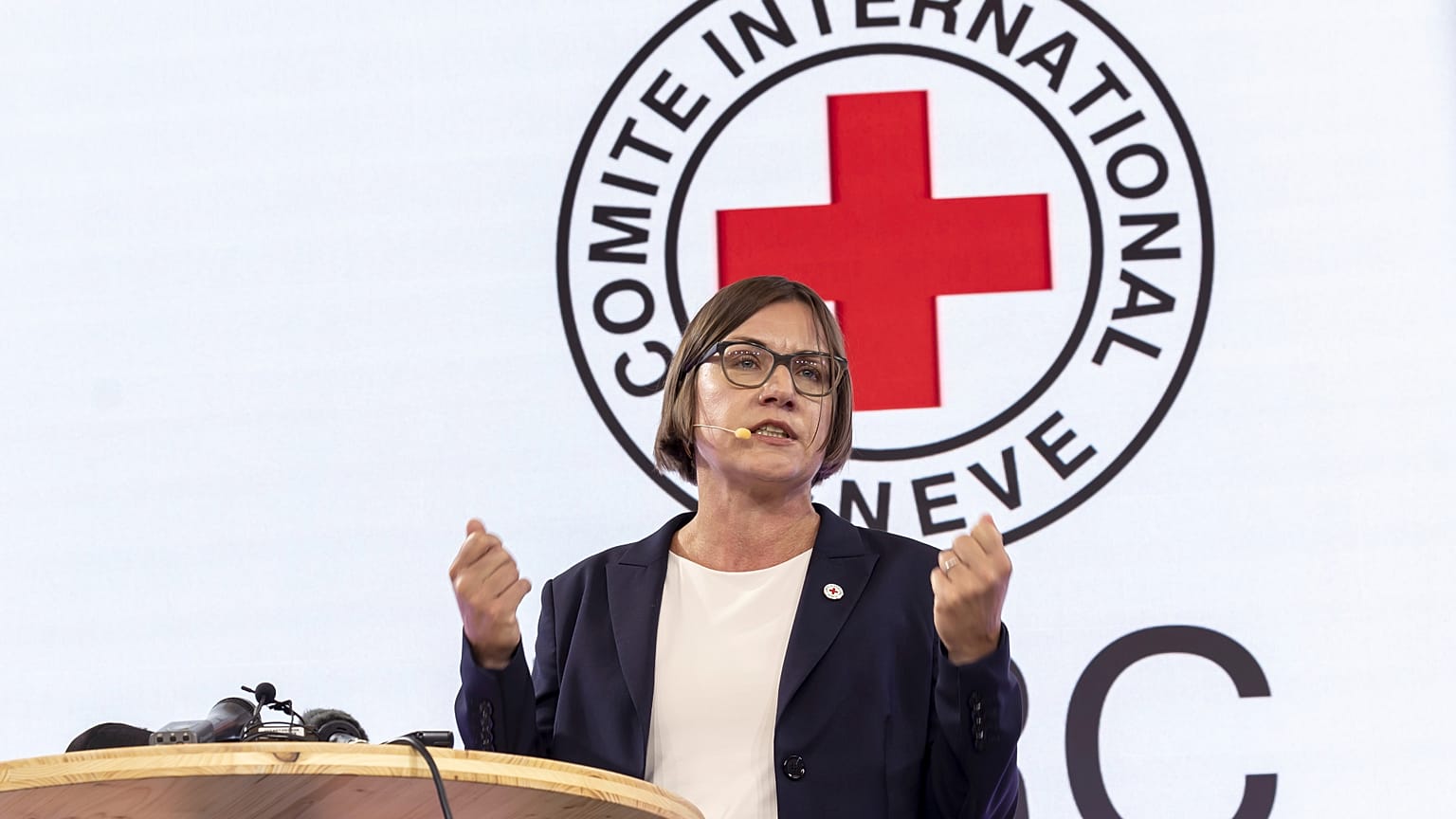














In an exclusive interview with Euronews, the president of the Committee of the Red Cross (ICRC), Mirjana Spoljaric Egger, warns of serious violations of international law in the Middle East conflict and calls for an end to attacks on essential infrastructure.
The Iran war is nearing its one-month mark with a mounting civilian toll that aid organisations warn is pushing the limits of international humanitarian law.
 ADVERTISEMENT
ADVERTISEMENT
ADVERTISEMENT
More than 3,300 people have been killed inside Iran since the war began, among them at least 1,400 civilians, according to figures compiled by Human Rights Activists in Iran (HRANA), a US-based NGO. Euronews was unable to independently verify the numbers.
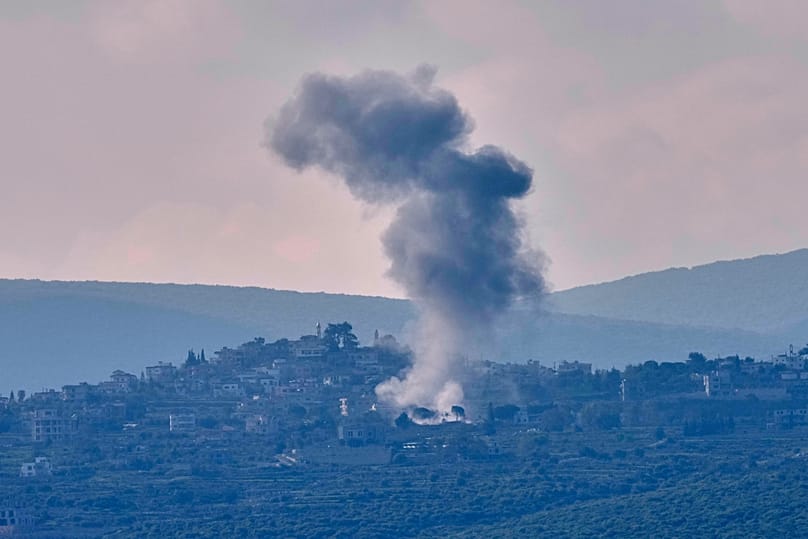
The fighting has increasingly targeted the infrastructure underpinning daily life. Last week, Israeli strikes hit South Pars, one of Iran's most strategically significant gas fields.
Tehran responded by striking Ras Laffan, Qatar's sprawling LNG terminal and the largest of its kind in the world. Engineers warn that repairs to both facilities could take years.
In the capital, the damage is already being felt. Water and energy supplies in Tehran have been severely disrupted following strikes by Israel and the US, Iranian Energy Minister Abbas Aliabadi said, according to state-run news agency ISNA.
Iran has separately accused Washington of attacking a desalination plant on Qeshm Island in the Strait of Hormuz, a strike that Foreign Minister Seyed Abbas Araghchi said cut off water to 30 villages. The allegation has not been independently confirmed.
Tehran, for its part, is reported to have struck desalination facilities in Bahrain, following through on its threats.
It is against this backdrop that Mirjana Spoljaric Egger, president of the International Committee of the Red Cross (ICRC), sat down for an interview with Euronews.
Her assessment was blunt: civilians are bearing the brunt of a conflict that is eroding the foundations of human existence, and the attacks must stop.
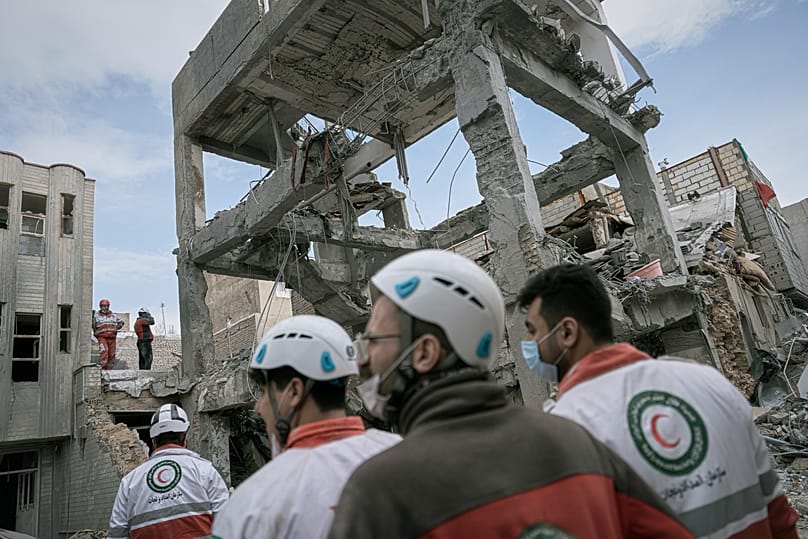
Euronews: Ms Spoljaric Egger, we are currently witnessing a marked escalation in Iran. How is this affecting the civilian population on the ground?
Spoljaric Egger: Unfortunately, what we see today — as we have over the past four weeks — is that the civilian population is bearing the brunt of this latest escalation.
The fact that civilian infrastructure across the entire Middle East, including the Gulf states, is being targeted in attacks is unacceptable from a humanitarian standpoint, and equally so from the perspective of an organisation that upholds and advocates for international humanitarian law.
Euronews: Do you have a sense of how many people are currently affected?
Spoljaric Egger: We are too limited in our ability to collect data and must rely on figures from other institutions, such as the United Nations. In any case, the numbers are far too high. We continue to see massive displacement, including in Lebanon.
And these people — we may now be talking about as many as 1 million — do not know when, or even whether, they will be able to return to their homes, or whether those homes will still exist.
Euronews: What are the greatest humanitarian risks at this moment?
Spoljaric Egger: We are hearing deeply alarming accounts. The situation is serious because deliberate or indiscriminate attacks on vital infrastructure can constitute grave violations of international humanitarian law, as they strike protected civilians.
They create a situation in which nothing is safe any longer. People come under pressure because they are directly attacked or their homes are destroyed, but also because they are forced to flee when there is no longer any drinking water or electricity to ensure access to healthcare and other essential services.
That is why such attacks are unacceptable and must stop.
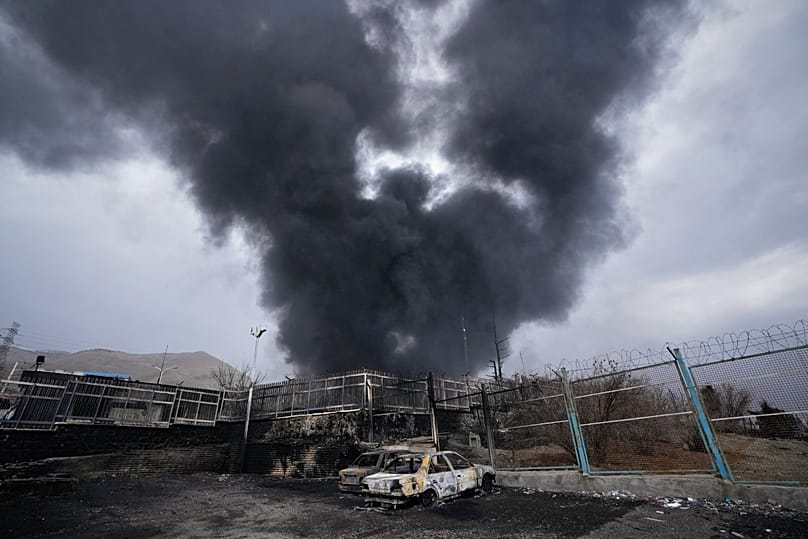
Euronews: You have just mentioned possible violations of international humanitarian law. What else are you observing?
Spoljaric Egger: We are seeing, in many different ways, how civilians are being placed under pressure — through lack of access to healthcare, water, or food.
But what we are now witnessing goes even deeper: the very possibility of people being able to live in an area at all is being destroyed. The entire infrastructure that forms the foundation of human existence is being attacked in this war.
This points to a disproportionate course of action in which there are barely any discernible limits with regard to military objectives.
When military operations are conducted in this way, there is a risk of escalation spiralling out of control.
Even now, we can see how difficult it is to contain the consequences, which have by now likely reached every person in the world in some way.
Euronews: What do attacks on civilian infrastructure such as energy facilities mean for Iran's long-term reconstruction?
Spoljaric Egger: Every time such attacks occur, we know it will take significantly longer for the population to return to any semblance of normalcy and for the economy to recover to a level that ensures survival.
Over the past three to four years, we have seen an exponential rise in reconstruction costs — in part precisely because of these massive attacks on essential services and infrastructure.
They cause displacement and, at the same time, mean that reconstruction will take a very long time. Look at Syria: 15 years after the conflict began, many people are still living in a situation without reconstruction.
Euronews: How difficult is it currently for organisations like the ICRC to reach people in need?
Spoljaric Egger: Our room for manoeuvre is shrinking. It is simply too dangerous. In some operational areas, there are no safe places left.
Our freedom of movement is also constrained by the enormous quantities of explosive ordnance — take Gaza, for example.
Gaza is largely destroyed and heavily contaminated. We cannot move freely without risking our own lives and those of the people we are trying to help.
Euronews: During your time at the United Nations, you were closely involved with Israel and Palestine. What does the current escalation in Iran mean for Gaza, the West Bank, and countries such as Lebanon?
Spoljaric Egger: The humanitarian situation in Gaza, the West Bank, and Lebanon is acute. But given the current escalation, there is a danger that these crises will fade from view — and that is dangerous.
Across the entire Middle East, there is deep fear of further escalation. My appeal to states is therefore to invest in de-escalation now, before it is too late.
People are living in fear. They hear the announcements, they are being displaced, and they see no end in sight. At the same time, political leaders continue to call for new military operations.
This is amplifying the panic among the civilian population. People are fleeing, but they do not know where to. We must contain this. In the end, no one benefits from a war without rules. It ultimately becomes self-destructive.
Euronews: What responsibility does the Iranian leadership bear when it comes to de-escalation and the protection of civilians?
Spoljaric Egger: Under international humanitarian law, all states bear equal responsibility. They must protect civilian infrastructure and shield civilians from hostilities to the greatest extent possible.
Any state that deliberately attacks civilian infrastructure is acting unlawfully. We do not distinguish between states. We are a neutral, independent organisation, and we raise possible violations with the relevant authorities.
Euronews: How is this war affecting regions outside the Middle East?
Spoljaric Egger: Its consequences are primarily economic. We are already seeing this: rising energy and fuel prices, as well as disrupted supply chains. This affects economies worldwide.
But there are also security policy implications. Modern technologies mean that conflicts reverberate far beyond their immediate regions. One can be drawn into a conflict even from a great distance.
Attacks are taking place globally and may be connected to events in the Middle East. Moreover, such conflicts send a dangerous signal to armed groups worldwide — namely, that there are no longer any rules. And that shapes their behaviour.