




























US sanctions prevent the Venezuelan government from footing the bill and Maduro and Flores say they do not have sufficient personal funds to cover it themselves.
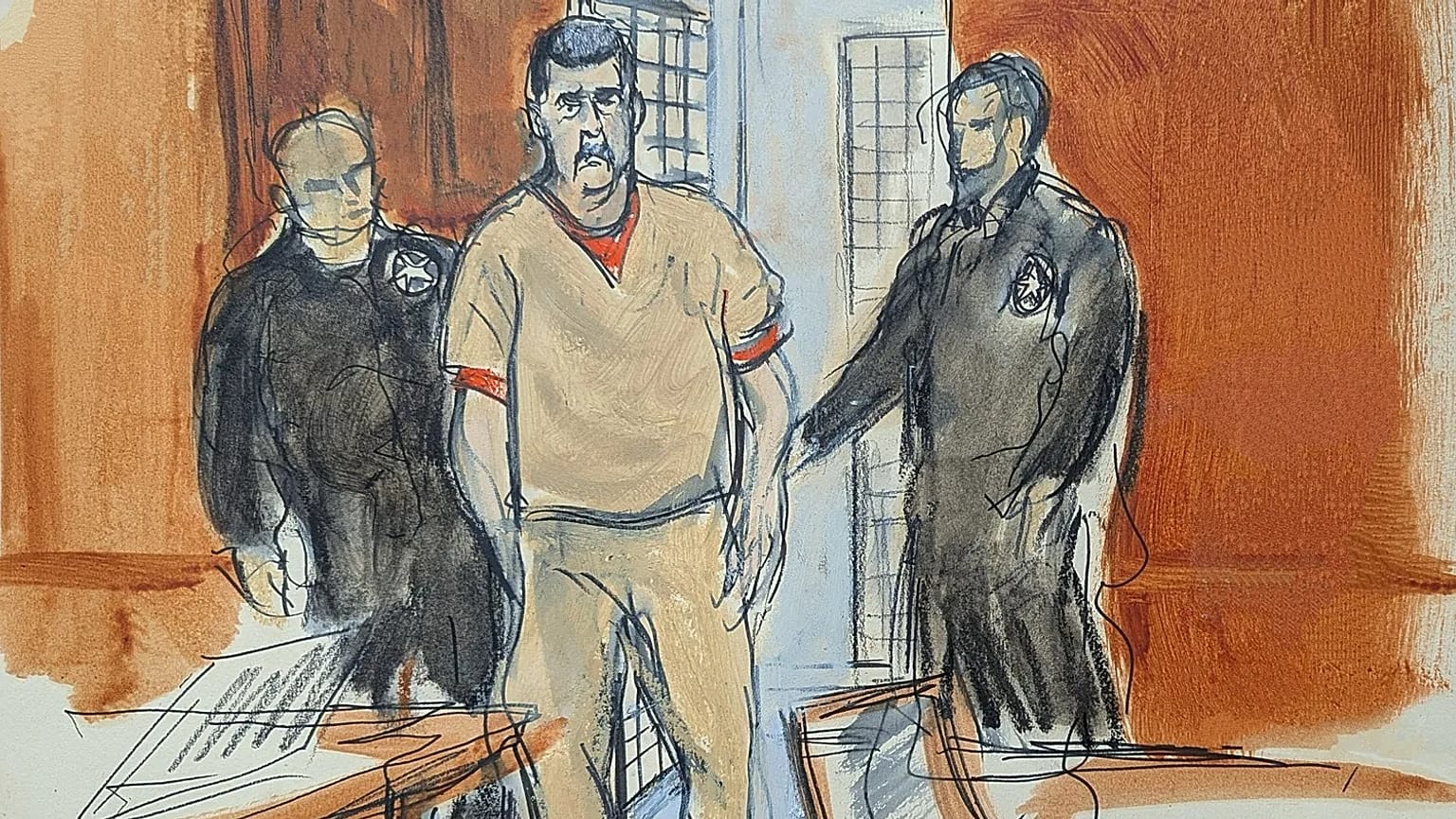
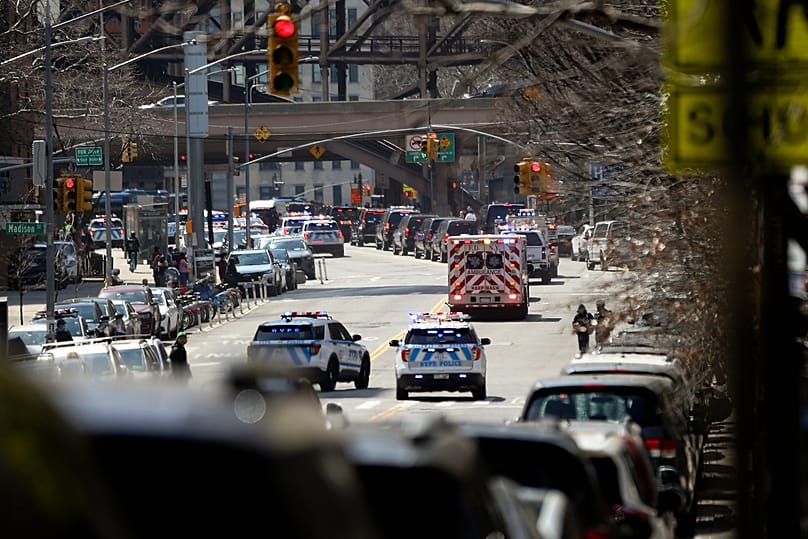
Ousted Venezuelan president Nicolás Maduro cut a relaxed figure as he returned to a federal court in New York on Thursday for his second appearance since his capture by US forces in an extraordinary nighttime raid.
 ADVERTISEMENT
ADVERTISEMENT
ADVERTISEMENT
During the one-hour hearing, the judge indicated he would not dismiss the case over Maduro and his wife's apparent inability to afford their legal bill without aid from the Venezuelan government.
The former leader, 63, and wife Cilia Flores have been held in a Brooklyn jail for almost three months since American commandos snatched the pair from their compound in Caracas in early January.
The stunning operation deposed the strongman who had led Venezuela since 2013 and has since forced the oil-rich country to largely bend to the will of US President Donald Trump.
Maduro has declared himself a "prisoner of war" and pleaded not guilty to the four counts he faces: "narco-terrorism" conspiracy; cocaine importation conspiracy; possession of machine guns and destructive devices; and conspiracy to possess machine guns and destructive devices.
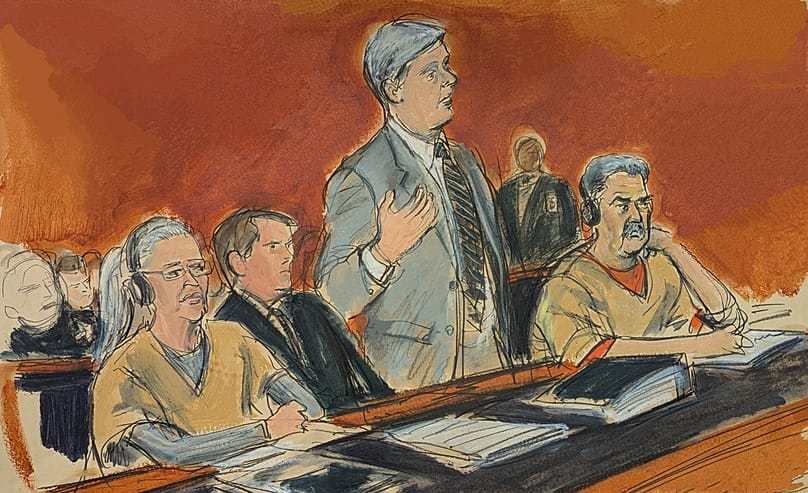
Wearing a grey prison uniform, glasses and a headset for translation, he jotted down notes throughout the hearing and occasionally spoke to his lawyer through an interpreter.
Maduro, who smiled as he entered the room, did not address the court during the proceedings, which focused on arguments over who will pay his and Flores' legal fees.
US sanctions prevent the Venezuelan government from footing the bill and Maduro and Flores say they do not have sufficient personal funds to cover it themselves.
"I'm not going to dismiss the case," said Judge Alvin Hellerstein, seemingly rebuffing a request by Maduro's lawyer, though he did not issue a formal decision.
Hellerstein also did not immediately set the next court date.
Protest in Caracas
Before the hearing, Trump said that "other cases are going to be brought" against Maduro, without giving more details.
Several backers and opponents of Maduro gathered outside the Manhattan courthouse, including some with a large inflatable doll depicting him in an orange prison jumpsuit with handcuffs.
At one point, a scuffle broke out between protesters before police intervened and escorted a man from the area.
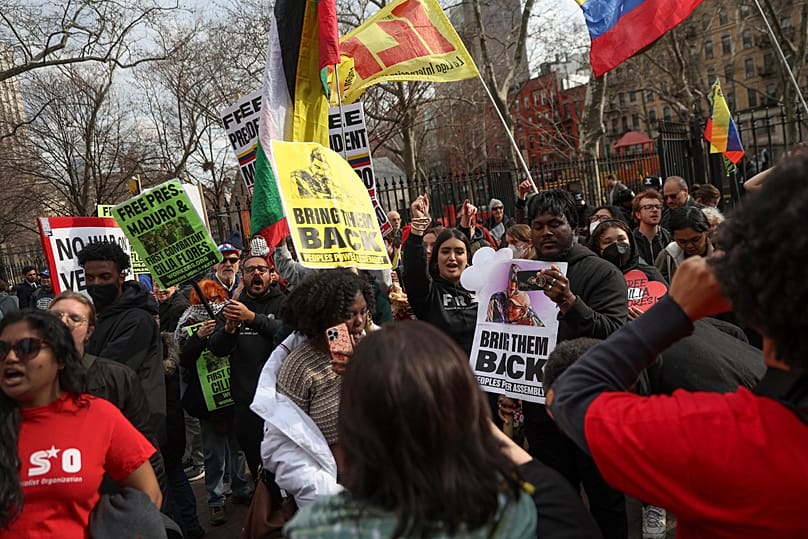
Hundreds of people also rallied in the Venezuelan capital Caracas during the hearing, including Maduro's son Nicolás Maduro Guerra.
"We trust in the legal system of the United States," he told the AFP news agency, but said the "kidnapping" of his father undermines the legitimacy of the case.
Detained in Brooklyn's Metropolitan Detention Centre, a federal prison known for unsanitary conditions, Maduro is reportedly alone in a cell with no access to the internet or newspapers.
US pressure
Maduro and his wife were forcibly taken by US commandos in the early hours of 3 January in air strikes on the Venezuelan capital backed by warplanes and a heavy naval deployment.
At least 83 people died and more than 112 people were injured in the assault, according to Venezuelan officials. No US service members were killed.
The South American country is now led by Delcy Rodríguez, who had been Maduro's vice president since 2018.
Under US pressure, she is grappling with leading a country saddled with the world's largest proven oil reserves but an economy in shambles.
Rodríguez has since enacted a historic amnesty law to free political prisoners jailed under Maduro and reformed oil and mining regulations in line with US demands for access to her country's vast natural wealth.
This month, the State Department said it was restoring diplomatic ties with Venezuela in a sign of thawing relations.