















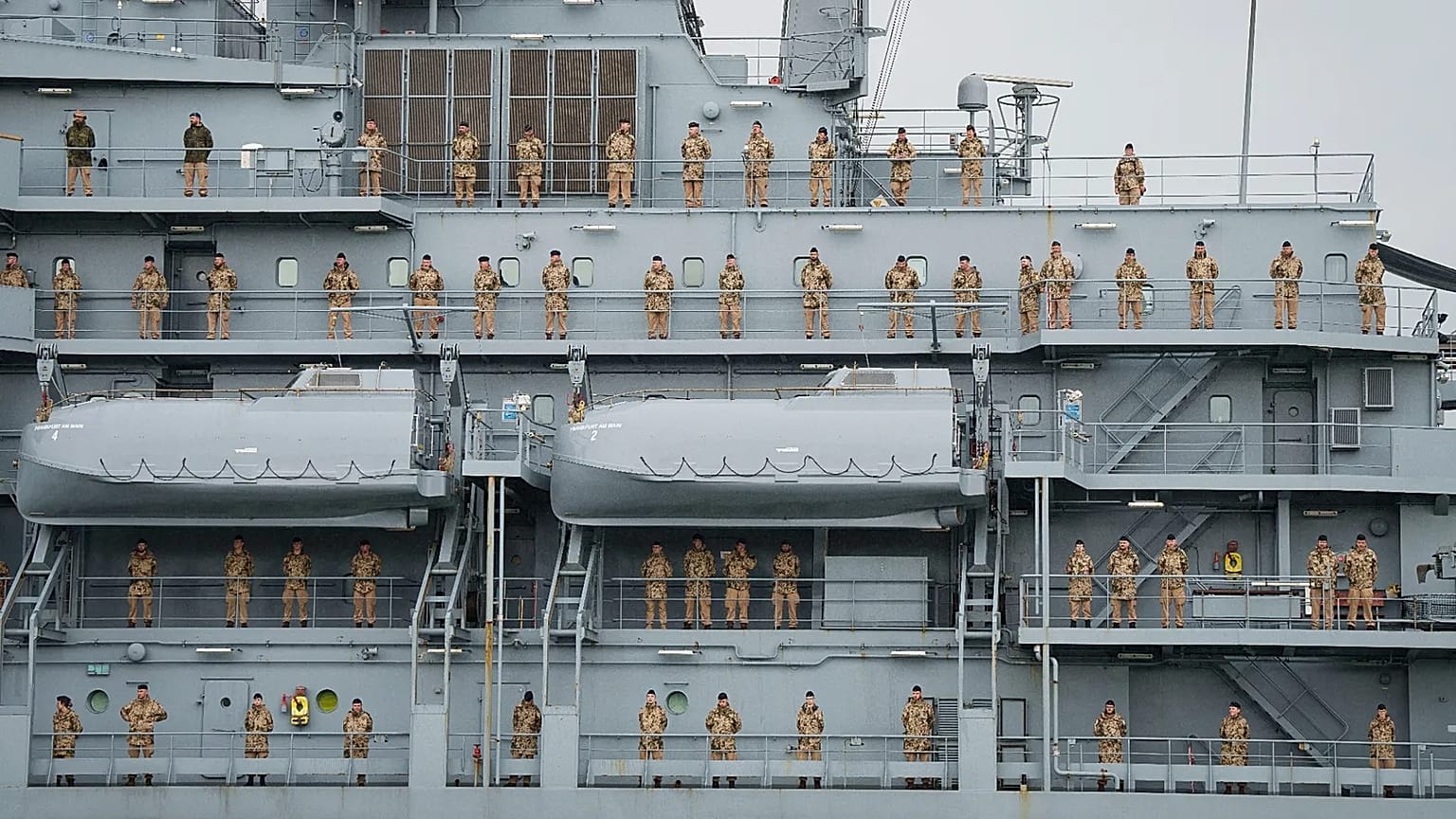














The Bundeswehr could take on a role in securing one of the world's most important trade routes after the end of the war, "but now is not the time to discuss that," the German defence minister said.
Germany ruled out military involvement in the Iran war but said it could participate in securing the Strait of Hormuz after an end to hostilities, Defence Minister Boris Pistorius said during a visit to Australia.
 ADVERTISEMENT
ADVERTISEMENT
ADVERTISEMENT
"We do not want to be drawn into this war," Pistorius said in Canberra on Thursday. "As long as the war continues, we will not get involved militarily."
Germany could participate in an international mission with a clearly limited remit after a ceasefire or peace agreement, he said.
"After a ceasefire or peace, we can, of course, imagine and are prepared in principle to participate in an operation to secure the freedom of navigation through the Strait of Hormuz," Pistorius said.
The Bundeswehr could take on a role in securing one of the world's most important trade routes after the end of hostilities, he said. "But now is not the time to discuss that."
Defence cooperation expanded
Germany and Australia agreed to simplify troop deployments between the two countries and expand joint defence projects including space-based early-warning systems, as Berlin seeks to diversify its security partnerships.
Pistorius met his Australian counterpart Richard Marles in Canberra during a tour of the Indo-Pacific region.
The two countries will develop a troop status agreement to simplify the deployment of armed forces in each other's territory.
Australia will participate in developing a German space-based early-warning system, based on a global network of sensors, to detect threats such as Russia or China blinding or destroying satellites.
Australia plans to integrate missiles from German manufacturer TDW into its own production. The move comes amid a growing shortage of military resources due to the conflicts in Ukraine and the Middle East.
"Our dependency was too one-sided," Pistorius said. Germany aims to diversify supply chains and involve more partners, he said.
Germany's Indo-Pacific focus
The expansion of relations with Australia forms part of a broader strategy. Pistorius visited Japan, Singapore and Australia during his trip.
"Security in Europe and security in the Indo-Pacific are two sides of the same coin," he said.
Germany has significantly increased its Bundeswehr presence in the Indo-Pacific in recent years through naval missions, air force exercises and joint training with local partners.
German soldiers are integrated in manoeuvres such as Pitch Black 2026.
The aim is to increase interoperability, safeguard international rules and protect trade routes and energy supplies.