





























According to reports published by outlets including Iran International and the Jerusalem Post, two Islamic Republic diplomats have recently stepped down from their posts and applied for asylum.
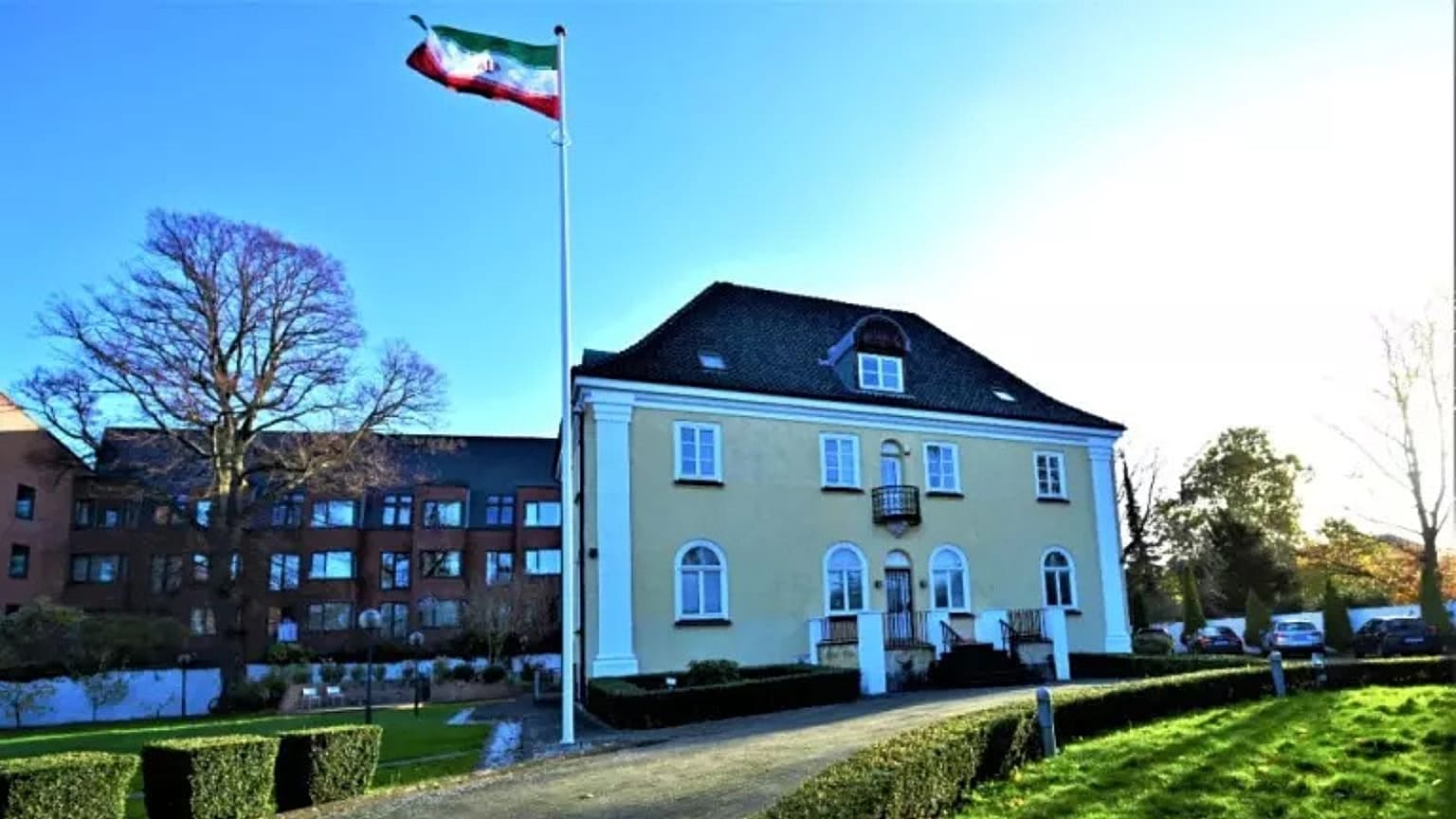
Alongside unconfirmed reports of senior Islamic Republic diplomats seeking asylum in Denmark, the circulation of a video showing the opposition’s Lion and Sun flag being hoisted within the Iranian embassy compound in Denmark has triggered fresh speculation.
 ADVERTISEMENT
ADVERTISEMENT
ADVERTISEMENT
U.S. President Donald Trump had previously, during a March 6 address at the White House, explicitly called on Iranian diplomats to distance themselves from the government and assist in "shaping the future of Iran."
According to reports published by outlets including Iran International and the Jerusalem Post, two Islamic Republic diplomats have recently stepped down from their posts and applied for asylum.
Alireza Sohbati is one of these individuals. Serving as the Second Secretary at the Iranian Embassy in Copenhagen since 2022, he has reportedly requested asylum in Denmark.
Diplomatic defections: rumours or reality?
Investigations by Euronews indicate that, given the standard three-to-four-year term for Iranian diplomatic missions, Mr. Sohbati was nearing the end of his posting. Euronews' attempts to contact the Iranian Embassy in Copenhagen for further clarification on this matter have remained unanswered.
In addition to Alireza Sohbati, Mohammad Pournajaf, a senior diplomat in Canberra, Australia, who previously served as the embassy’s Chargé d’Affaires, has emerged as a new asylum seeker.
While some sources suggest his request dates back several months, the official disclosure of this news amid the ongoing war has exerted significant psychological pressure on the Ministry of Foreign Affairs in Tehran.
These cases follow earlier defections in Geneva (Alireza Jeyrani Hakamabad) and Vienna (Gholamreza Derikvand).
In previous instances, the Islamic Republic has largely attempted to downplay such events. For example, regarding Gholamreza Derikvand, the Mehr News Agency, affiliated with Iran's Islamic Propaganda Organization, claimed he was "merely a sector expert at the mission and never held positions such as ambassador, deputy head of mission, or even deputy department head."
The agency added that "following the conclusion of his three-year mission, for unknown reasons, likely stemming from psychological pressure and illness" he requested to remain in Switzerland.
The Copenhagen incident: Lion and Sun flag hoisted in embassy compound
Meanwhile, the release of a video on the social media platform X in recent days has fuelled discussions regarding the defection of Iranian embassy staff in Denmark.
In the video, a group of protesters is seen gathered in front of the embassy building. Danish police forces have formed a barrier, preventing them from approaching the entrance.
While the crowd chants "Honorable, Honorable" (Ba-sharaf), the Lion and Sun flag is suddenly hoisted on the main flagpole inside the embassy grounds.
Analysis of the footage suggests the flag was raised from inside the building by someone with access to the enclosed compound. The speed of the action and the location of the flagpole reinforce the hypothesis of cooperation between an internal staff member and the protesters, or an individual act by a defecting diplomat.
This comes as the Danish government and Copenhagen police have yet to issue an official statement regarding the identity of the person who replaced the flag.
Concurrent with these events, rumours regarding the defection of Seyed Mohammad-Reza Sajjadi, the Islamic Republic’s Ambassador to Denmark, have gained traction online. Some users claim that hoisting the Lion and Sun flag would be impossible without coordination or a "green light" from the embassy’s high-level officials.
However, follow-ups by our correspondent show that as of noon today (March 19), Seyed Mohammad-Reza Sajjadi’s name and image remain on the official website of the Iranian Embassy in Copenhagen as the Ambassador of the Islamic Republic.
In diplomatic protocol, website access is typically revoked immediately following a resignation or defection. Therefore, the ambassador’s defection remains an unconfirmed rumour at this stage, though the silence of the Iranian Ministry of Foreign Affairs has added to the ambiguity.
Tehran’s Response: Silence and Denial
As per its standard procedure in similar cases (such as the Geneva mission), the Islamic Republic’s Ministry of Foreign Affairs has so far declined to confirm the asylum requests of Alireza Sohbati or Mohammad Pournajaf.
State media in Tehran have also attempted to minimize these events, accusing Persian-language media abroad of "disseminating lies during wartime."
Political observers believe that the defection of diplomats, especially while the country is under extensive airstrikes, is a severe blow to Tehran's "international prestige". Consequently, confirming such cases could further undermine the government’s legitimacy.
It appears that until definitive evidence is released, the issue of "diplomatic fractures" among Islamic Republic officials will remain shrouded in uncertainty.