

















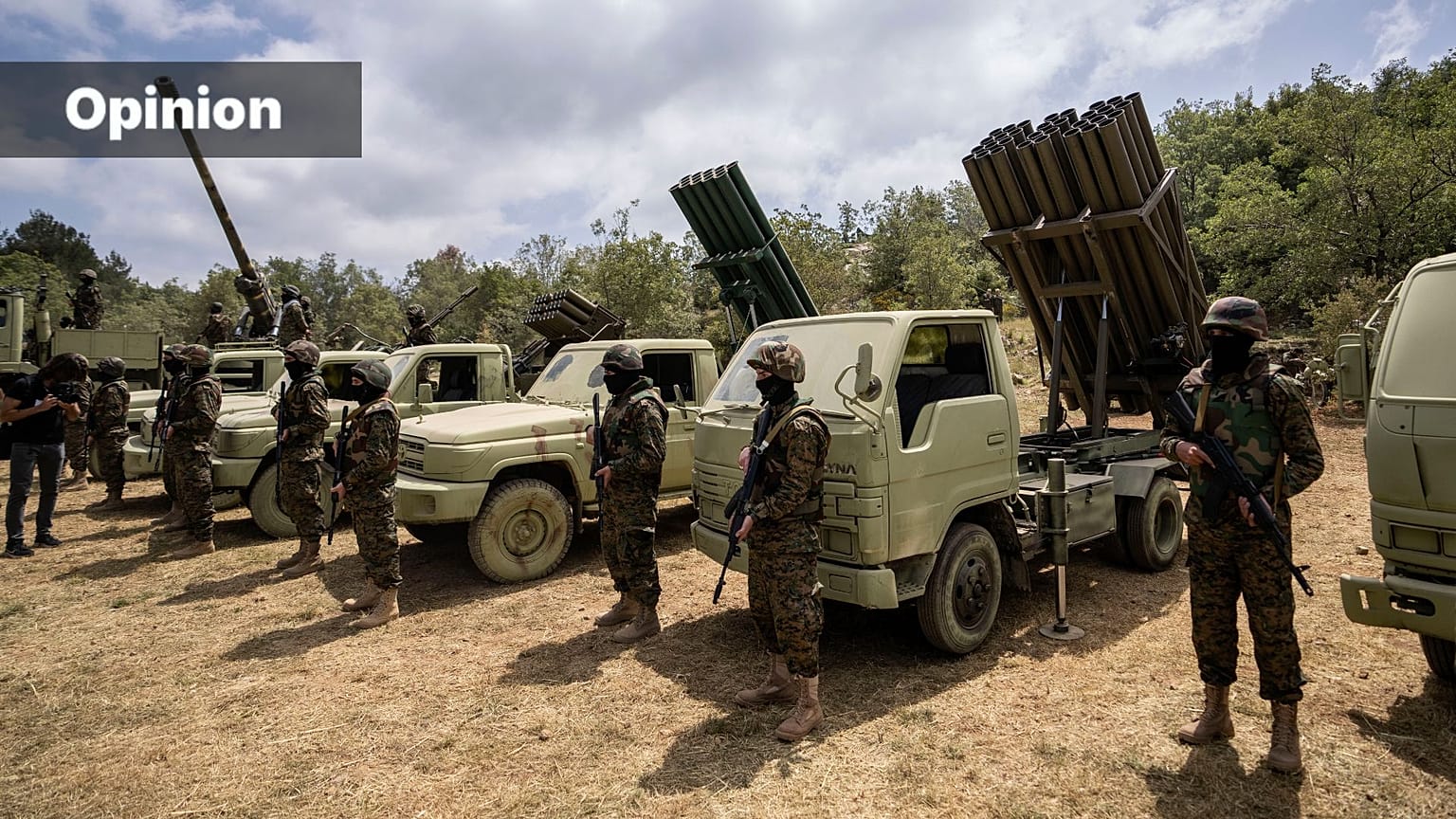













Since the US and Israel launched their offensive against Iran, Tehran's ally Hezbollah has opened a second front from Lebanon. With a ceasefire increasingly unlikely, Israel now appears determined to dismantle Hezbollah once and for all, writes Hanin Ghaddar in an opinion piece for Euronews.
If the previous wars between Israel and Hezbollah had taught us anything, it's that Hezbollah cannot be disarmed by airstrikes.
 ADVERTISEMENT
ADVERTISEMENT
ADVERTISEMENT
To reach a lasting solution to the Hezbollah problem in Lebanon and eliminate its military threats, policymakers need to remember two details: First, if the regime in Iran survives this war, and remains politically and financially resilient, it will always find a way to provide Hezbollah with the military and financial capabilities to rebuild its infrastructure.
Since the ceasefire agreement between Israel and Lebanon in November 2024, Iran managed to funnel around one billion US Dollars to Hezbollah - most of which gained from Iran's oil sales – which the group used to restore its arsenal.
Hezbollah has established an ecosystem of power
Second, Hezbollah in Lebanon is not just a military infrastructure. It orbits within an ecosystem of power, with very strong financial and political foundations that had allowed it to regenerate after every war.
Even if Israel managed to eliminate most of the group's military infrastructure, Hezbollah could regenerate through its financial cash system, and its control over key positions within the Lebanese state institutions.
Within this in mind, two days after Israel and the United States launched their joint war on Iran, Hezbollah fired six rockets into northern Israel on March 2. The goal was not avenging the killing of the supreme leader Ali Khamenei, nor was it to protect Lebanon from potential Israeli aggression.
The objective was more sinister: to drag Israel into a war with Hezbollah in Lebanon, in the hope of distracting the Israel Defence Forces (IDF) from Iran by opening a second front.
Hezbollah wants to survive, rebuild and regenerate
Evidently, the thin line that separated Hezbollah from the Iranian Revolutionary Guards Corps (IRGC), broke, and exposed the group's main priorities and interests: to defend and protect the Iranian regime.
This was even more apparent when a few IRGC commanders were hit and killed in Lebanon by the IDF, with information about the IRGC leading the battle in the absence of Hezbollah's command structure.
Like the Iranian regime, the endgame for Hezbollah is not to win the war, but to survive, and eventually rebuild and regenerate.
They have learnt throughout the previous wars, that no matter the sacrifices, their control of Lebanon's decision-making process, ports of entry, the cash economy, and security apparatuses, will allow them to endure.
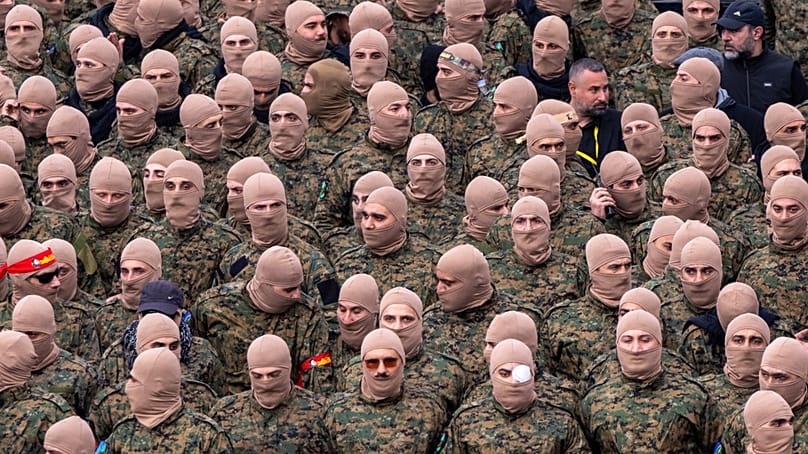
Will an Israeli Invasion 'finish the job'?
For Isreal, the Lebanese government and the Lebanese Armed Forces (LAF) had fifteen months to implement the ceasefire agreement and disarm Hezbollah. Instead, Lebanon dragged for months and eventually failed to fulfill its promises.
Despite claims that the South of Litani River had been cleared of Hezbollah's arms and presence, many missiles were recently launched from there. There is simply no trust in the LAF or the Lebanese government anymore. And as the IDF prepares for a possible ground invasion, the Israeli government seems to be planning to finish the job and be the boots on the ground that the LAF was supposed to be.
Recent promises and actions by Lebanon also are falling on deaf ears. The Lebanese Prime Minister Nawaf Salam's government ban of Hezbollah's military activities was not translated into action – the LAF still refuses to confront Hezbollah and no other steps were made beyond that decision.
Unless Lebanon shows seriousness regarding Hezbollah, the next phase of this war could witness an invasion that could expand past the Litani River and last beyond the war, leading to more displacement and humanitarian crises.
However, Hezbollah is facing many challenges, and the Lebanese leadership can take a few steps to prove that they can handle Hezbollah's weapons.
Lebanon's leaders should show strength
As the group is under attack and is probably losing what is left of its military infrastructure, its own constituency is facing a crossroad: Hezbollah decided to risk their lives to defend the Iranian regime for no reason. More than 700,000 Lebanese Shia have been displaced, without support, and with no prospect of any victory in sight.
Their sacrifice will be worth nothing. The anger and disillusionment of this community could be translated into political change if the Lebanese government steps up as an alternative. But to show strength, Lebanon's leaders should be strong, take over Lebanon's security decisions, and confiscate all illegal arms.
For example, the LAF could deploy in critical areas and start dismantling Hezbollah's military infrastructure as much as possible.
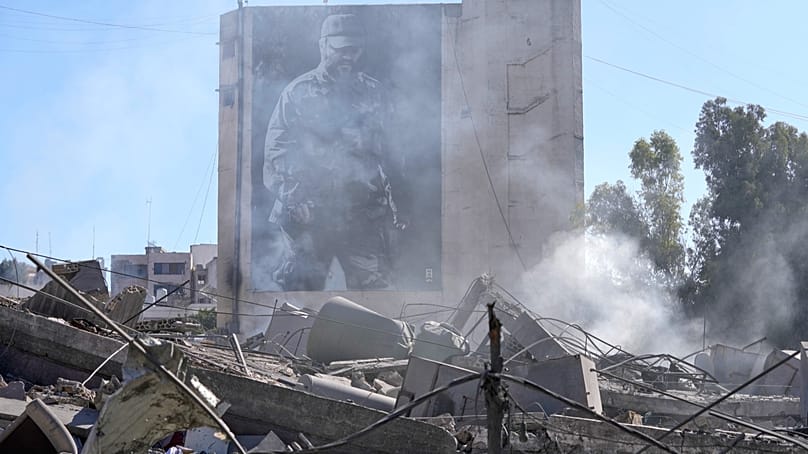
Israel wants Hezbollah to be 'completely disarmed'
The government could summon the Iranian ambassador and close the embassy in Beirut, in addition to sacking the two Hezbollah ministers in the cabinet. Lebanon can take a few steps without international assistance or approval and establish its ability to act as a sovereign state.
To that purpose, the Lebanese decisionmakers need to be made aware of two main dynamics: First, the war in Lebanon will not end if the war in Iran ends, and second, the war in Lebanon is not going to be concluded with another ceasefire agreement. This time around, Israel wants to see Hezbollah completely dismantled.
Lebanon's President launches new initiative in talks with EU
If Lebanon wants to avoid a long-lasting Israeli invasion and a prolonged war with Hezbollah, sitting aside and hoping for international mediation will not work this time.
Eventually, Isreal should also realise that Hezbollah will only be undone in two scenarios: a regime change in Iran, or a complete dismantlement of its financial system and political power.
In the second case, Israel will eventually need the Trump administration's help to push Lebanon to do more in this regard, now that the Lebanese President Joseph Aoun had called for direct negotiations between Lebanon and Israel.
During a virtual meeting with European Union officials, Aoun launched his initiative with the goal of reaching a permanent security agreement between the two countries.
The international community could build on this unprecedented proposal to reach a peace agreement between Lebanon and Isreal, one that would end the conflict for good.
Hanin Ghaddar is the Friedmann Senior Fellow at the Washington Institute for Near East Policy, where she focuses on Shia politics across the Levant. She is the author of Hezbollahland: Mapping Dahiya and Lebanon's Shia Community.