






























Trump says attacks on Iran could last several more weeks despite soaring energy costs. The US president says he is assembling a coalition to help police the Strait of Hormuz and escort stranded oil vessels out to address international energy supply crises caused by the war.
US President Donald Trump says he has demanded seven countries to join an international coalition aimed at policing the chokepoint Strait of Hormuz on Sunday, sending warships and military assets to help escort oil vessels through as global crude prices continue to reel from the war in Iran.
 ADVERTISEMENT
ADVERTISEMENT
ADVERTISEMENT
The US president declined to name the countries heavily reliant on Middle East crude that his administration is negotiating with to join the initiative amid Iranian attacks, which have effectively closed the crucial waterway, through which around one-fifth of global oil normally flows.
“I’m demanding that these countries come in and protect their own territory, because it is their own territory,” Trump told reporters about Air Force One, claiming the shipping channel is not something Washington needs because of its own access to oil.
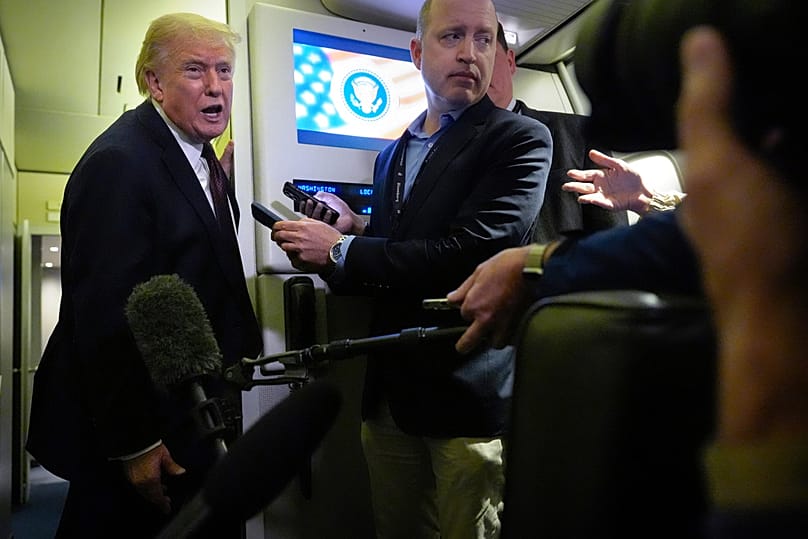
Trump stressed that China gets about 90% of its oil from the strait, while the US gets a minimal amount. He declined to discuss whether China will join the coalition.
“It would be nice to have other countries police that with us, and we’ll help. We’ll work with them,” he said. The US president has previously appealed to China, France, Japan, South Korea and the UK to join US forces in policing the strait.
Iran's Foreign Minister Abbas Araghchi earlier told US media outlets that Tehran has been “approached by a number of countries” seeking safe passage for their vessels, “and this is up to our military to decide.”
He said a group of vessels from “different countries” had been allowed to pass, without providing details. The top Iranian diplomat noted that the strait remains open to all “except the United States and its allies.”
No promises made
Several countries reportedly involved in Trump’s plans have commented on the proposal, but have no resolutely committed their support towards the initiative.
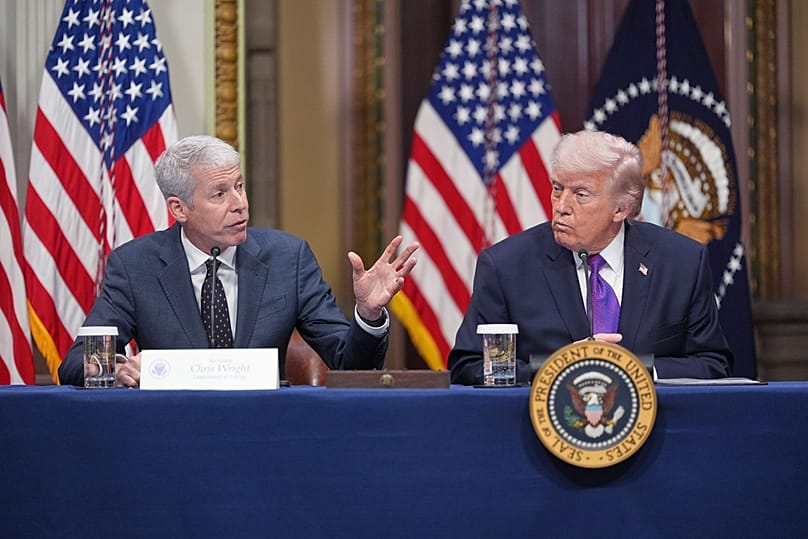
US Energy Secretary Chris Wright earlier mentioned that he has been “in dialogue” with some of the countries Trump had mentioned previously, and said he expected China “will be a constructive partner” in reopening the strait.
A spokesperson for China’s embassy to the US, Liu Pengyu, said that “all parties have the responsibility to ensure stable and unimpeded energy supply” and that China would “strengthen communication with relevant parties” for de-escalation.
South Korea’s Foreign Ministry said it “takes note” of Trump’s call and that it “will closely coordinate and carefully review” the situation with the US.
Expectations are high that Trump will ask Japan directly when Prime Minister Sanae Takaichi meets him on Thursday at the White House.
France previously said it is working with countries — President Emmanuel Macron mentioned partners in Europe, India and Asia — on a possible international mission to escort ships through the strait but has stressed it must be when “the circumstances permit,” when fighting has subsided.
Trump has reportedly also spoke with UK Prime Minister Keir Starmer about the issue, but indicated to reporters that London may still be reluctant to join.
“Whether we get support or not, but I can say this, and I said to them: We will remember,” Trump said.
Attacks continue to intensify
Meanwhile, US and Israeli attacks on Iran are continuing as the war enters its 17th day, with both countries reporting successful strikes on critical infrastructure and military positions, which they say is continuing to cripple Tehran’s offensive response capacity.
US Defence Secretary Pete Hegseth reported in a Pentagon briefing that Iran’s missile strikes have reduced by up to 90% while their drone attacks took a plunge of around 95% as Washington continues to target their ballistic missile command centres and drone manufacturing facilities.
Israeli military spokesperson, Effie Defrin, claimed similar successes as he addressed media outlets on Sunday.
“Until now, we have attacked more than 700 targets of the missile array in real time, we succeeded in reducing the firing,” said Defrin.
“We have taken out of use more than 70% of the ballistic missile launchers. All of the UAVs that were launched from Iran toward the territory of Israel until now were intercepted by the air force. We continue the hunt against the missiles and the launchers all the time.”
Deffrin says Israel has struck more than 2,000 targets across the country and over 10,000 different munitions throughout the course of the war, now in its third week. These targets have also included Iranian nuclear sites, which were previously attacked in a US-Israeli operation last year.

Still, Iran continues to fire missile and drone barrages at Israel on a daily basis in its retaliatory attacks. Their response also continues to target countries in the region, with Gulf Arab states reporting new barrages targeting infrastructure, energy sites and civilian areas.
The war has killed more than 1,300 people in Iran, with the country’s health ministry adding that women and children making up at least 445 of the deceased.
In Israel, 12 people have been killed by Iranian missile fire and dozens more have been injured, including three on Sunday. At least 13 US military members have been killed, six in a plane crash in Iraq last week.
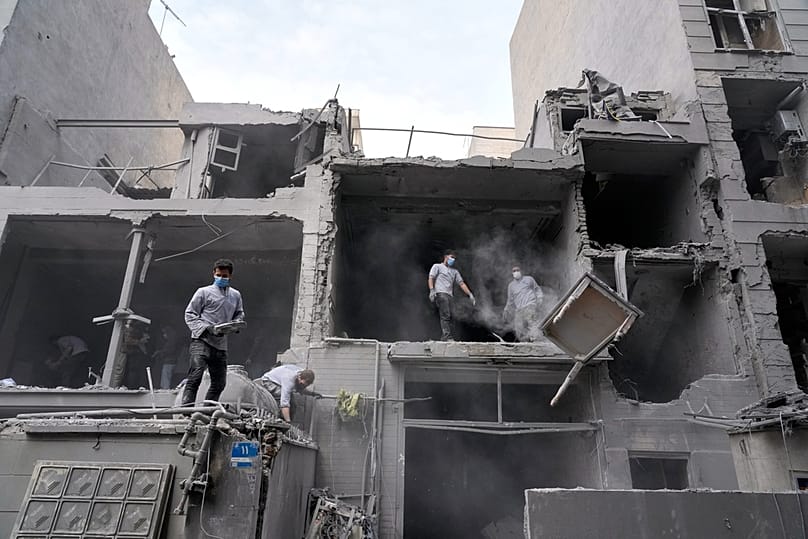
Meanwhile the death toll in Lebanon has soared past 820, according to the health ministry, as intensive Israeli attacks continue to strike the country, claiming to target what it says are Iran-backed Hezbollah positions.
The UN has warned of an unfolding humanitarian catastrophe in Lebanon, where close to one million people have been internally displaced since Israeli attacks started shortly after the US and Israel fired the opening salvo in Iran on 28 February.