




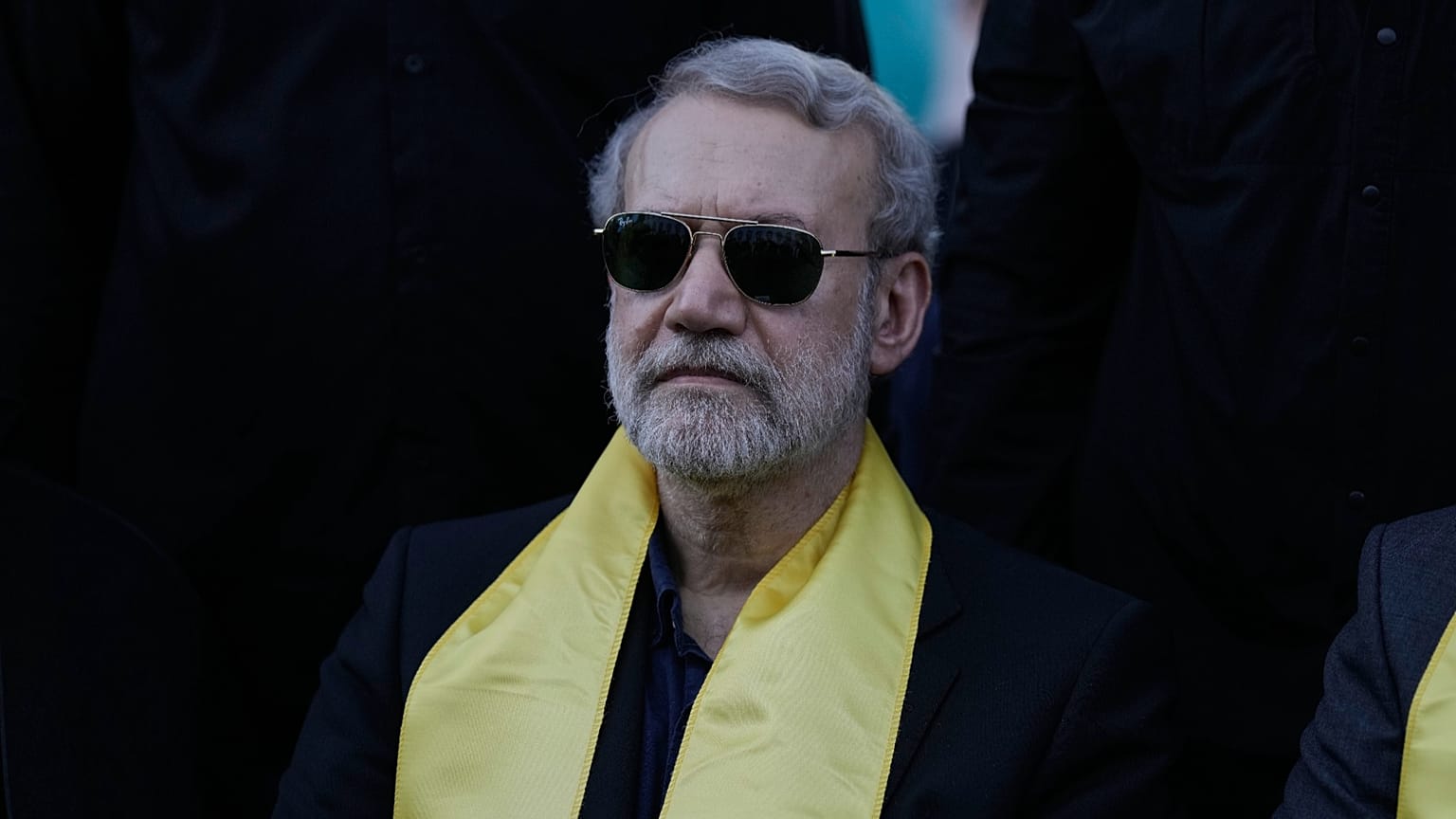













Although Ali Larijani could not have succeeded Ali Khamenei and holds no position in the interim leadership council, his current status makes him one of top targets for elimination due to the immense power he wields.
Iran's security chief Ali Larijani issued a veiled threat to US President Donald Trump on Tuesday, warning him to be careful "not to be eliminated" and saying Tehran was not afraid of his "empty threats."
 ADVERTISEMENT
ADVERTISEMENT
ADVERTISEMENT
"Iran is not afraid of your empty threats. Even those greater than you could not eliminate the Iranian nation," said Larijani in a post on X.
"Take care of yourself not to be eliminated," Larijani added.
While it is questionable whether Tehran has the means or the capacity to make good on its words, Larijani's immense stature within the regime should not be underestimated.
While Larijani could never have succeeded the late Ali Khamenei as supreme leader, the veteran Iranian powerbroker has re-emerged as a central figure in Tehran’s security establishment after his son Mojtaba Khamenei was named the new ayatollah.
His closeness to Mojtaba Khamenei became even further apparent after Larijani feted his appointment by the Assembly of Experts, saying on X that the decision had left Israel and the United States “in despair”.
Larijani is widely seen as part of the close circle surrounding the new supreme leader, alongside judiciary chief Gholam-Hossein Mohseni-Ejei, parliament speaker Mohammad Bagher Ghalibaf, Ahmad Vahidi, who has been appointed commander-in-chief of the Islamic Revolutionary Guard Corps on March first, and senior security official and commander of Khatam al-Anbiya Central HQ, Ali Abdollahi.
His comments have also placed him at the centre of the escalating war of words between Tehran and Washington.
Earlier this week, Larijani warned that security in the Strait of Hormuz would not stabilise as long as the conflict with the US and Israel continued, suggesting the strategic oil route could become impassable.
That remark prompted a sharp response from Trump, who warned that Iran would be hit “20 times harder” if it attempted to block the waterway.
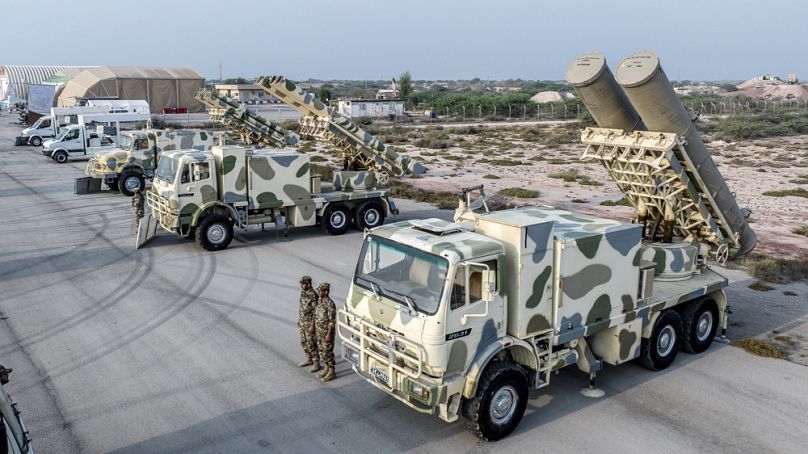
Trump had earlier dismissed Larijani’s threats, saying he did not know who the Iranian official was. “I have no idea what he’s talking about, who he is. I couldn’t care less,” Trump said, adding that Iran had already been forced to back down.
Larijani had previously declared that Trump must “pay the price” for the US-Israeli strikes on Iran and warned that the Islamic Republic would not leave the American president alone after the killing of Ali Khamenei.
Larijani has also threatened major retaliation against the US and Israel.
The two "have burned the heart of the Iranian nation, and we will burn theirs in return," Larijani said after Khamenei's death.
He warned that Iran's armed forces would respond far more severely. "They must know this is not a matter of striking and walking away," he added.
Where does Larijani's power come from?
Larijani, 67, serves as secretary of the Supreme National Security Council and is considered one of the most prominent figures in Iran's political and security apparatus.
A former commander in the Islamic Revolutionary Guard Corps, he served as chief of staff of the IRGC during the Iran-Iraq War.
In recent years, Larijani has represented Khamenei in managing relations with Russia, China and Gulf Arab countries rather than President Masoud Pezeshkian. He travelled to Oman before a recent round of talks with Washington to outline Tehran's framework and conditions.
After Hezbollah and other Shia proxy forces failed to deter Israel, Khamenei assigned Larijani to manage relations with Lebanon and Yemen.
The move was interpreted as a signal aimed at the commander of the Quds Force, the IRGC's external operations wing, since Larijani is a civilian figure.
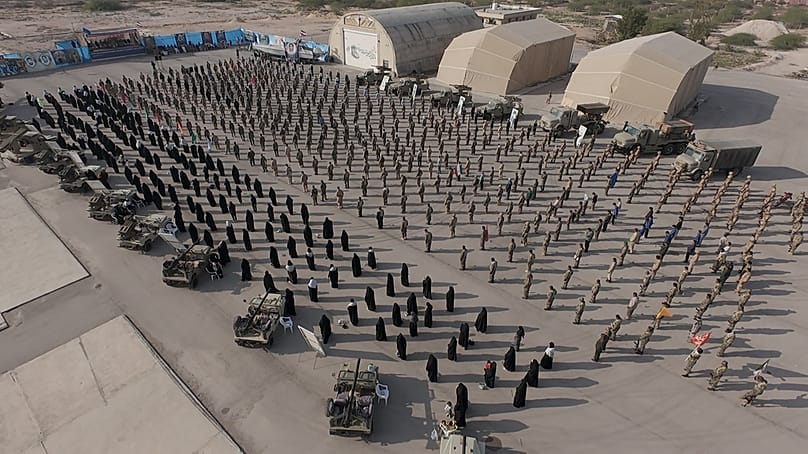
Larijani's role in the killings during the recent protests was significant enough that the Trump administration included him on its sanctions list.
Between 2005 and 2007, Larijani was appointed secretary of the Supreme National Security Council under President Mahmoud Ahmadinejad and oversaw Iran's nuclear file. He resigned or was removed due to disagreements with Ahmadinejad, returning to the position on 5 August 2025.
Larijani served as speaker of the Iranian parliament for 12 years, from 2008 to 2020, and was a key negotiator in Iran's nuclear talks with world powers, playing a central role in the 2015 Joint Comprehensive Plan of Action (JCPA).
He also headed Iran's state broadcaster from 1994 to 2004 and served as minister of culture and Islamic guidance from 1992 to 1994. He attempted to run for president twice, but the Guardian Council rejected his candidacy both times.
Powerful family of 'true believers'
Larijani comes from a prominent clerical family. His father was a high-ranking clergyman, and his father-in-law, Morteza Motahhari, was a key revolutionary theorist and close aide to Ayatollah Ruhollah Khomeini. His brother Sadeq Larijani served as head of Iran's judiciary for a decade.
In the early 2020s, the Larijani brothers' names were linked to corruption allegations, including land grabs, bribery and ownership of 63 personal bank accounts containing billions of tomans.
In 2021, Larijani was tasked with negotiating a 25-year strategic agreement with China valued at several billion dollars.
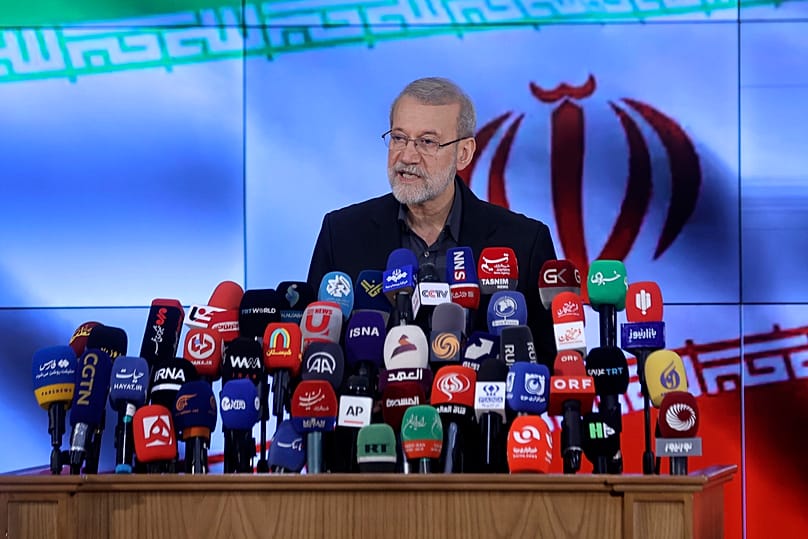
In a televised interview referring to last summer's 12-day conflict, Larijani claimed Israelis "called me during that war and said I had 12 hours to leave the country or they would kill me".
After the EU designated the IRGC as a terrorist organisation, Larijani wrote on X that "armies of countries that participated in the 27-member bloc's recent measure against the IRGC are considered terrorist" according to a parliamentary resolution.
"The consequences of this action will fall on the European countries that took such steps," he warned.
Larijani holds a PhD in philosophy, reportedly focusing on the teachings of Immanuel Kant.
Many of his relatives live in the West, including a nephew who is a university professor in the UK and a daughter who taught in the US until Iranian opposition groups pressured her to leave her academic position.