




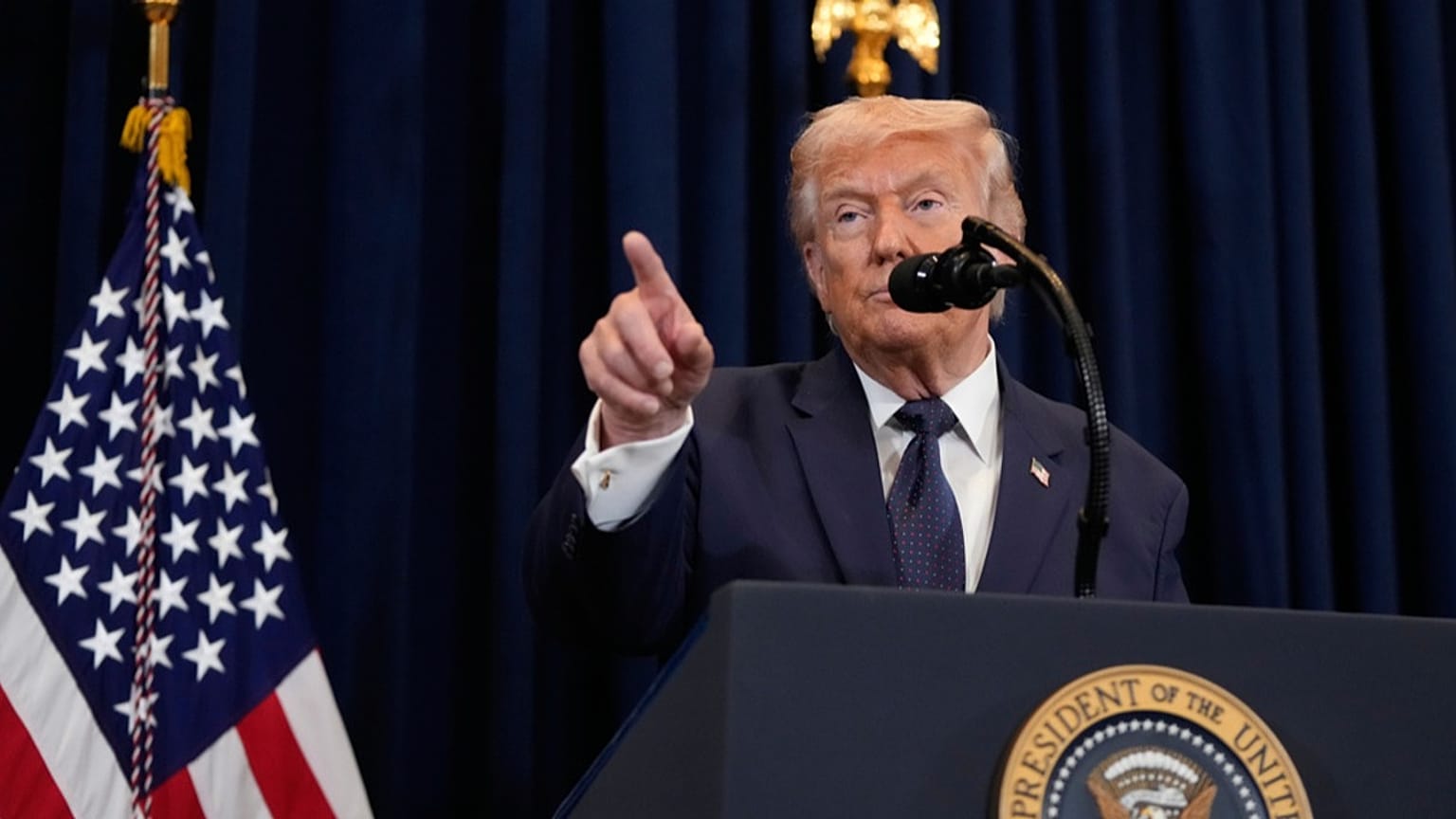














Trump assured Republican lawmakers that the war in Iran could end “very soon” but declined to provide a specific timeline on when that might be. The US president says Washington is achieving “tremendous success” on the ground, but stressed that the war will only end after all war objectives are met.
US President Donald Trump said on Monday that the Iran war could be over “very soon” but left the possibility of an escalation in fighting open if global oil supplies are disrupted by Iran, after global energy prices soared following Tehran’s appointment of a new hardline supreme leader.
 ADVERTISEMENT
ADVERTISEMENT
ADVERTISEMENT
Oil prices briefly shot to their highest level since 2022 a day after Iran selected Ayatollah Mojtaba Khamenei to succeed his late father as Iran’s supreme leader. Investors saw it as a signal that Iran was digging in 10 days into the war launched by the United States and Israel.
But prices later fell and US stocks rose on hopes that the war with Iran may not last much longer.
“We took a little excursion” to the Middle East “to get rid of some evil. And, I think you’ll see it’s going to be a short-term excursion,” Trump told Republican lawmakers at his golf club near Miami, Florida.
“If Iran does anything that stops the flow of oil within the Strait of Hormuz, they will be hit by the United States of America 20 times harder than they have been hit thus far.,” wrote Trump hours later in a post on Truth Social.
“Additionally, we will take out easily destroyable targets that will make it virtually impossible for Iran to ever be built back, as a nation, again — death, fire, and fury will reign upon them — But I hope, and pray, that it does not happen,” he continued.
In an apparent response to Trump’s remarks published in Iranian state-run media, a spokesperson for the paramilitary Revolutionary Guard, Ali Mohammad Naini, said “Iran will determine when the war ends.”
The war has choked off major supplies of oil and gas to world markets and sent fuel prices rising across the US. The fighting has also led foreigners to flee from business hubs and prompted millions to seek shelter as bombs hit military bases, government buildings, oil and water installations, hotels and at least one school.
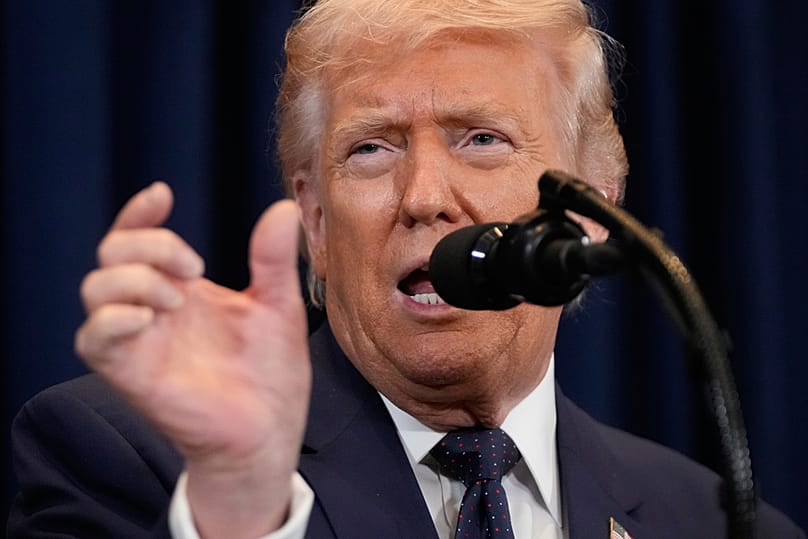
Trump has previously stated that Washington aims to destroy Tehran’s missile programme, end its naval capacity, prevent it from ever acquiring a nuclear weapon and choke its ability to fund regional proxies and armed groups.
Speaking to reporters at a press conference on Monday, the US president insisted Washington is outperforming all war projections and are significantly “ahead of schedule”. He also defended Washington’s “excursion” as righteous, noting that had the US not attacked, Iran would have attempted to “take over” the Middle East.
“They were looking to take over the Middle East. Now, had Operation Midnight Hammer not taken place, that was definite, because they would have had a nuclear weapon within a matter of weeks. But that took place. That was a setback,” he said.
“But look at the number of missiles they were able to buy and make over the last six months. And those missiles were aimed at various countries. And when you look at a thousand, over-a-thousand missiles shot at, like, UAE, they were looking to take over the Middle East. We got there first.”
Trump boasted that his military has already completely taken out Iran’s air force, anti-aircraft equipment, radar and telecommunications systems and multiple layers of their leadership. He however stressed that fighting, as indicated before, will continue until all other objectives are realised.
Attacks on Tehran continued on Monday, in what was described by many as one of the heaviest air raid on the capital since the war broke out on 28 February. Multiple explosions were heard across Tehran, though local media outlets did not report on damages or casualties.
Israel said on Monday that it was carrying out “a wide-scale wave of strikes” on the Iranian city of Isfahan, as well as Tehran and in southern Iran. The Israeli military said it hit dozens of infrastructure sites, including the drone headquarters of the Revolutionary Guard Corps.
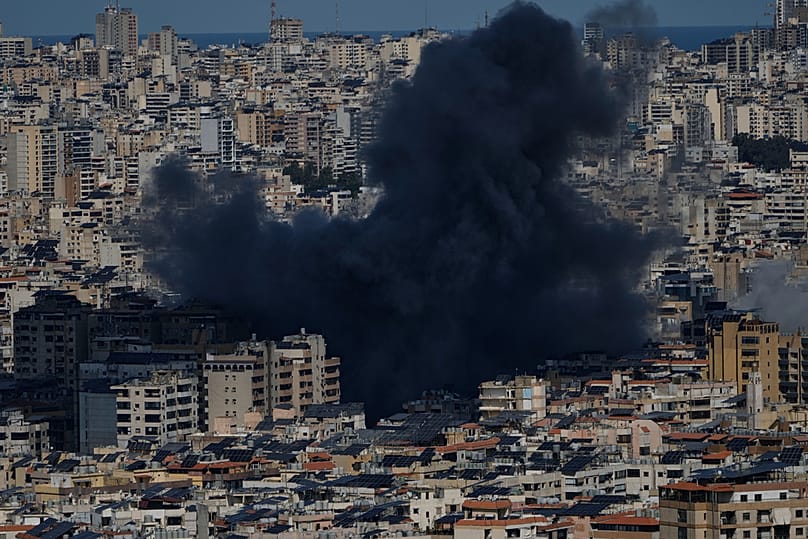
Israel is also continuing to carry out multiple aerial campaigns across Lebanon daily, in what it says are strikes targeting Hezbollah members and infrastructure.
Iran’s retaliatory strikes also continued with force on Monday, as Tehran fired multiple barrages of missiles and drones targeting Israel and several neighbouring Gulf nations. From Lebanon, Iran-backed Hezbollah also fired rockets into Israel on Monday.
Israel’s military alerted the population throughout the day about incoming missiles from Iran, which killed one person on Monday, bringing the death toll on the Israeli side to 11.
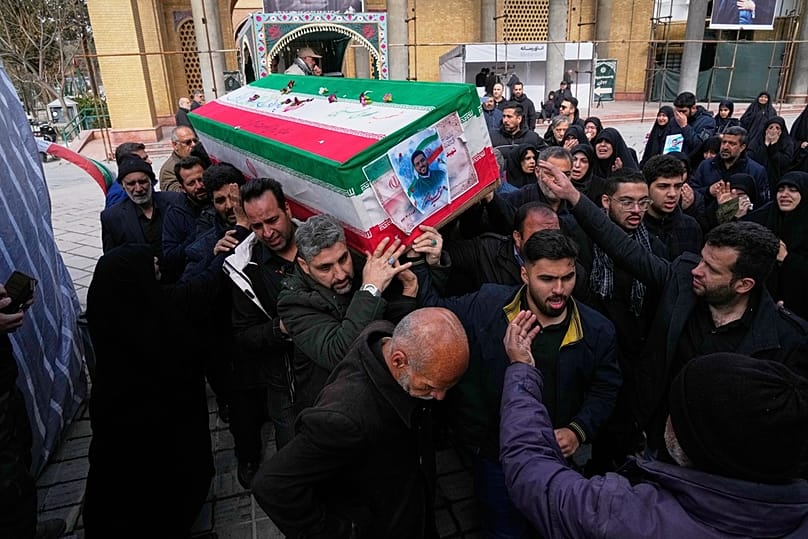
According to latest government figures, the war has so far claimed the lives of at least 1,230 people in Iran and 397 people in Lebanon. A total of seven US service members have also been killed in the fighting to date.