






























Traditional craftsmanship continues to evolve through artisan studios, intimate house museums and revitalised cultural spaces, where heritage techniques intersect with modern design and inspire a new generation of makers.
Creativity in Uzbekistan is part of everyday life. It unfolds in family courtyards, takes shape in small workshops, and fills restored historic spaces with new purpose. Across the country, thread, clay and colour carry stories of memory, while contemporary design gives them renewed meaning.
 ADVERTISEMENT
ADVERTISEMENT
ADVERTISEMENT
Art rooted in daily life
In Karakalpakstan, artistic traditions are closely tied to community and landscape. A house in Nukus that once belonged to a well-known Karakalpak painter now serves as a museum and creative space, where visitors can explore decades of work and meet local artists.
“My father was one of the founders of the Karakalpak contemporary art school,” says artist Gulmira Serekeeva. “He painted everyday life, ceremonies, holidays, national costumes and food. Through his work, our contemporary art began to reflect the ethno-culture of the Karakalpak people.”
The museum preserves paintings from the 1960s to recent years, spanning realism, impressionism and experimental techniques. Visitors can also see traditional household items, 19th century crafts and yurt decorations, linking fine art with everyday heritage.
Embroidery as identity
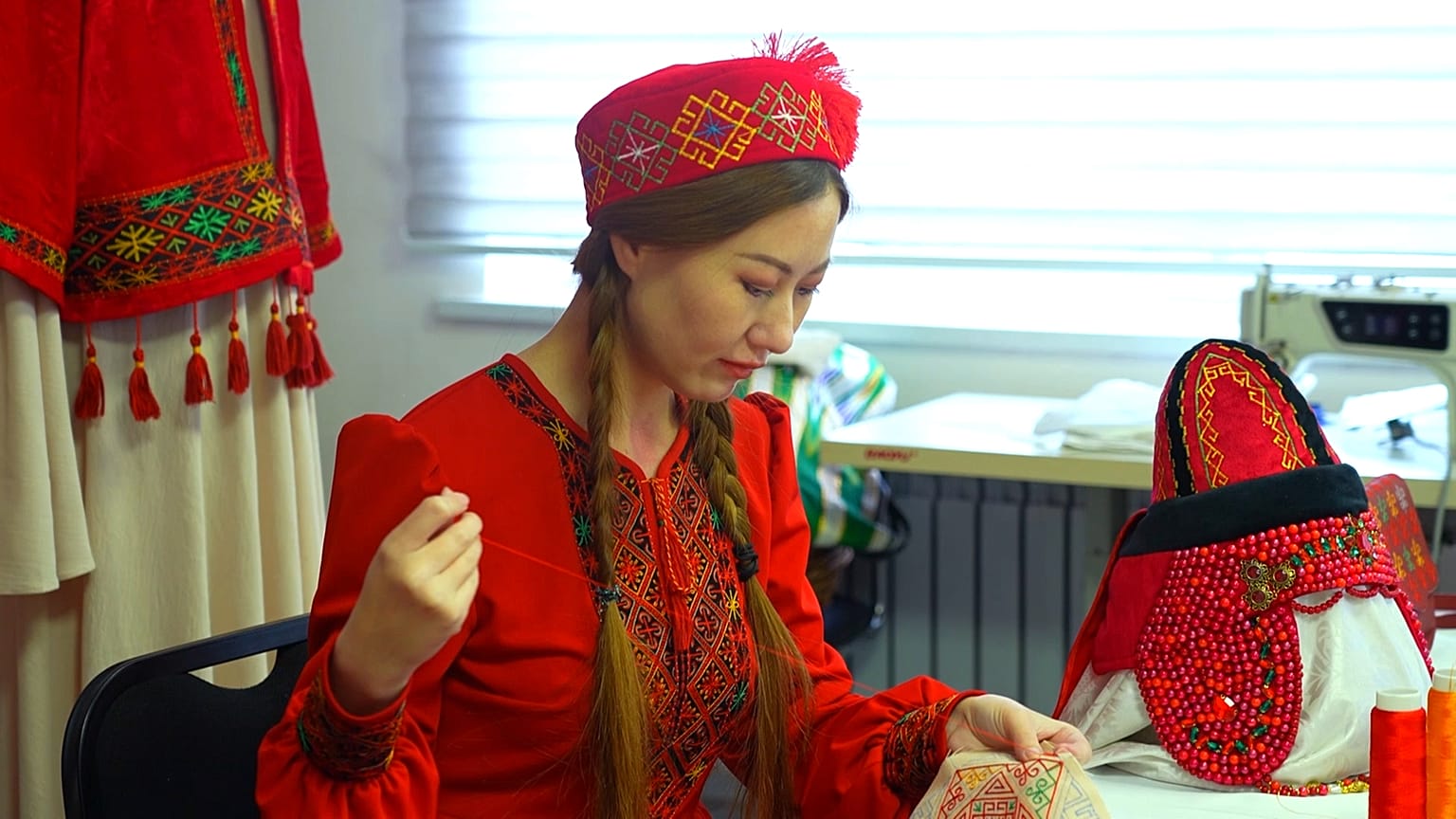
Not far from the museum, women continue the tradition of suzani embroidery. Patterns such as ram’s horns, musical instrument motifs and camel footprints carry symbolic meaning. Colours drawn from nature, yellow, green and red are combined in compositions believed to protect from the evil eye.
“These works require months of patient hand sewing,” explains craftswoman Gumisay Rametullaeva. “They were once used instead of carpets and hung on walls as decoration. Today they are still worn at weddings and celebrations.”
For many families, embroidery marks life’s milestones. Mekhrigul Amaniyazova continues the tradition passed down from her grandmother and aunt. The saukele headdress, decorated with turquoise and coral-like stones, remains a festive symbol for Karakalpak brides.
“It is sewn by hand, bead by bead,” she says. “Even today, girls are choosing to wear the saukele again at their weddings.”
Reviving ceramics
Another voice of the region is shaped in clay. Local potter Guzal Guvenova learned painting techniques before turning to ceramics at the Kamoliddin Behzod Institute. Together with her spouse, she runs a family workshop producing household and decorative items.
“In our region pottery once flourished, but later declined,” she says. “Our goal is to revive and develop this tradition again.”
One plate depicts a caravan travelling along the Great Silk Road. The process takes weeks: shaping clay, drying, firing, painting with engobe colors, glazing and firing again. “Pottery requires patience,” Guvenova adds.
Young designers in Surkhandarya
Further south in Surkhandarya, creativity takes another form. In shared workshops, young artisans reinterpret heritage for contemporary audiences.
Jeweller Marjona Shodmonova designs ornaments inspired by national motifs. Some pieces are worn by brides; others are adapted for students and everyday wear. She also creates jewellery in the colors of national flags for international guests.
“These ornaments represent our identity,” she says. “Every country has its own traditions, and crafts help preserve ours.”
Beyond jewellery, she paints portraits and sketches clothing designs. “When you understand art, it leads you to design and architecture,” she explains.
A historic space reimagined
The journey concludes in Tashkent’s historic Okhun Gozar neighbourhood. A restored 18th-century mosque has been transformed into Gozar of Artisans, an initiative supported by the Uzbekistan Art and Culture Development Foundation (ACDF).
“This space was created to bring artisans together and provide a platform to share experience,” says Saidaziz Ishankhojaev, Deputy Chairman of ACDF. “At the same time, it creates an environment that engages the younger generation.”
Located near Chorsu market and historic mahallas, the site preserves architectural elements such as domes and brickwork while introducing modern exhibition and workshop areas. The aim is to give heritage buildings new functions without losing their authenticity.
Visitors encounter wood carving, metalwork, ceramics and jewellery-making side by side. Traditional techniques remain visible, yet their application reflects contemporary design.
“Our visitors will first be impressed by our traditional crafts,” Ishankhojaev says. “At the same time, they see that these crafts are developing and becoming modern. It creates a symbiosis.”
A living tradition
Across Uzbekistan, homes, museums, workshops and restored monuments are becoming new points on the country’s creative map. In Nukus, Surkhandarya and Tashkent, artisans draw on heritage while shaping contemporary culture.
Each region works in its own way through embroidery, clay, metal or paint, yet the intention is similar. Craft here is practiced, taught and reinterpreted. In family workshops and newly restored spaces, tradition continues as part of daily life, carried forward by those who choose to keep it moving.
Read more