




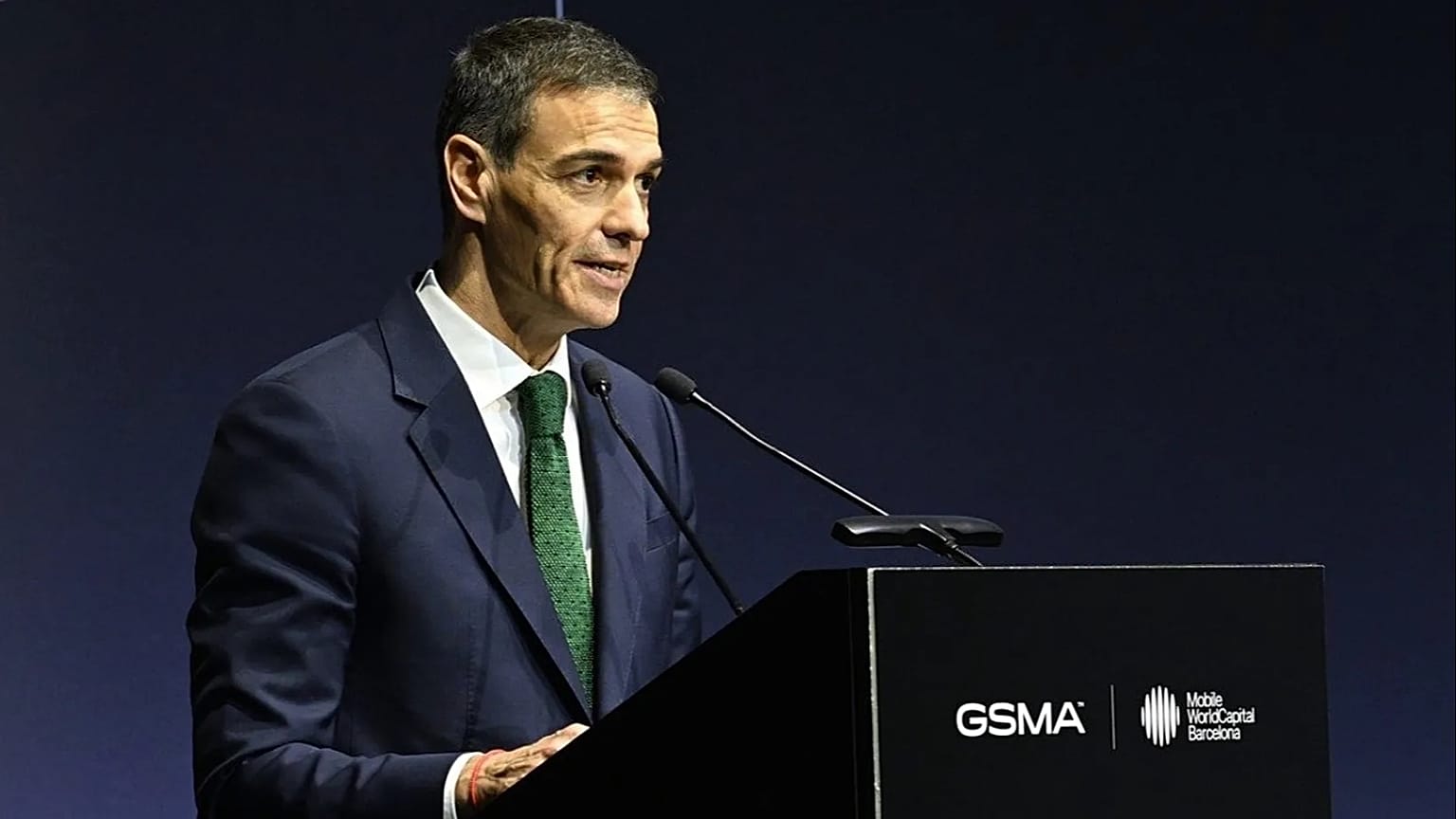














The Spanish prime minister has hit back at Donald Trump's announcement that he will block trade with Spain due to Madrid's reluctance to take part in the US offensive against Iran and allow the US use of the Rota and Morón bases.
The Spanish Prime Minister, Pedro Sánchez, appeared before the media on Wednesday to, he said, clarify his government's "position" in the face of the "crisis" unleashed in the Middle East as a result of the attacks by the United States and Israel against Iran, and after his US counterpart yesterday described Spain as a "terrible partner" and announced that he would block all trade between the two countries.
 ADVERTISEMENT
ADVERTISEMENT
ADVERTISEMENT
"I am addressing you to inform you of the crisis that has broken out in the Middle East, the position of the Spanish government and the actions we are taking," Sánchez began his press conference.
"The position of the Spanish government can be summed up in four words: no to war".
Sánchez's appearance comes after he vetoed the use of Spain's Morón and Rota bases in his campaign against Iran, which has been branded "illegal" by La Moncloa.
The president said his country cannot "respond to one illegality with another", and expressed the "solidarity" of the Spanish people with the nine countries that have suffered "indiscriminate" attacks by the Iranian regime since the initial strikes by the United States and Israel last Saturday.
"Spain's position at this juncture is clear and forceful," Sánchez declared. "It is the same position we have maintained in Ukraine and also in Gaza: firstly, no to the breaking of international law that protects us all – especially the most defenceless, the civilian population – and, secondly, no to assuming that the world can only solve its problems through conflict, through bombs."
"The question is not whether or not we are in favour of the ayatollahs; nobody is," he said. "Certainly the Spanish people are not and, of course, neither is the Spanish government. The question, on the other hand, is whether or not we are on the side of international legality and, therefore, of peace".
'Mistakes of the past'
The Socialist leader called for "not repeating the mistakes of the past", in reference to the war unleashed 23 years ago by George W. Bush against Iraq on the pretext that Saddam Hussein 's regime was developing weapons of mass destruction – something that was eventually proved to be untrue.
According to Sánchez, this war, in which the then US President, George W. Bush, had the support of his British and Spanish counterparts, Tony Blair and José María Aznar, "produced the opposite effect" to that intended by unleashing "the greatest wave of insecurity that our continent has suffered since the fall of the Berlin Wall".
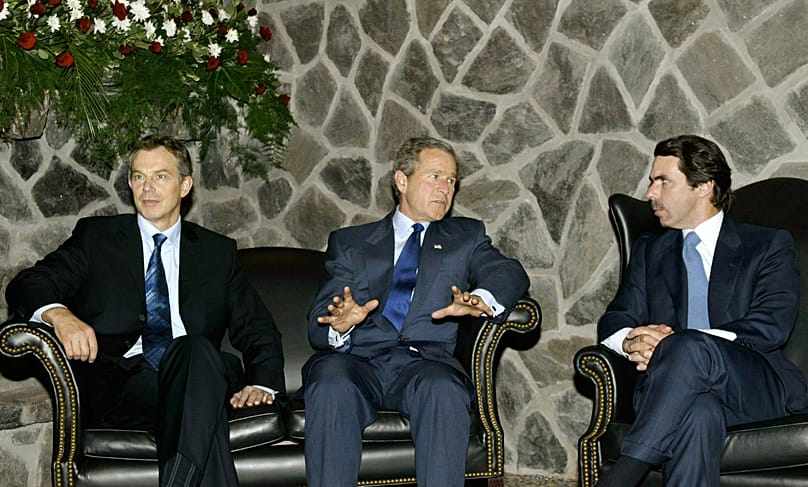
"That was the Azores Trio's gift to the Europeans of the time: a more insecure world and a worse life," Sánchez said.
The Spanish leader acknowledged that "it is still too early" to know how the current conflict in the Middle East will end, but he did state categorically that it is clear that the result will not be "a fairer international order".
For this reason, he stressed that Spain is "against this disaster" and called on the US, Israel and Iran to put an end to the conflict "before it is too late".
"Nobody knows what will happen now," Sánchez insisted. "It is not even clear who launched the first attack, but we have to be prepared, as its promoters say, for this to be a long war".