





























Commemorations are taking place to mourn the deaths of hundreds killed in February 1992 in the town of Khojaly during the Karabakh conflict between Armenia and Azerbaijan.
Azerbaijan's President Ilham Aliyev led Thursday's national commemoration of the deaths of hundreds of Azerbaijanis killed in February 1992 in the town of Khojaly during the Karabakh conflict.
 ADVERTISEMENT
ADVERTISEMENT
ADVERTISEMENT
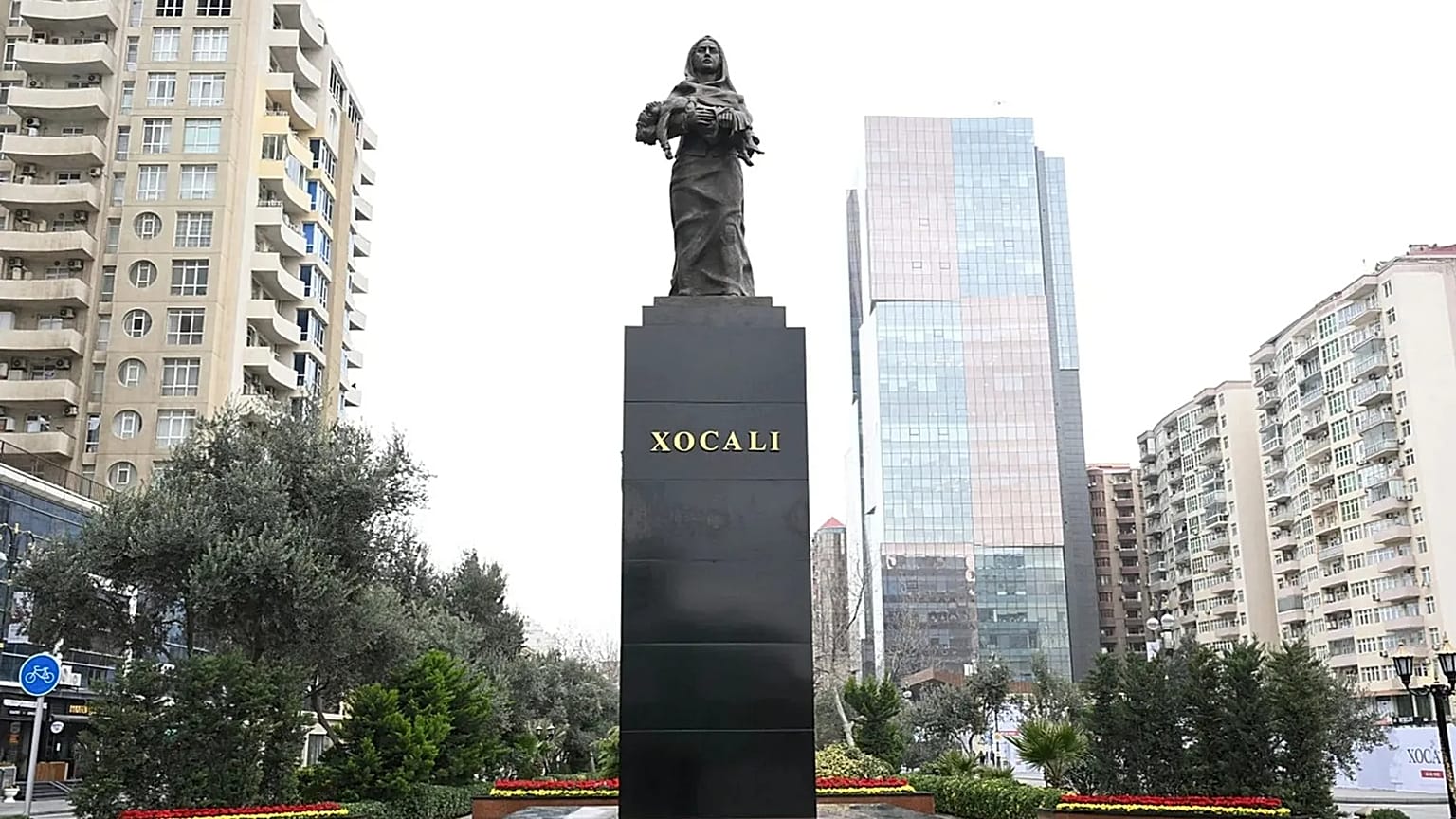
Aliyev inaugurated a Khojaly Genocide Memorial Complex on Thursday, a new monument paying respect to those who died over 30 years ago in what the president called "the greatest tragedy for the Azerbaijani people”.
A minute of silence was observed across the country, and thousands gathered at the Khojaly Massacre Memorial in Baku to pay their respects to the victims of the tragedy during the National Day of Remembrance, as it is called by Azerbaijanis.
Azerbaijan maintains that 613 civilians, including women and children, were killed when Armenian forces assaulted the town with the support of the former Soviet Union's 366th Guards Motor Rifle regiment.
According to Azerbaijani authorities, dozens were reported missing or injured in the massacre, which occurred during the war between ethnic Armenian forces backed by Armenia and Azerbaijani forces over the Karabakh region and surrounding areas.
Armenia has denied the accusations ever since, claiming that the death toll was exaggerated and that the deaths occurred during the fighting between the forces of the two countries. This view is denied by Azerbaijan and international organisations.
Following its own investigation, Human Rights Watch (HRW) said it "placed direct responsibility for the civilian deaths with Karabakh Armenian Forces".
More than three decades on, the victims of the Khojaly tragedy continue to be embedded in Azerbaijanis' collective memory.
This year's commemorations take place in the context of the peace and reconciliation process agreed by Azerbaijan and Armenia, as the two countries agreed to look forward to a peaceful future together following decades of suffering on both sides.