




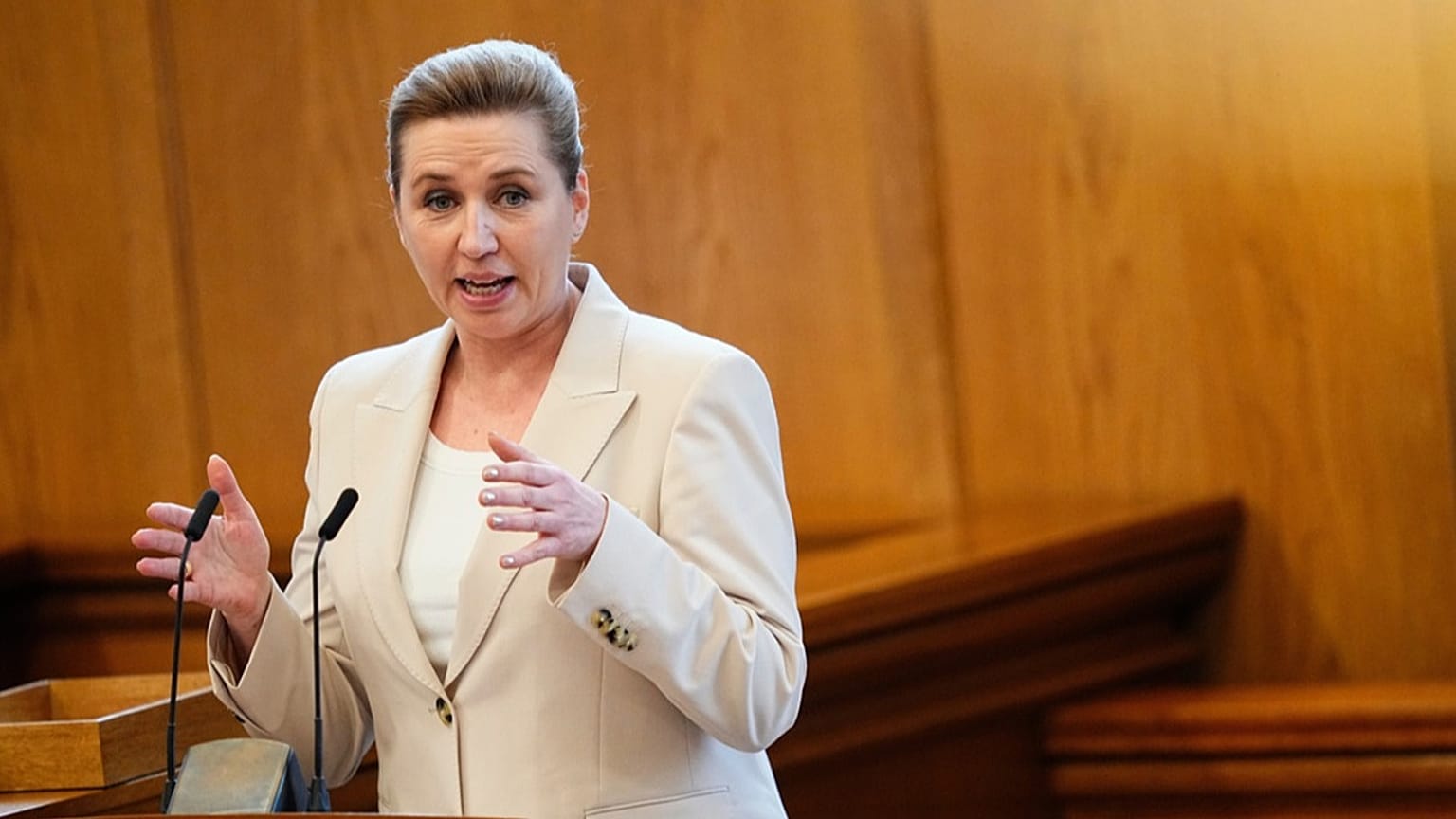














Denmark will hold early elections on 24 March as PM Mette Frederiksen seeks a new mandate after a tense standoff with the US over Greenland.
Danish Prime Minister Mette Frederiksen announced on Thursday that the country will hold a parliamentary election on 24 March, giving citizens a chance to vote several months early after a tense standoff with Washington over Greenland.
 ADVERTISEMENT
ADVERTISEMENT
ADVERTISEMENT
Voters will determine who sits in the Danish parliament, Folketing, and elect its 179 lawmakers.
Most of the seats in the chamber — 175 — are reserved for MPs representing Danish constituencies, with the remaining four being split between lawmakers from the Kingdom of Denmark’s two autonomous territories, Greenland and the Faroe Islands.
“It is now up to you, the voters, to decide what direction Denmark will take over the next four years. And I am looking forward to it,” Frederiksen said as she announced the election to parliamentarians on Thursday.
A general election must be held in Denmark at least every four years, but the sitting prime minister can call one at any time. The last election held in the NATO and EU member state took place in November 2022, resulting in a three-party coalition, crossing the left-right divide.
Frederiksen, a centre-left Social Democrat, has led the country since mid-2019. She currently heads a government with the Liberal Party, led by incumbent Defence Minister Troels Lund Poulsen, and the centrist Moderate Party, led by Foreign Minister Lars Løkke Rasmussen, who formerly held the premier's post.
A major challenge for Frederiksen’s government over the last year has been navigating US President Donald Trump's desire to acquire Greenland, which culminated in his threat last month to impose new tariffs on Copenhagen and several other EU countries.
Trump had argued that Washington needs to acquire the island in the North Atlantic for what he said were national security reasons, as Russia and China pose a serious threat to Greenland and the Arctic region, raising concerns in the White House.
The dispute ended after Trump announced that a framework deal to bolster Arctic security had been agreed upon following talks with NATO chief Mark Rutte on the sidelines of the World Economic Forum in Davos.
After that, US, Danish, and Greenlandic officials began technical talks on implementing the deal. Frederiksen and other prominent Danish officials have repeatedly said that the country’s sovereignty is non-negotiable.
At the Munich Security Conference earlier in February, Frederiksen said she did not believe the crisis had passed, noting that she thinks Washington still wants to annex Greenland.