




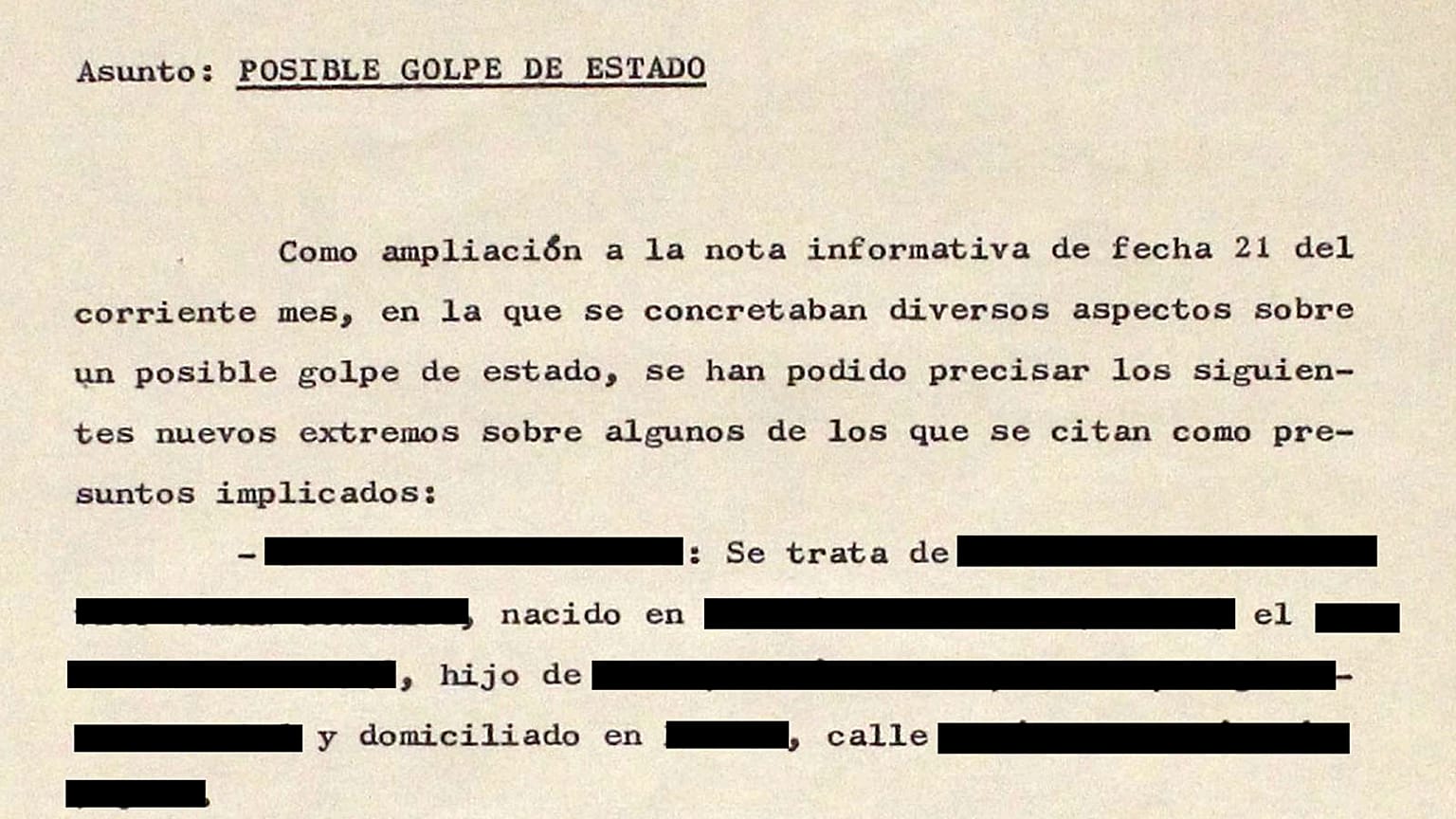













Spain has published 153 declassified documents on the 1981 23-F coup, revealing orders to shoot to kill and King Juan Carlos I’s role in stopping it.
Spain published 153 classified documents on Wednesday relating to the failed military coup of 23 February 1981, also known as 23-F, ending 45 years of secrecy around one of the most dramatic moments in the southern European country's transition to democracy.
 ADVERTISEMENT
ADVERTISEMENT
ADVERTISEMENT
The documents were made available on the government's La Moncloa website from midday Wednesday, following the publication of a ministerial order in the Official State Gazette that lifted the classified status.
The release includes transcripts of telephone conversations between military commanders, intelligence reports from the former CESID intelligence service, and records from the defence, interior and foreign ministries during the 18-hour parliamentary hostage crisis which collapsed shortly after it was denounced by the king.
The release represents around a quarter of the total documentation located so far, according to the government. The documents are transcripts only and do not include audio recordings.
Spain's Prime Minister Pedro Sánchez announced the declassification earlier this week, calling it an act to "settle a historical debt with the citizenry" on the 45th anniversary of the 23-F coup attempt.
"Memory cannot be under lock and key," Sánchez wrote on X. "Democracies must know their past in order to build a freer future."
Government spokesperson Elma Saiz said on Tuesday the release represents "all the documentation" found in government ministries relating to the coup.
However, the complete judicial summary of the Supreme Court trial remains classified, as the government has authority only over executive branch archives.
What the documents reveal
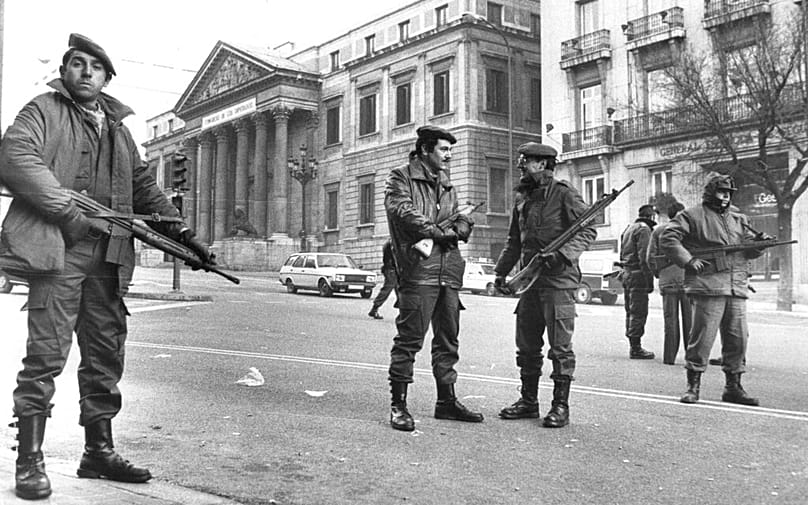
Lieutenant Colonel Antonio Tejero and 200 armed Civil Guard officers stormed the Congress of Deputies on 23 February 1981 during a vote to confirm Leopoldo Calvo Sotelo as prime minister.
The officers held parliamentarians and ministers hostage for 18 hours while General Jaime Milans del Bosch deployed tanks in Valencia.
General Alfonso Armada, who had served in the royal household, attempted to position himself as a saviour who would form a coalition government.
The declassified materials show conversations between coup plotters, including instructions to "shoot to kill" after firing an initial warning shot and references to having "tanks and carriages" ready for deployment.
One document records that King Juan Carlos I heard about the coup via radio at 6:22 pm on 23 February 1981, according to notes from his Secretary General Sabino Fernández Campos.
The Spanish monarch was listening to live coverage of the parliamentary vote to confirm Calvo Sotelo as prime minister when Tejero's forces burst into the chamber.
King Juan Carlos I denounced the coup in a televised address shortly after 1 am on 24 February, calling for the rule of law and democratic government to continue. The coup ended hours later.
The materials also include intelligence reports on pro-coup factions within the military after the failed attempt, showing concern about possible future plots.
A Supreme Court trial sentenced Milans del Bosch, Armada and Tejero to 30 years in prison as the key instigators of 23-F.
The military uprising stemmed from deep unrest within parts of the Spanish armed forces over the country's democratic transition following 40 years of Francisco Franco's dictatorship.
Spain faced an economic crisis causing nearly 20% unemployment and 16% inflation, while the military hardliners rejected the new political model and believed that strong authority was essential for governing.
They were further irritated by ongoing violence by the Basque separatist group ETA, complications over a territorial reorganisation that would grant further autonomy to regions, and the increasingly diminished influence of the military in society.
Spain to rework law on state secrets?
The declassification comes as the parliamentary process for a Classified Information Bill remains stalled in Congress.
The bill, approved by the Council of Ministers in July and sent to parliament on 22 July, would replace the Official Secrets Law of 1968 enacted during Franco's dictatorship.
The proposed legislation would set a 25-year limit on classified information, with 10-year extensions available in exceptional circumstances, and automatic declassification after 10 years for lower-level classified matters.
Opposition parties have criticised the timing of the release, with some accusing the government of political opportunism.
However, historians and civil society groups have welcomed greater transparency since the events surrounding 23-F more than four decades ago.