

















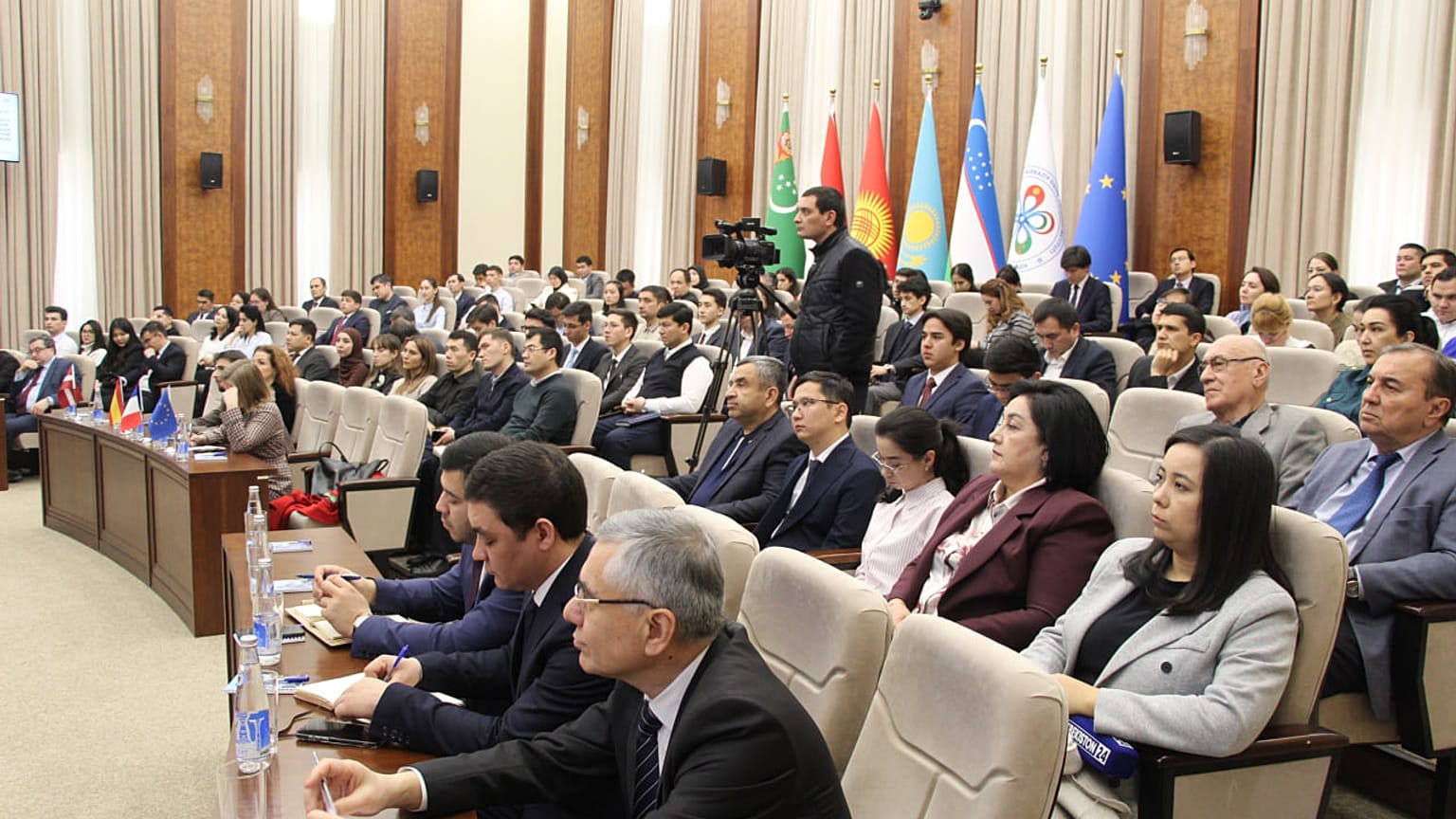














The European Union is expanding its engagement with Central Asia through transport connectivity, energy investments and cooperation on critical raw materials.
The European Union is deepening its engagement with Central Asia, with Uzbekistan emerging as a key partner in a relationship increasingly focused on transport corridors, critical raw materials, and energy cooperation.
 ADVERTISEMENT
ADVERTISEMENT
ADVERTISEMENT
EU Ambassador to Uzbekistan Toivo Klaar said that this has become the backbone of EU-Central Asia relations over the past year.
“Investment is growing, planning is becoming more coordinated, and the corridor is starting to become both faster and economically viable,” Klaar told Euronews at an event in Tashkent, referring to the Trans-Caspian transport route that links Central Asia to Europe.
For the European Union, the Trans-Caspian corridor is not only about moving Chinese goods westwards. According to Klaar, its primary purpose is to give Central Asian countries more options: to export more to Europe, import higher-quality goods, and reduce dependence on single routes or partners.
“It makes no sense to talk to only one side of the Caspian,” he said, explaining why the EU increasingly brings Central Asian and South Caucasus countries together around one table.
This approach was reflected in recent EU-led meetings involving Central Asia, the South Caucasus, Turkey, Moldova, and Ukraine, which are signs of a broader regional framework taking shape.
Raw materials, but with value added
Another growing pillar of cooperation is critical raw materials, which are essential to Europe’s green and digital transitions.
Central Asia holds significant reserves, but the EU insists the partnership should go beyond extraction.
“We don’t want to dig a hole and leave a spoon behind,” Klaar said, stressing that European companies are encouraged to refine materials locally, transfer technology and train local workers.
For the EU, reliable and affordable transport routes are a prerequisite for making these value chains work, linking raw materials, processing, and European industry into a single system.
Energy cooperation has also accelerated. Klaar cited major EU-backed projects, including €900 million in financing from the European Investment Bank for the Kambarata-1 hydropower project in Kyrgyzstan.
Once completed, Kambarata-1 is expected to become one of the largest hydropower plants in Central Asia, strengthening regional energy security and supporting the transition to renewable electricity.
“These investments are about providing sustainable energy for the region,” he said, adding that green transition goals are increasingly shaping EU partnerships worldwide.
A new framework for reform
Much of the discussion also focused on the Enhanced Partnership and Cooperation Agreement (EPCA) between the EU and Uzbekistan, signed during President Shavkat Mirziyoyev’s recent visit to Brussels.
Unlike earlier agreements, Klaar said the EPCA embeds rule of law, human rights, democratic governance, and sustainable development at its core, while introducing modern, WTO-compatible regulations on trade, services, public procurement and intellectual property.
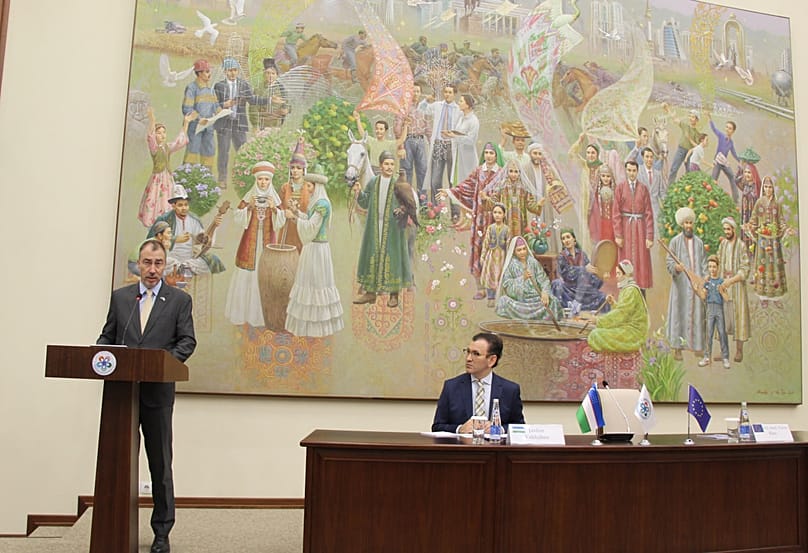
Javlon Vakhabov, Director of the International Institute for Central Asia, described 2025 as a “remarkable year” for EU-Central Asia relations, citing the first-ever EU-Central Asia summit in Samarkand, ministerial meetings, economic forums and the EPCA signing.
He said think tanks play a key role in turning high-level diplomacy into practical outcomes.
“Our task is to add substance through policy advice and recommendations, so that this partnership delivers tangible results,” Vakhabov told Euronews.
While a revised EU strategy for Central Asia is still in the works, Klaar said cooperation on the ground has already changed dramatically since 2019 particularly in transport, connectivity, energy and raw materials.
“The documents may take time,” he noted, “but the reality is already moving.”