

















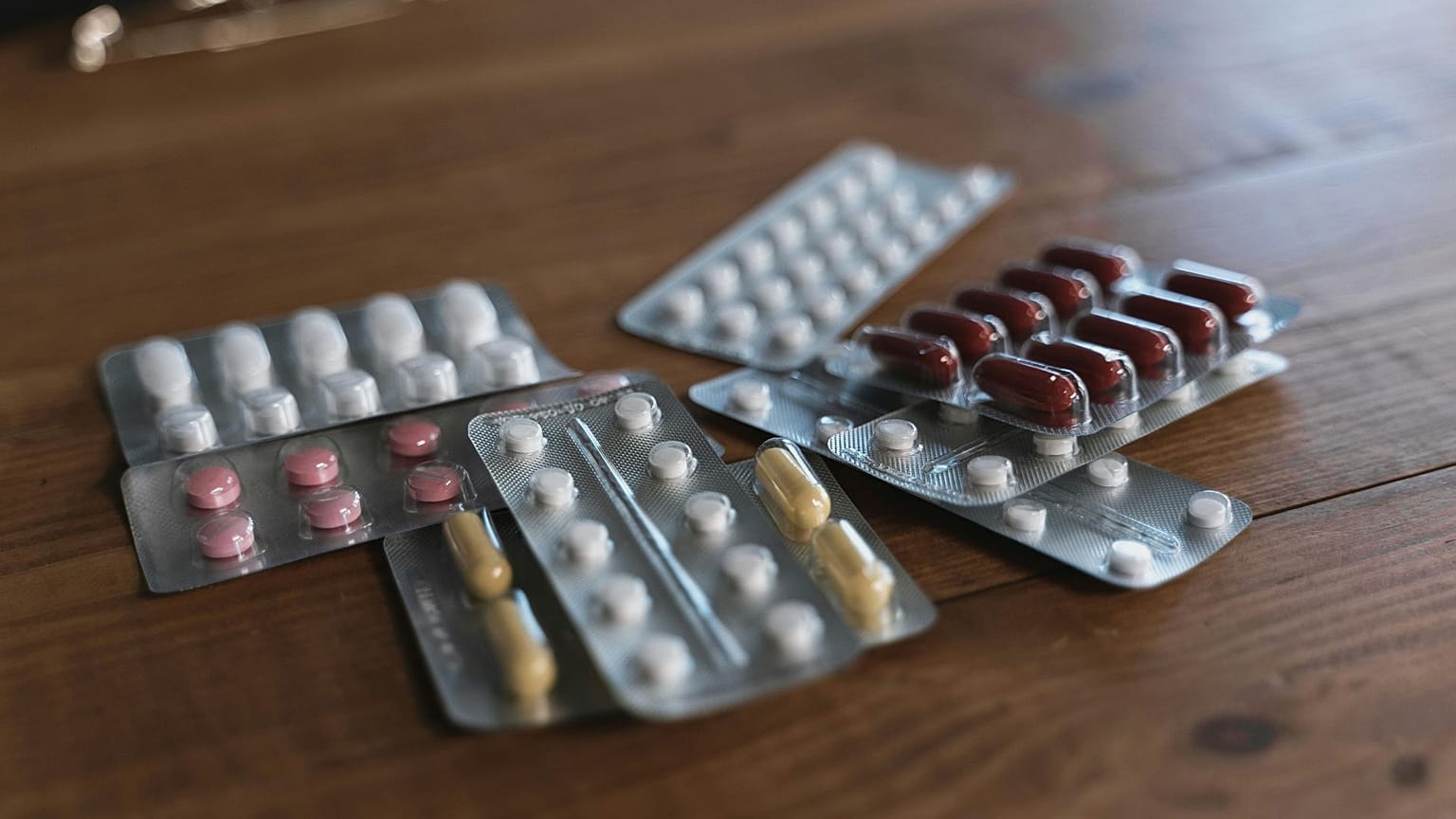













Antibiotic use varies greatly across Europe, and in some countries it is even increasing.
Health experts have called on Europe to curb its reliance on antibiotics as the threat of drug resistance grows – but some countries are using the medicines at much higher rates than others.
Antimicrobial resistance (AMR) occurs when pathogens such as bacteria or viruses evolve to the point where they can evade existing drugs, making infections harder to treat. The overuse of antibiotics can speed up AMR, which causes more than 35,000 deaths every year in the European Union, Iceland, Liechtenstein, and Norway.
As a result, in 2023, the EU Council asked member states to reduce their antibiotic use and ensure that at least 65 per cent of antibiotics used are first-line treatments.
Yet the bloc has not met either of these goals, the European Centre for Disease Prevention and Control (ECDC) warned last month.
Across the EU, people took an average of 20.3 daily doses of antibiotics for every 1,000 residents in 2024. That’s 2 per cent higher than the pre-pandemic baseline in 2019, and significantly above the EU’s target of 15.9 daily doses by 2030.
Antibiotic use also varies greatly across Europe. Last year, daily dose rates ranged from 9.8 in the Netherlands to 29.9 in Greece.
That’s because it takes time for official health guidance to trickle down to hospitals, doctors, clinics, and patients – and some countries are further along in this effort than others, said Evelyne Jouvin Marche, who coordinates scientific research on antibiotic resistance at Inserm, France’s National Institute of Health and Medical Research.
“The rollout between countries is not exactly the same,” she told Euronews Health.
In many countries, these trends are going in the wrong direction. Since 2020, antibiotic use has increased in Austria, Belgium, Croatia, Estonia, Finland, France, Iceland, Latvia, Lithuania, Luxembourg, the Netherlands, Norway, Portugal, Slovenia, and Spain, ECDC data shows.
“The poor progress towards the EU targets on antimicrobial consumption … highlights the need to strengthen efforts to address unnecessary and inappropriate antimicrobial use at all levels of health care,” the agency said in a November report.
The ECDC said countries should update their diagnostic practices to take antibiotic overuse into account and take more steps to prevent and control infections.
Other factors making it harder to combat AMR include the risk of drug-resistant pathogens spreading across borders and Europe’s ageing population, which means more people are vulnerable to infections.
Meanwhile, people can help fight antibiotic resistance by using all of the prescribed medication when they have an infection, rather than throwing it away or saving it for later, Jouvin Marche said.
“You have exactly the dose of antibiotics you need to treat it,” she said.