
















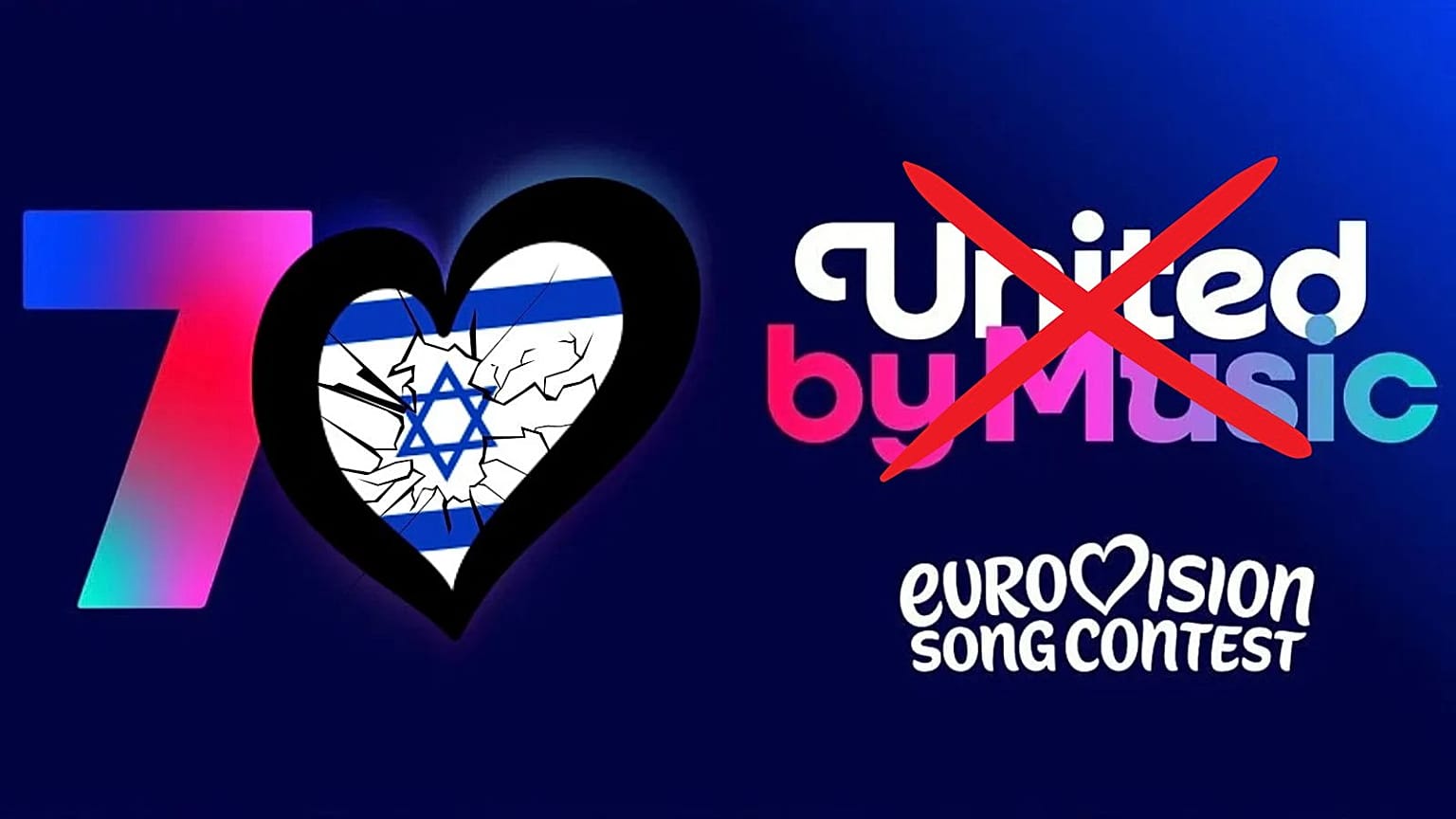













The organizers of next year's Eurovision Song Contest announced they were allowing Israel to compete. This drew quick announcements of withdrawals from several European countries critical of the Israeli offensive in Gaza. Here's everything you need to know and what might be next for Eurovision 2026.
Israel has been given the go-ahead to compete in next year’s Eurovision Song Contest, amid calls for the country’s exclusion due to the war in Gaza and allegations that voting at this year's contest had been manipulated in favour of Israel’s contestant.
At the general assembly of the European Broadcasting Union (EBU), which organises the competition, “a large majority of members agreed that there was no need for a further vote on participation and that the Eurovision Song Contest 2026 should proceed as planned, with the additional safeguards in place,” according to the organisation.
Indeed, in lieu of a vote on Israel’s participation, members from 37 countries were asked to vote in a secret ballot on whether they were happy with the new rules announced last month. 65 per cent of delegates voted in favour of the changes, while 23 per cent voted against and 10 per cent abstained.
Those in favour of the changes included broadcasters from Norway, Sweden, Finland and Denmark, who all said they would continue to support the song contest.
Austria's broadcaster ORF said it was happy with the decision and is looking forward to hosting next year.
Roland Weissman, ORF director-general, said the contest "is a competition for broadcasters, not governments", and that he had personally advocated for Israel's participation.
"In the spirit of fostering cultural dialogue and supporting and strengthening the democratic role of public broadcasters, it was important not to burn any bridges," he said, adding that concerns raised by some members had been taken "very seriously".
Reacting to the EBU’s decision, Israel's president Isaac Herzog posted on X: "Israel deserves to be represented on every stage around the world, a cause to which I am fully and actively committed... I hope that the competition will remain one that champions culture, music, friendship between nations, and cross-border cultural understanding."
However, the decision to keep Israel on next year’s line-up has led four countries – for now – to pull out of Eurovision 2026.
Who won’t be participating in Eurovision 2026... so far?
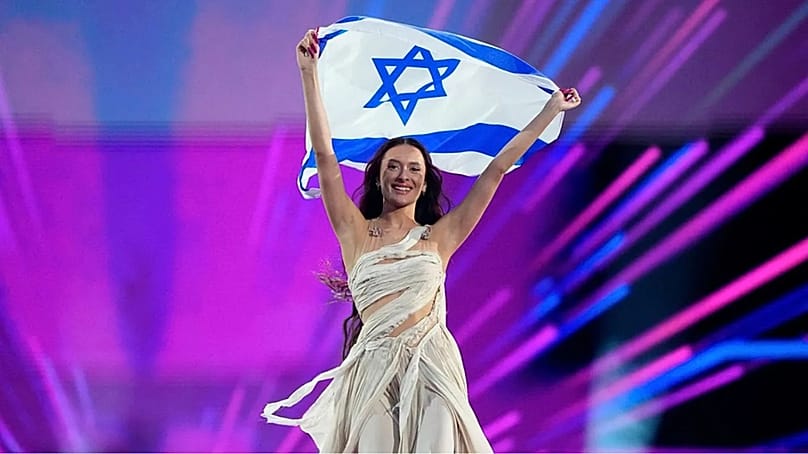
Ireland, the Netherlands, Slovenia and Spain are all set to boycott Eurovision next year. The countries' broadcasters immediately issued statements saying they will not participate in the 2026 contest following the EBU's general assembly meeting yesterday.
Dutch broadcaster AVROTROS said it “concludes that, under the current circumstances, participation cannot be reconciled with the public values that are fundamental to our organisation.”
General director Taco Zimmerman added: "Culture unites, but not at any price. What has happened over the past year has tested the limits of what we can uphold."
Slovenian broadcaster RTVSLO said that taking part “would conflict with its values of peace, equality and respect” and that it was pulling out of the competition "on behalf of the 20,000 children who died in Gaza".
In her address to members before the decision, Natalija Gorscak, RTVSLO board chairwoman, said: "For the third year in a row, the public has demanded that we say no to the participation of any country that attacks another country. We must follow European standards for peace and understanding. Eurovision has been a place for joy and happiness from the very beginning, performers and audiences have been united by music, and it should remain that way."
The Irish broadcaster RTÉ responded to the decision by saying: “RTÉ feels that Ireland’s participation remains unconscionable given the appalling loss of lives in Gaza and the humanitarian crisis there, which continues to put the lives of so many civilians at risk.”
The Spanish broadcaster RTVE said it would not broadcast the contest or the semi-finals and criticised the decision-making process as “insufficient”. They said that the EBU’s decision “increases RTVE’s distrust of the festival’s organisation and confirms the political pressure surrounding it.”
The boycott has been backed by the country’s culture minister, Ernest Urtasun, who said he was “proud of an RTVE that puts human rights before any economic interest.”
It will be Spain’s first time staying away from the contest since 1961 and its absence will have the biggest effect for Eurovision, as Spain is one of the "Big Five" broadcasters - a group which contributes the most towards staging the contest, which also includes France, Germany, Italy and the UK.
Germany has previously said that it would not participate in Eurovision 2026 if Israel was excluded, while France confirmed its participation regardless earlier this year.
The BBC said it would broadcast the contest next year, saying it supports “the collective decision made by members of the EBU.
What happens next?
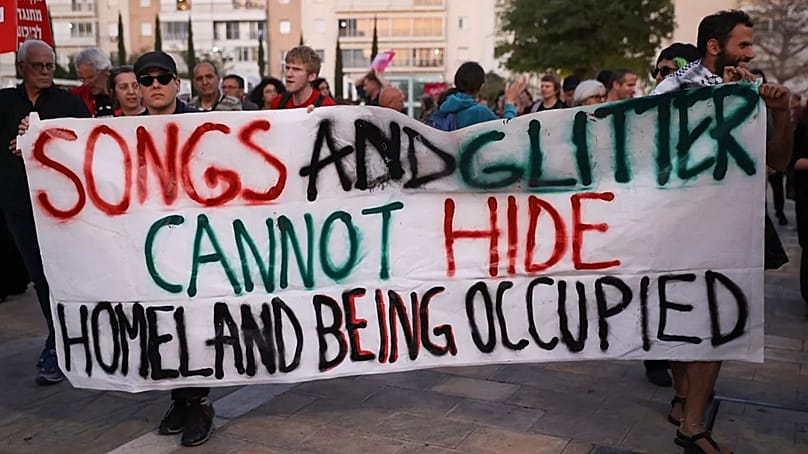
The competition is facing a crisis and the denial of an actual vote on Israel's participation has triggered further chaos.
“Eurovision is becoming a bit of a fractured event," said Eurovision expert Paul Jordan, who holds a PhD on the contest. “The slogan is ‘United by Music’... unfortunately it’s disunited through politics.”
“It’s become quite a messy and toxic situation,” he added, prior to the general assembly.
Some broadcasters have yet to make statements following yesterday’s ruling. Iceland's RÚV, which previously agreed to a motion to recommend Israel be expelled, said it would not make a final decision on its participation until next week.
It remains to be seen if other broadcasters join Spain, the Netherlands, Ireland and Slovenia’s boycott of Eurovision 2026. Members have until mid-December to confirm their participation next year, and a final list will be announced by Christmas.
One thing’s for sure – after two divisive competitions due to Israel’s participation, there is a very real risk that viewing numbers will drop when it comes to the 2026 show.
There are already calls for a global boycott of next year's competition, with many online expressing their dismay and anger at Israel being kept on the line-up. The EBU’s decision could fuel further protests, exposing what some call a blatant show of hypocrisy from the organisation.
Indeed, the contest prides itself on maintaining political neutrality, positioning itself as celebrating music rather than politics. However, the EBU banned Russia in 2022, just days after the invasion of Ukraine. Why should Israel be any different?
Next year’s contest, which will be the 70th Eurovision, is due to take place in Austria from 12-16 May. Will you be watching?