


























Israel's participation in the Eurovision Song Contest is being debated at a two-day meeting of member broadcasters in Geneva starting today. Eurovision could vote on Israel’s involvement as more countries threaten boycott next year’s event in Austria.
It’s crunch time for the Eurovision Song Contest, whose organizers are meeting today and tomorrow to tackle a divisive issue: Should Israel be allowed to participate in the 2026 competition?
 ADVERTISEMENT
ADVERTISEMENT
ADVERTISEMENT
The European Broadcasting Union (EBU), a group of public broadcasters from 56 countries that runs the competition, is holding a general assembly, with many countries calling for Israel to be excluded over the war in Gaza and alleged interference in contest voting, following controversy this year surrounding Israel's second-place finish.
The meeting comes after anti-Israel protesters attempted to disrupt the 2024 and 2025 contests in Basel and Malmö, citing their opposition to the genocide in Gaza. Many have also accused Israel's government of artificially boosting their position through paid-for advertising campaigns and urging people across Europe to vote for their song.
It's not clear whether a vote will be called today or tomorrow, and if a united position is not reached on the issue at EBU headquarters in Geneva, broadcasters may have to decide, on their own or as a breakaway group, whether to take part as individual countries.
“Eurovision is becoming a bit of a fractured event," said Eurovision expert Paul Jordan, who holds a PhD on the contest. “The slogan is ‘United by Music’... unfortunately it’s disunited through politics.”
“It’s become quite a messy and toxic situation,” he added, describing the situation as a “watershed moment” for Eurovision.
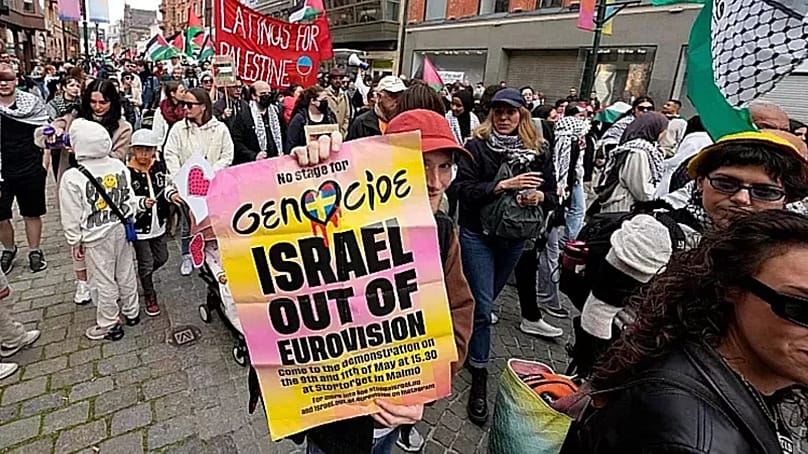
Countries including Iceland, Ireland, Spain, Slovenia and the Netherlands, have threatened in recent months to pull out of the 2026 contest if Israel takes part.
Dutch broadcaster AVROTROS highlighted a "serious violation of press freedom" by Israel in Gaza, and accused Israel of "proven interference" during the last edition by lobbying the public overseas. As for Spain’s public broadcaster, it reaffirmed its pledge to boycott the competition if Israel is allowed to take part.
"Israel has politically used the contest, has tried to influence the outcome, and has not been sanctioned for this conduct," said RTVE president José Pablo López, who called Israel’s actions in Gaza a genocide.
"As President of the (RTVE) corporation, I keep thinking that Eurovision is a contest, but human rights are not a contest," he said.
Others, including Belgium, Finland and Sweden, have also indicated they were considering a boycott over the situation in Gaza.
As for Germany, it has indicated it will pull out if Israel is excluded.
Members have until mid-December to confirm their participation next year, and a final list will be announced by Christmas.
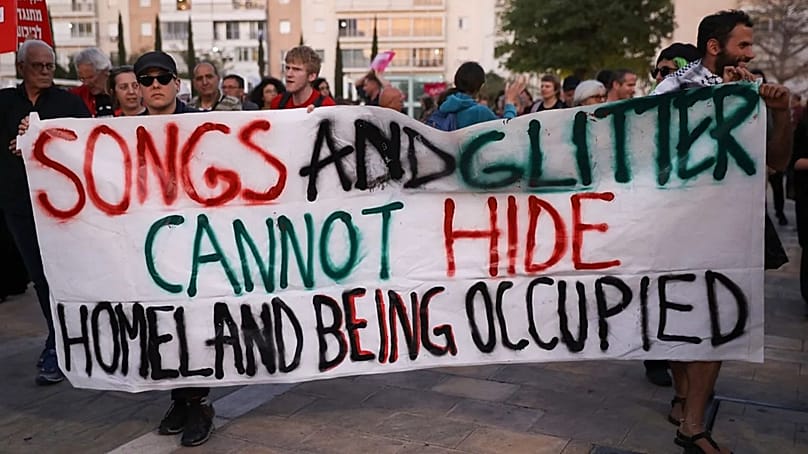
The war in Gaza represents one of the biggest headaches for Eurovision, which draws more than 150 million viewers globally every year.
Eurovision expert Dean Vuletic said a boycott by any EU member country would be significant. “It would be the biggest boycott of Eurovision ever. There have been boycotts in the past, but they have been usually bilateral."
Last month, in an apparent bid to avoid a vote, the EBU announced that it had changed its voting rules to strengthen "trust and transparency".
The EBU said it would "discourage disproportionate promotion campaigns", particularly if they were "undertaken or supported by third parties, including governments or governmental agencies".
It remains to be seen whether these changes will be enough to assuage participants' concerns over Israel's presence on the 2026 line-up.
ORF, the public broadcaster in Austria, which will host the 2026 contest, has expressed hope that a consensus can be reached so that it can host "as many participants as possible".
Eurovision strives to remain non-political. However, many have called out the EBU as hypocrites with regards to the Israeli situation, as Russia was excluded following its 2022 invasion of Ukraine, while Belarus was excluded a year earlier after the contested re-election of President Alexander Lukashenko.
The 70th anniversary edition of Eurovision is due to take place in Vienna, Austria.The finale will take place on 16 May after the semi-finals on 12 and 14 May 2026.