






























France's president says discussions are underway at "the technical level", while condemning Moscow’s refusal to engage in peace talks over Ukraine.
French President Emmanuel Macron signalled on Tuesday that he was ready to restart dialogue with his Russian counterpart Vladimir Putin.
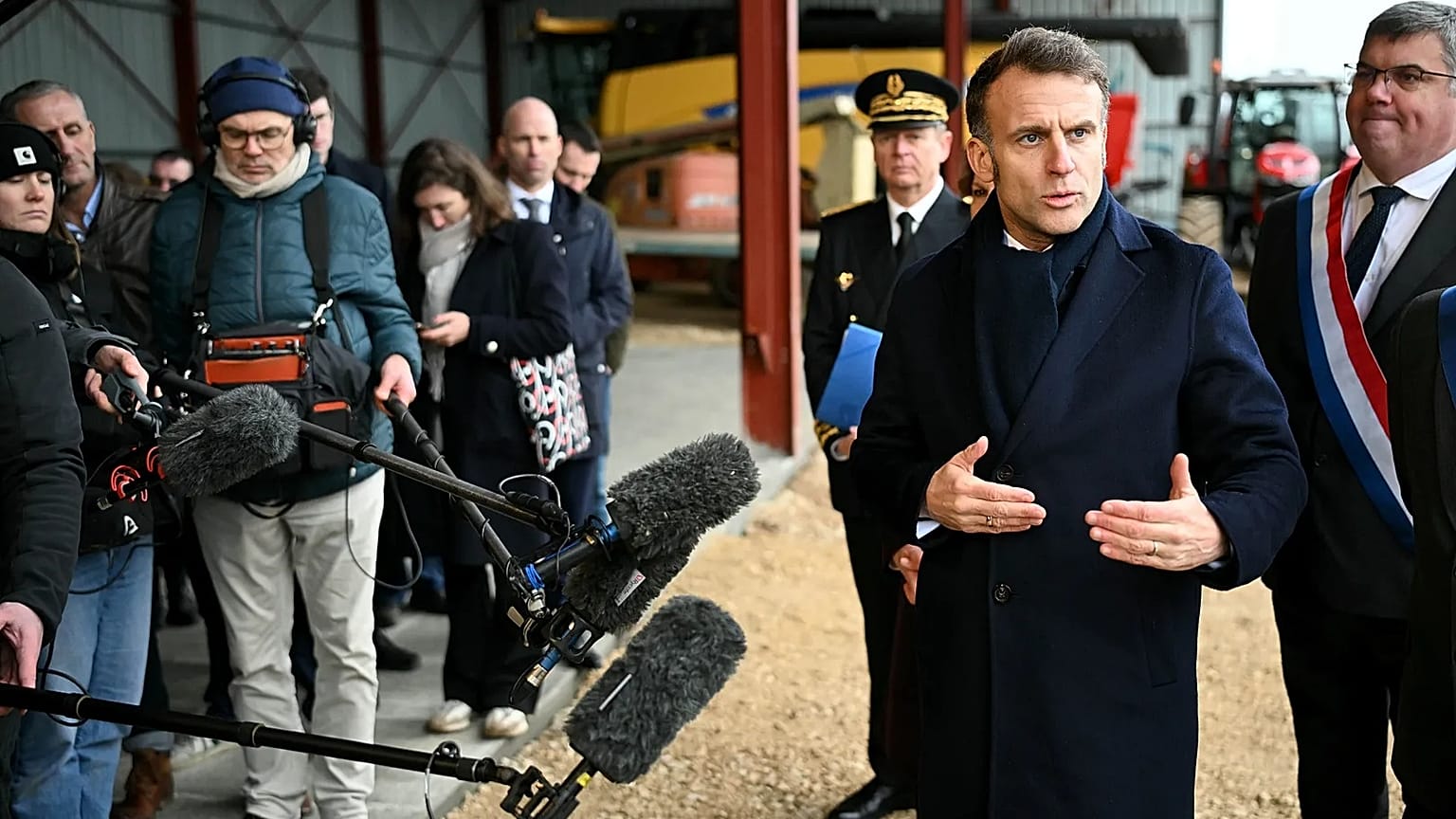
Speaking during a visit to eastern France, Macron said contacts were ongoing at "the technical level". He said the process was being carried out "in transparency and in consultation" with Ukrainian President Volodymyr Zelenskyy, but did not give a timeline.
Macron also condemned Russia's recent attacks on Ukrainian infrastructure, describing them as "intolerable".
On Tuesday, Russian forces carried out large-scale strikes on Ukraine’s power grid amid freezing temperatures across the country. The attacks do not demonstrate "a real willingness to negotiate for peace," Macron said.
Since Russia launched its full-scale invasion of Ukraine almost four years ago, most European leaders have chosen to keep Putin at arm's length.
But the recent rapprochement between US President Donald Trump and the Russian leader has reignited debate in European capitals, which feel sidelined in the peace talks.
In early January, Italian Prime Minister Giorgia Meloni said that "the time has come for Europe to talk to Russia too", calling for the appointment of a European "special envoy" to speak with a single voice.
By contrast, German Chancellor Friedrich Merz reiterated his opposition to reopening diplomatic channels with Putin, citing the Russian president's "maximalist demands".
Last December, Macron said that it would "once again be useful to talk to Vladimir Putin", a statement welcomed by the Kremlin at the time.
But he faced heavy criticism for maintaining talks in the months after Russia's invasion in February 2022, before gradually ending contacts and hardening his stance.
Macron and Putin last spoke in July, holding a nearly two-hour call that focused on Ukraine and the Middle East. It was their first direct communication in almost three years.
Their previous contact, in September 2022, concerned the Russian-occupied Zaporizhzhia nuclear power plant.