

















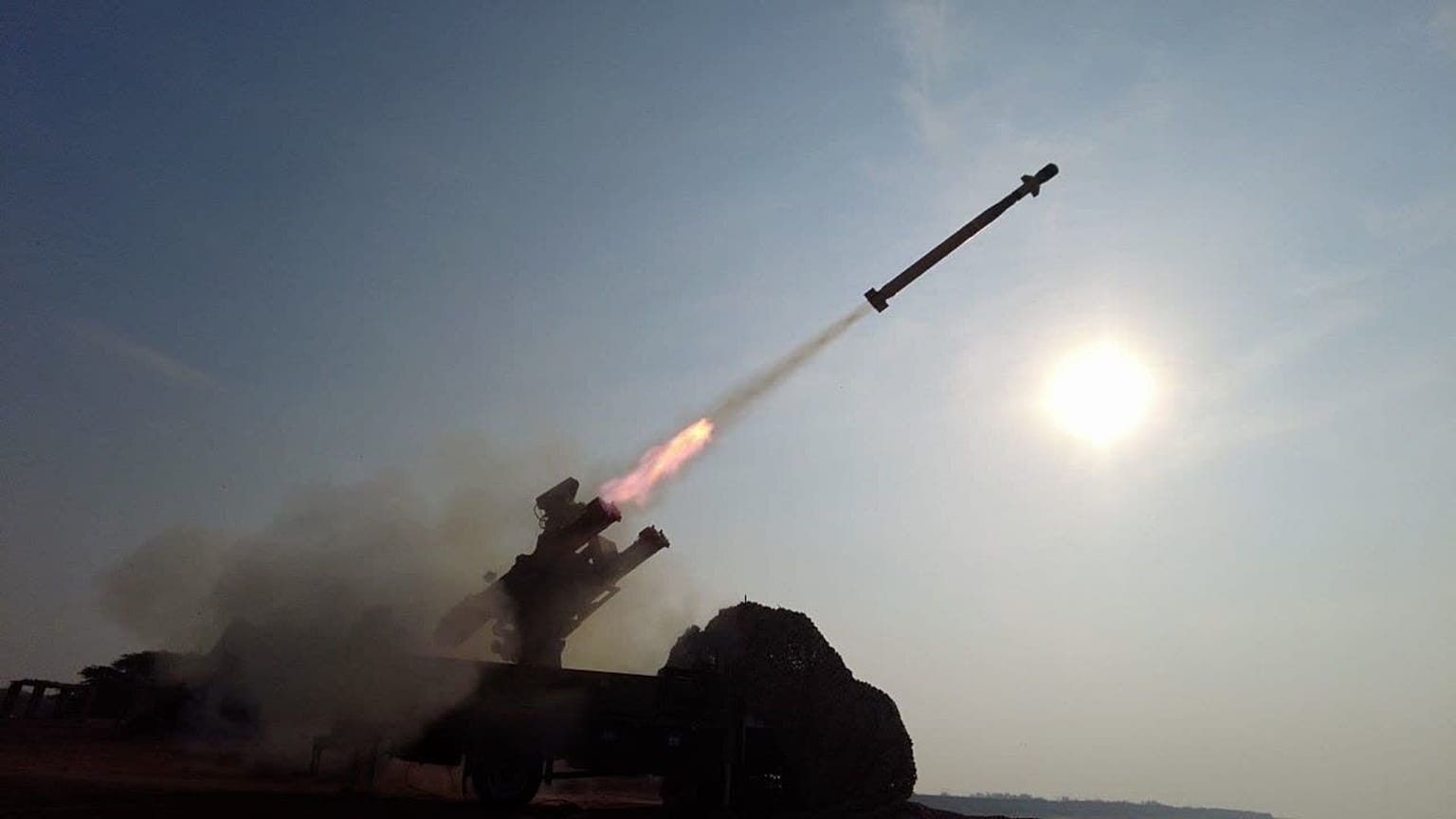














Tehran is rebuilding its missile arsenal at high speed after the 12-day conflict with Israel, aiming to fire 2,000 missiles at once in future escalations, Israeli officials and analysts warn.
Iran has resumed massive production of ballistic missiles six months after the 12-day conflict with Israel, with factories operating "around the clock" to rebuild capabilities destroyed in Israeli strikes, according to Israeli military officials and regional intelligence assessments.
 ADVERTISEMENT
ADVERTISEMENT
ADVERTISEMENT
Israel's top military representative warned lawmakers during an unpublicised meeting of the Knesset's foreign and defence affairs committee that Iran's efforts to rebuild its missile capability are under way at high speed, Israeli media reported.
Western diplomats have raised concerns in recent weeks that Tehran is trying to accelerate the recovery process after Israel targeted "planetary mixers," a key component of solid fuel production for ballistic missiles, in attacks on Iran last year.
Tehran has turned to older methods of producing the fuel, according to regional officials briefed on intelligence assessments cited by Ynet.
Ali Vaez, Iran project director at the International Crisis Group, said Iranian officials told him missile factories are operating "around the clock" and that "if there is another war, they hope to fire 2,000 missiles at once instead of the 500 missiles they fired over 12 days."
"This situation raises the risk of a computational mistake," said one Western diplomat.
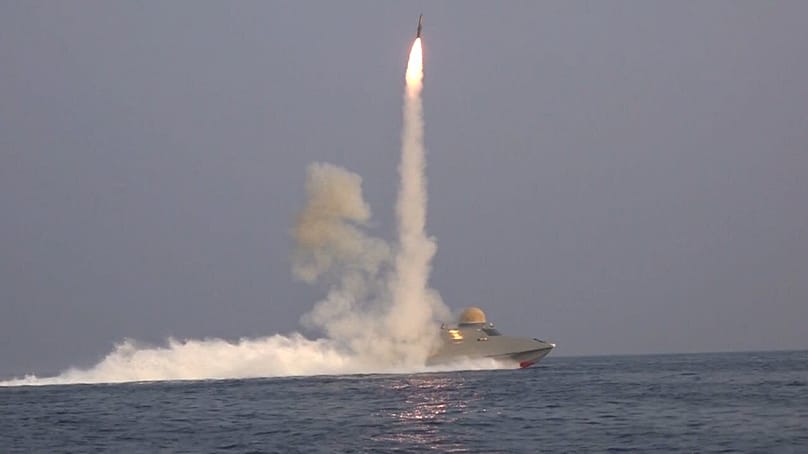
Iran announced on Friday it was holding a major IRGC naval exercise in the Persian Gulf, saying the drills included cruise and ballistic missiles with a range of 2,000 kilometres, as well as suicide drones.
Three air defence systems were deployed in the exercise under electronic warfare conditions. "Utilising artificial intelligence, these systems were able to identify flight and maritime targets in a fraction of the time and hit them with high accuracy," according to Iranian media reports.
Iranian naval units on the first day of the exercise "alerted American ships present in the region and conveyed their decisive message," according to reports, though the exact content of the messages has not been determined and US forces in the Persian Gulf have not commented.
Iran also announced on Friday the end of joint "anti-terrorist" exercises in East Azerbaijan attended by Shanghai Cooperation Organisation member states.
"The joint anti-terrorist manoeuvre Sanhand-2025 demonstrates the resolute commitment of like-minded countries to deal effectively with the threat of terrorism," Mihrdad Kiai, national coordinator of the Islamic Republic of Iran to the SCO, said in a meeting with Piao Yangfan, deputy secretary-general of the SCO.
Israel, through Western mediators, has tried to send a message to Iran that it is not seeking another direct confrontation, according to Western diplomats. Iranian officials, however, have deemed the messages deceptive and rejected them.
Meanwhile, IRGC spokesman Ali Mohammad Naini claimed on Sunday during a speech marking Student's Day that the corps shelled Haifa refinery on two occasions during the 12-day conflict and targeted a Mossad headquarters, killing 36 people.
"If they hit our fuel storage facility in Tehran, we hit the Haifa refinery in two turns five hours later," Naini said. "If they targeted our intelligence centre, we hit the Mossad centre and they killed 36."
Israel said the total killed in Iranian missile strikes during the 12-day conflict was 28.
Naini also claimed the accuracy of Iran's missile strikes was at a level where the negative floor of a 32-storey building, which was Israel's exchange data centre, was precisely targeted.
Israeli response remains uncertain
Raz Zimat, director of the research programme "Iran and the Shiite Axis" at the Institute for National Security Studies in Tel Aviv, called the current situation between Iran and Israel after the 12-day conflict "extremely unstable" and said both sides were now managing the conflict.
"Two scenarios are of concern to Israel; the first is the calculation error of each side which, of course, is less likely. But the more likely scenario is that Iran wants to resume uranium enrichment," Zimat said.
According to the researcher, Israel is still undecided about how to respond to the resumption of Iran's ballistic missile programme and at what point it would consider such actions as crossing a red line.
But unlike the ballistic missile programme, the resumption of uranium enrichment, efforts to acquire a nuclear weapon or any action toward recovering some 440 kilograms of uranium with an enrichment of up to 60% supposedly buried under the rubble of Iran's attacked nuclear facilities would likely lead to an Israeli military response.
Although Iran does not appear to be seeking to rapidly advance its nuclear programme, Tehran's priority is reviving its ballistic missile project, according to Western diplomats.
The programme could dramatically affect the outcome of any potential confrontation, according to US and Israeli officials.