


















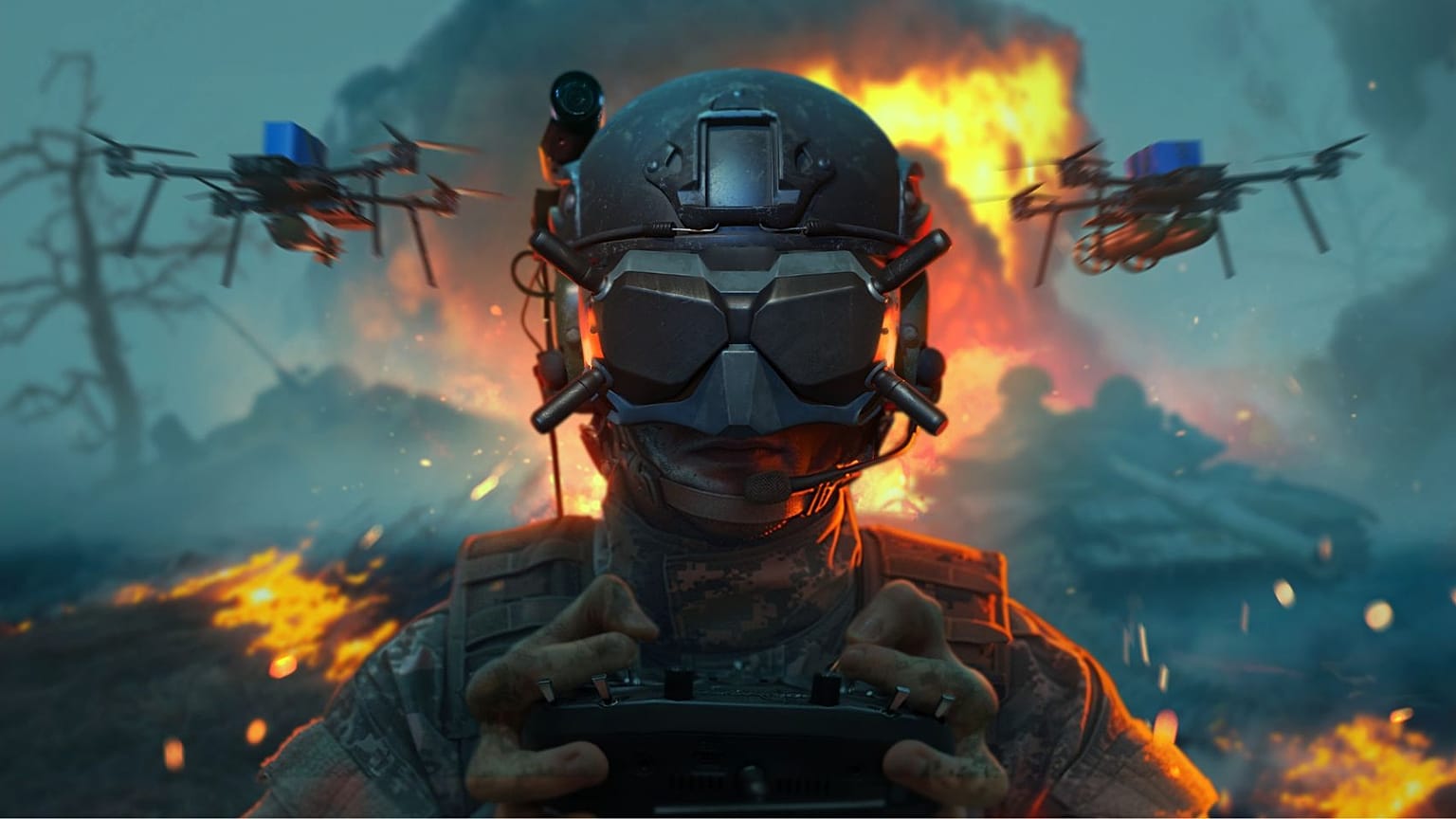













Drones have fundamentally changed modern warfare since Russia's full-scale invasion of Ukraine in early 2022, also becoming increasingly crucial for European armies.
The drone revolution is not just unfolding on the front lines in Ukraine — it is increasingly making its presence felt in the West as well.
Western militaries, including Germany's Bundeswehr, are being forced by Russia's war in Ukraine to rethink their modernisation plans. The focus isn't solely on expensive tanks, as small, agile, and, above all, cost-effective drones are now in high demand.
Just recently, it was announced that the Bundeswehr plans to deploy six attack-drone units in the coming years. "We've already started running tests," said Lieutenant General Dr Christian Freuding, who was appointed Inspector of the Army in October.
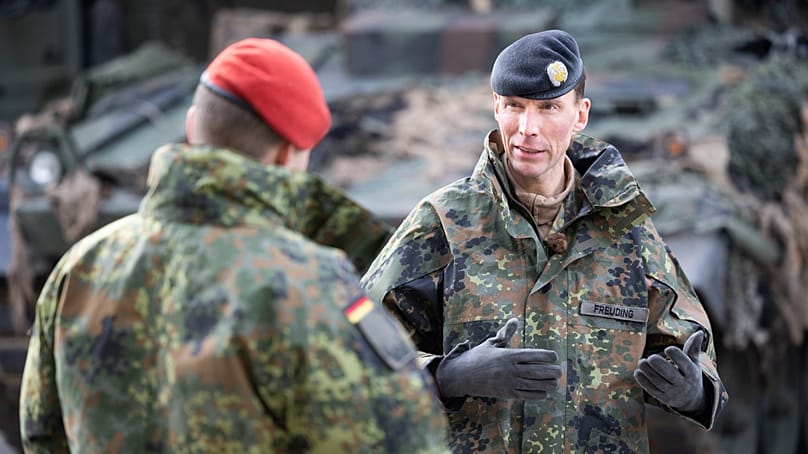
The first medium-range battery is expected to be ready by 2027.
Five more units are planned by 2029, including one company equipped with long-range precision weapons. The test phase Lieutenant General Freuding mentioned involves so-called loitering munitions, also known as "kamikaze" drones.
From the front lines to your living room
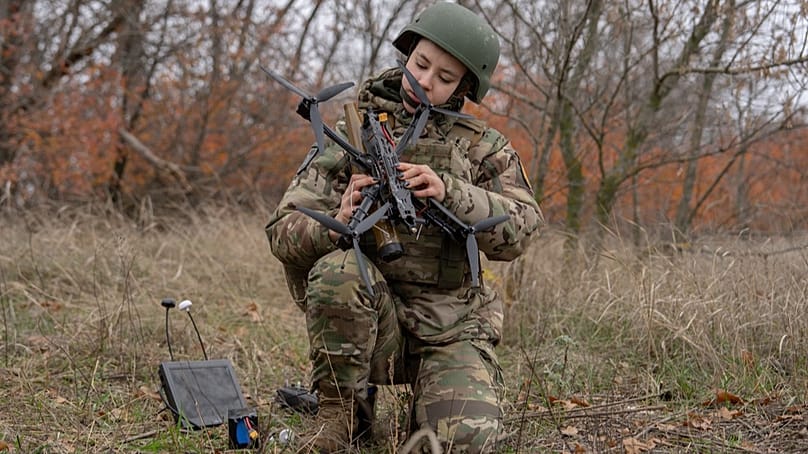
Ukraine is deploying so-called FPV drones, remotely flown from a first-person perspective and used as precision attack weapons. To train soldiers, the military relies on specialised simulation programmes.
For the first time, part of this training toolkit is now available to the public: the Ukrainian Fight Drone Simulator (UFDS) was released on Steam on 10 December. This version is based on the simulator used by the Ukrainian army but has been adapted for civilian users under the name "Starter Edition".
"It's designed for non-military users primarily to give them a basic understanding and experience of operating a combat drone in true-to-life conditions", Oleg, a member of the Ukrainian Drone Fight Group (UFDS), told Euronews.
The aim is to allow "ordinary" users to experience some of the challenges faced by Ukrainian fighters every day, he said.
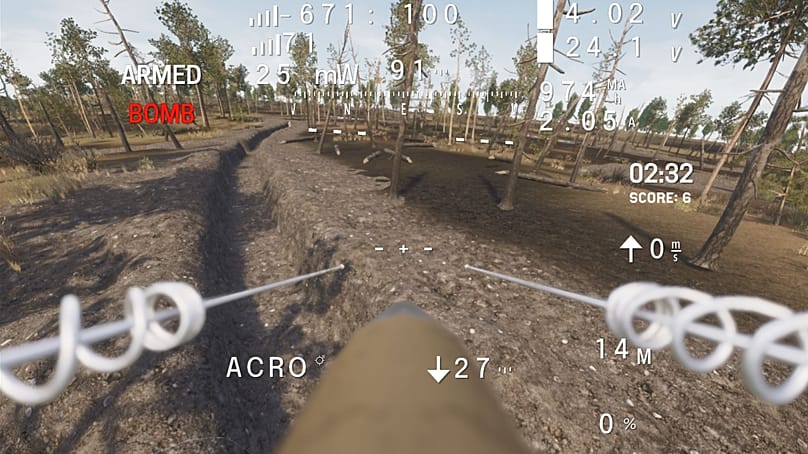
Most missions and features remain restricted to specialised military training centres and are not accessible to the public. For civilians, only a simplified map system, a handful of missions, and certain locked features are available. In the simulator, drones are flown from a first-person perspective.
Users must select payloads, study maps and plan retreat routes, making the experience much closer to the daily reality of a drone operator than to typical military-themed video games.
The drone simulator is just one example of how the war in Ukraine is affecting the gaming industry. Ukrainian players encounter a similar dynamic in DayZ, where Russian-speaking players on Russian servers oppose them in-game.
According to German newspaper Die Zeit, this effectively creates a kind of digital proxy war, allowing players to vent frustration and helplessness over the real-life conflict – without anyone being put in harm's way.
When the game is a preparation for reality
According to the Russian outlet Doxa, nearly 540 million roubles (over €5.7 million) were spent on drone courses at Russian schools in 2024. The investment covered simulators, FPV drones, and UAV labs, some of which have military applications.
Drone operation is now firmly part of the Russian school curriculum, with dedicated courses, after-school clubs and textbooks. Doxa reported that the government is rapidly expanding the programme, aiming to train millions of drone specialists by 2030.
In Ukraine, over 5,000 drone pilots have already been trained on the UFDS simulator at operator schools. The company behind the simulator is still keen to gather feedback to improve it for Ukrainian soldiers. An "extensive list" of upgrades and enhancements has been drawn up to ensure the simulator continues to evolve.
"Our goal has been to achieve as realistic experience as possible, up to the level of flying a drone on screen and in reality with the same results demonstrated," explained Oleg.
Additionally, the developers work closely with operational brigades, receiving feedback on current front-line developments, new tactics, and emerging challenges, as well as suggestions for improving the simulator.
"We then implement this knowledge in the form of new missions or specialised training courses," Oleg added, pointing to a new model designed specifically for training fibre-optic drone operators as an example.
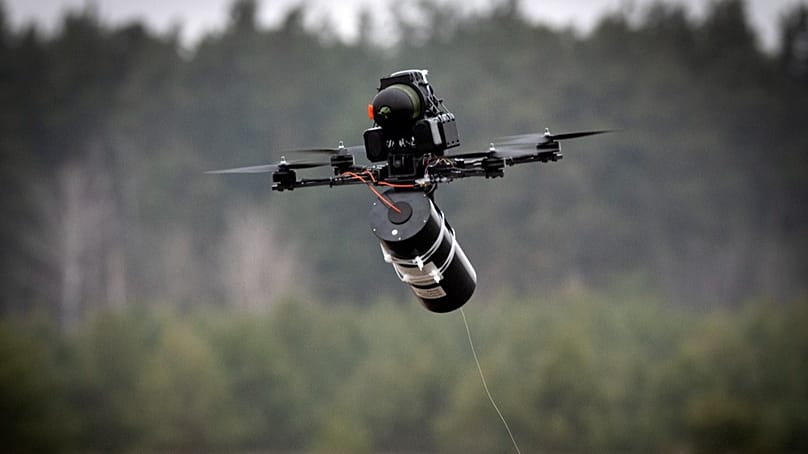
Fibre‑optic drones are connected to a ground station by an ultra‑thin cable that transmits control signals and video, making them largely immune to electronic interference and allowing them to bypass enemy jammers and reach otherwise challenging targets. Their vulnerability is apparent, however: if the cable is spotted, it can be easily cut.
Drones are steadily reshaping military doctrine, and UFDS argued that every soldier "in tomorrow's armies should have some understanding of how to use the drones."
The simulator lets users practise missions safely, without risking costly equipment or their own lives. UFDS hopes other militaries will eventually use the simulator.
According to Oleg, the company has already contacted several German organisations, though it is not currently working with the Bundeswehr. He believes UFDS could play a key role in expanding training, noting that combining software‑based simulations with live tactical exercises "yields the best results."
Under Germany's Foreign Trade and Payments Ordinance (AWV), Annex 1, Section A, Item 0014, "specialised equipment for military training" – including simulators and drones for military scenarios – is classified as a "strictly controlled defence item."
"Germany is clearly on the path of modernizing its defense capabilities, and the use of simulation-based training is a quick and cost-effective way on the path to that goal", Oleg explained.
"We know it works, because these solutions have already proven effective in Ukraine. We hope that the rules and regulations for integrating such defense-oriented training programs could get streamlined across the European countries, so the adoption process is sped up."