













Russia has repeatedly hit Ukrainian energy infrastructure throughout the nearly four-year war, but Kyiv says this winter has been the toughest yet.
The CEO of Ukraine's largest energy provider DTEK is in Davos and spoke to Euronews about what an energy ceasefire can mean for Ukrainians.
Maksym Timchenko's comments come a day after Ukraine's President Volodymyr Zelenskyy said that around 4,000 buildings in the capital Kyiv were still without heating and most of the city was cut off from electricity after Russian strikes earlier in the week.
"We passed three winters and we will pass fourth winter during the war But the question is, at what price? At what level of sufferings of our people," Timchenko said.
"So, the situation is extremely difficult. We need support. We need help. And that's the reason why we have a lot of meetings here with energy companies and with other stakeholders who can support us in this emergency situation. And now we are in survival mode, actually."
Russia has repeatedly hit Ukrainian energy infrastructure throughout the nearly four-year war, but Kyiv says this winter has been the toughest yet, with hundreds of Russian drones and missiles overwhelming air defences during particularly fierce frosts.
The situation also remained difficult across the country, including in the Sumy, Chernigiv, Dnipro and Kharkiv regions, Zelenskyy added.
Zelenskyy announced a "state of emergency" in the country's energy sector last week, with Kyiv schools remaining closed, street lights dimmed and roughly half a million residents leaving the capital.
More than 1,000 Ukrainians have been taken to hospital with frostbite and hypothermia over the past 30 days, the health ministry said, adding that the situation could "become threatening if temperatures drop or weather conditions worsen".
Germany called the Russian winter airstrikes against energy infrastructure "war crimes."
Timchenko urged other countries to see Ukraine as an example of how critical it is to protect energy infrastructure, particularly in winter.
"This level of destruction has never been seen for the energy system as we have in Ukraine, not in the modern history. That's why it's difficult to understand. Not even general public, but even for energy specialists, for CEOs,” he told Euronews.
With temperatures falling as low as minus 20 C in Kyiv, Ukraine is seeing one of the coldest winters in years, deepening the hardship of Ukrainians almost four years after Russia launched its full-scale invasion.
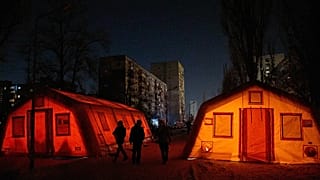
Kyiv authorities have set up hundreds of tents across the city, where people can warm up and get hot food and drink.
Russia has been pounding Ukraine's energy system since the start of its invasion, in what Kyiv says is an attempt to sap morale and weaken Ukrainians' resistance.
The Kremlin says it only targets Ukrainian military facilities and has blamed the continuation of the war on Kyiv for refusing to accept its peace demands.
The International Criminal Court has issued arrest warrants for two top Russian military officials over the attacks on Ukraine's energy grid.