















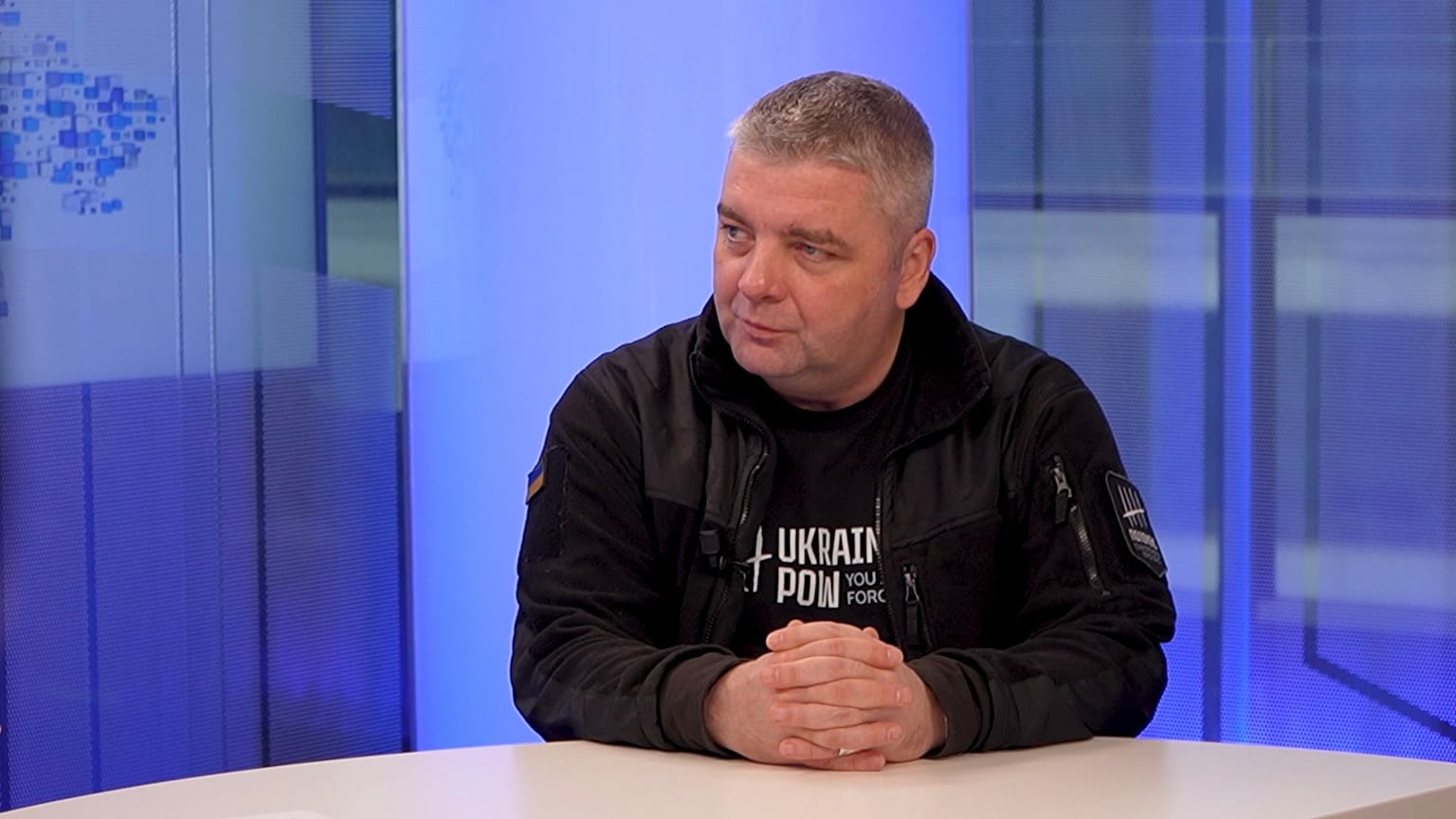













Ukrainian journalist and one of the country's most prominent human rights activists, Maksym Butkevych, spent more than two years in Russian captivity. He told Euronews Moscow is deliberately trying to avoid inevitable responsibility.
When the first version of the US-Russia plan was leaked to the media two weeks ago, Moscow sought to include a specific demand: amnesty for Russian forces for all they had done since Russia’s full-scale invasion began in February 2022.
 ADVERTISEMENT
ADVERTISEMENT
ADVERTISEMENT
“All parties involved in this conflict will receive full amnesty for their actions during the war and agree not to make any claims or consider any complaints in the future,” the alleged 28-point plan suggested.
This demand caused significant outrage in Ukraine, where people and authorities have been meticulously documenting all of Russia’s alleged war crimes for further investigation to hold Moscow accountable.
Ukrainian journalist and one of the country's most prominent human rights activists, Maksym Butkevych, spent more than two years in Russian captivity. He told Euronews that Moscow is deliberately trying to avoid inevitable responsibility.
“While I was still in captivity, my fellow prisoners of war would come to me and ask whether they would be able to testify, for example, before the International Criminal Court or other bodies that could bring those who had done this to us to justice,” Butkevych said.
According to Butkevych, Moscow’s attempts to push through the “amnesty demand” cannot be accepted in Ukraine.
“There is enormous demand for justice. And therefore, when there are attempts to push this point through (by Russia) it is met with categorical rejection and outrage”, he explained. “It is somewhat strange to be outraged by the demands of the Russian Federation at this point."
“Perhaps we are too tired to be outraged, because then there would be too much to be outraged about. But there is categorical rejection of this”.
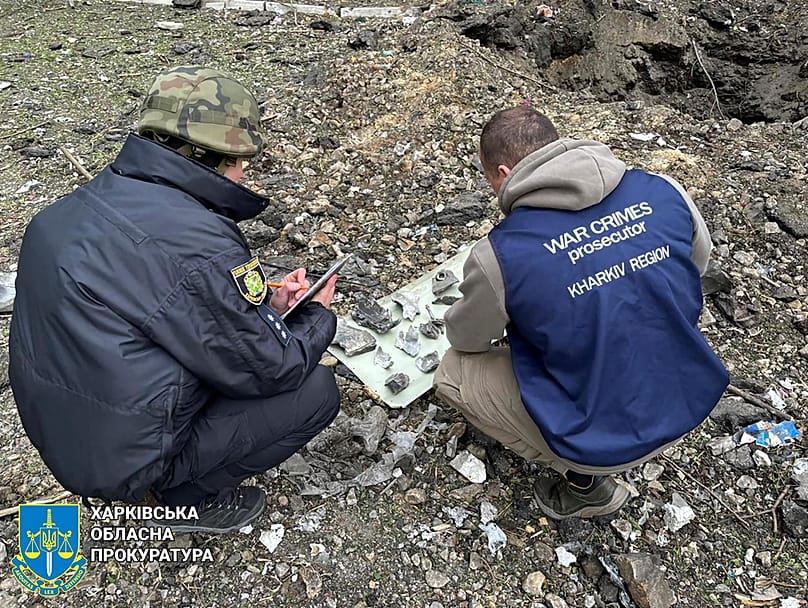
As of November, Ukraine's Prosecutor General's Office recorded 190,000 facts related to war crimes and crimes against humanity committed by Russia since the beginning of its full-scale invasion of Ukraine in 2022.
EU sanctions against Russian prison officials
On 20 November, the Council of the European Union imposed sanctions against 10 individuals involved in human rights violations in Russia, including the torture of civilian hostages and repression of the opposition.
They target senior officials of the Main Directorate of the Russian Federal Penitentiary Service in the Rostov region, who were involved in the torture of prisoners, including Ukrainian prisoners of war.
The sanctioned Russian individuals are responsible for the death of the Ukrainian journalist Viktoriia Roshchyna.
She was reporting on Russia’s policy of extrajudicial detention and torture in occupied parts of Ukraine. Roshchyna was detained by Moscow troops and died at the age of 27 last year after more than a year in Russian captivity.
Her body was returned to Ukraine earlier this year with some of the internal organs missing.
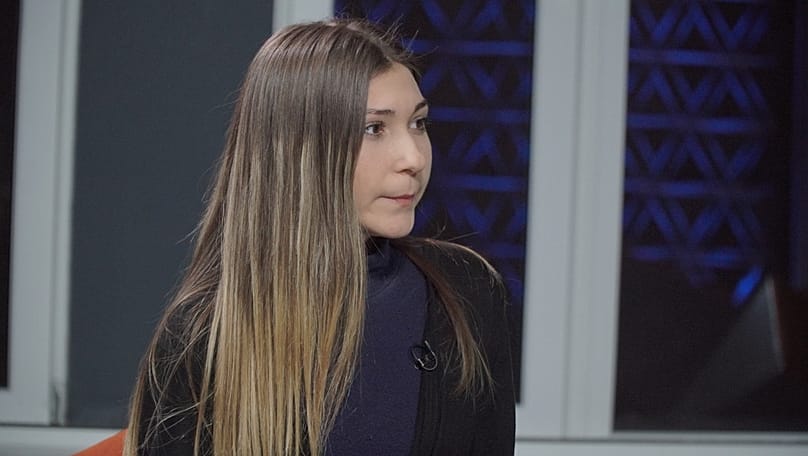
A journalist turned volunteer soldier, Butkevych said that, when discussing sanctions, human rights organisations have repeatedly pointed out that the issue of human rights violations in the occupied territories and breaches of the rights of Ukrainian prisoners of war and illegally detained civilians has not been a priority for a long time.
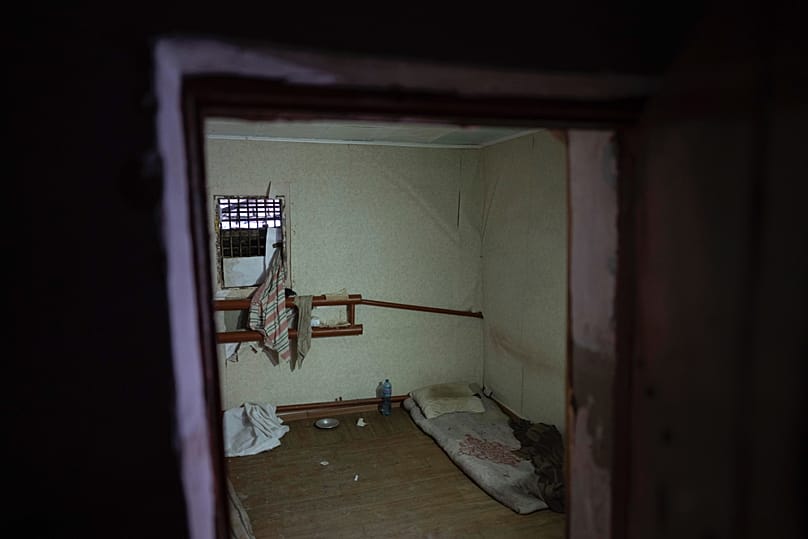
“It must be at the forefront because violations are not isolated incidents, they are systemic and widespread," he explained. "The rights of prisoners of war and civilians in Russian captivity are violated constantly and systematically. This is clearly a coordinated policy”.
Having been through the tortures in Russian prisons himself, he insists that those who implement this policy and those who are responsible for its implementation on the ground, for inhuman treatment, humiliation and torture will be held accountable.
“They need to know that there will be consequences for this," Butkevych said.
“If they feel they can act with impunity in Russia, they should at least know that this impunity is limited to Russian territory. Therefore, the fact that this step (EU sanctions) has been taken is very important. I hope that this is only the beginning.”
Ukrainian Prosecutor General's office revealed last year that up to 90% of all returned POWs stated they had been subject to torture in Russian prisons.
Butkevych says the EU sanctions prove that the demand for justice exists not only in Ukraine, but also for the broader international community “because we have witnessed things that are absolutely prohibited by international law”.
He insists that if Russia is not held accountable, it will mean that “all international humanitarian law, international law as a whole, is meaningless”.
“This is Russia's systematic policy to destroy international law as it currently stands, even though it may sometimes seem ineffective. But to truly render it meaningless.”
'It is not about territories, but about people'
Captured by Russian forces in June 2022 in eastern Ukraine, Butkevych was held for more than two years in Russian captivity in Moscow-occupied Luhansk region of Ukraine.
Together with Donetsk, this is the area of Ukraine often referred to as Donbas — the primary target of Russia’s war since the first invasion of 2014.
This is the part of Ukraine that Moscow now demands Kyiv to cede and withdraw its forces from, while at the same time asking Washington to officially recognise it as Russian.
Butkevych said this demand was unacceptable: "it is not about the territories as a 'piece of land’, it is about Ukrainians who live there and who are “de facto held hostage by Russia”.
“Right now it is impossible to live in the occupied territories without being forced into obtaining a Russian passport, without being documented by the aggressor state, which, of course, is a violation of international law.”
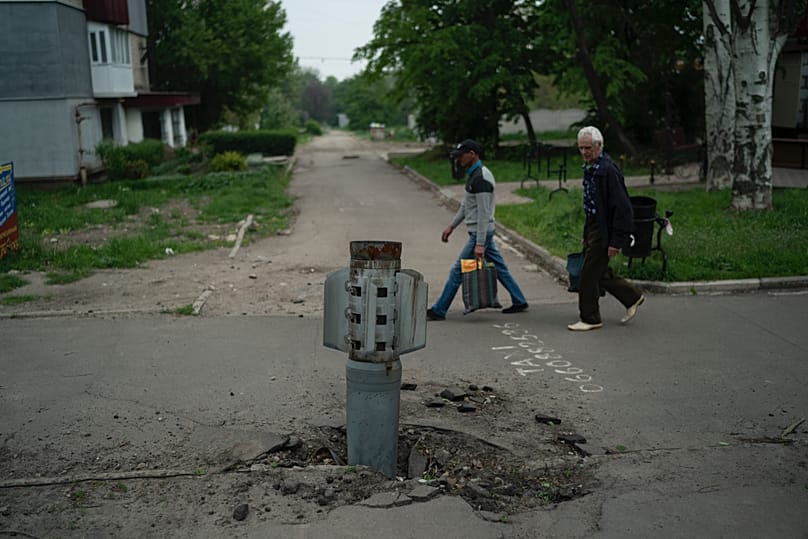
Six million Ukrainian citizens have found themselves in the temporarily occupied territories, 1.5 million of whom are children, according to Ukrainian officials.
As a human rights activist focused on protecting the rights of illegally detained civilians and prisoners of war, Butkevych states that every Ukrainian in the temporarily occupied territories is a “Russia’s hostage”.
“Any civilian can find themselves in captivity and become a bargaining chip, exchange material, or a person used for propaganda," he concluded.