



























The controversial September strike was one in a series carried out by the US military in the Caribbean Sea and eastern Pacific Ocean, as Trump ordered the buildup of a fleet of warships near Venezuela.
The White House said Monday that a Navy admiral acted “within his authority and the law” when he ordered a second, follow-up strike on an alleged drug boat in the Caribbean Sea in a September US military operation that has come under bipartisan scrutiny.
 ADVERTISEMENT
ADVERTISEMENT
ADVERTISEMENT
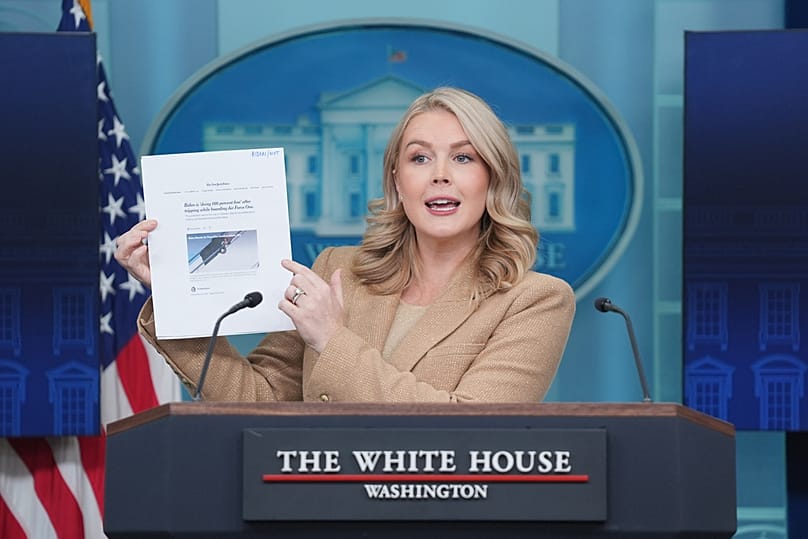
According to White House press secretary Karoline Leavitt, Defense Secretary Hegseth authorised Admiral Bradley to conduct these kinetic strikes.
“Admiral Bradley worked well within his authority and the law, directing the engagement to ensure the boat was destroyed and the threat to the United States of America was eliminated.
Leavitt, in her comments to reporters, did not dispute a Washington Post report that there were survivors after the initial strike.
Her explanation came after a Washington Post report detailing the attack sparked controversy, and President Donald Trump said he “wouldn’t have wanted that—not a second strike” when asked about the incident.
US lawmakers cited a published report that Defence Secretary Pete Hegseth issued a verbal order for a second strike that killed survivors on the boat.
Navy Vice Adm. Frank “Mitch” Bradley, who Leavitt said ordered the second strike, is expected to provide a classified briefing Thursday to lawmakers overseeing the military.
Late Monday, Hegseth posted: “Admiral Mitch Bradley is an American hero, a true professional, and has my 100% support. I stand by him and the combat decisions he has made — on the September 2 mission and all others since.”
A month after the strike, Bradley was promoted from commander of Joint Special Operations Command to commander of US Special Operations Command.
Congress wants answers
Concern over the Trump administration’s military strikes against the alleged drug-smuggling boats has been building in Congress.
Still, details of this follow-on strike stunned many lawmakers from both parties and generated stark questions about the legality of the attacks and the overall strategy in the region, and particularly toward Venezuelan President Nicolás Maduro.
Senate Majority Leader John Thune on Monday broadly defended the operations, echoing the Trump administration's position that they’re necessary to stem the flow of illegal narcotics into the United States.
While Senate Democratic leader Chuck Schumer called Hegseth a “national embarrassment” over his response to critics. Schumer demanded that Hegseth release the video of the strike and testify under oath about what happened.
Republican Sen. Roger Wicker of Mississippi, the chairman of the Senate Armed Services Committee, pledged that his panel’s investigation would be “done by the numbers.”
“We’ll find out the ground truth,” he said, adding that the ramifications of the report were “serious charges.”
Maduro reacts
Meanwhile, Trump met later Monday with his national security team to discuss the ongoing operations and potential next steps against Venezuela.
The Trump administration says the strikes are aimed at drug cartels, some of which it claims are controlled by Maduro. Trump is also weighing whether to carry out strikes on the Venezuelan mainland.
Trump confirmed Sunday that he had recently spoken by phone with Maduro but declined to detail the conversation.
Speaking to supporters in Caracas on Monday, Maduro said US pressure has “tested” the country, but Venezuelans are ready “to defend it and lead it to the path of peace.”
“We have lived through 22 weeks of aggression that can only be described as psychological terrorism,” Maduro said.
The controversial September strike was one in a series carried out by the US military in the Caribbean Sea and eastern Pacific Ocean, as Trump ordered the buildup of a fleet of warships near Venezuela, including the largest US aircraft carrier.
More than 80 people have been killed in the strikes.