














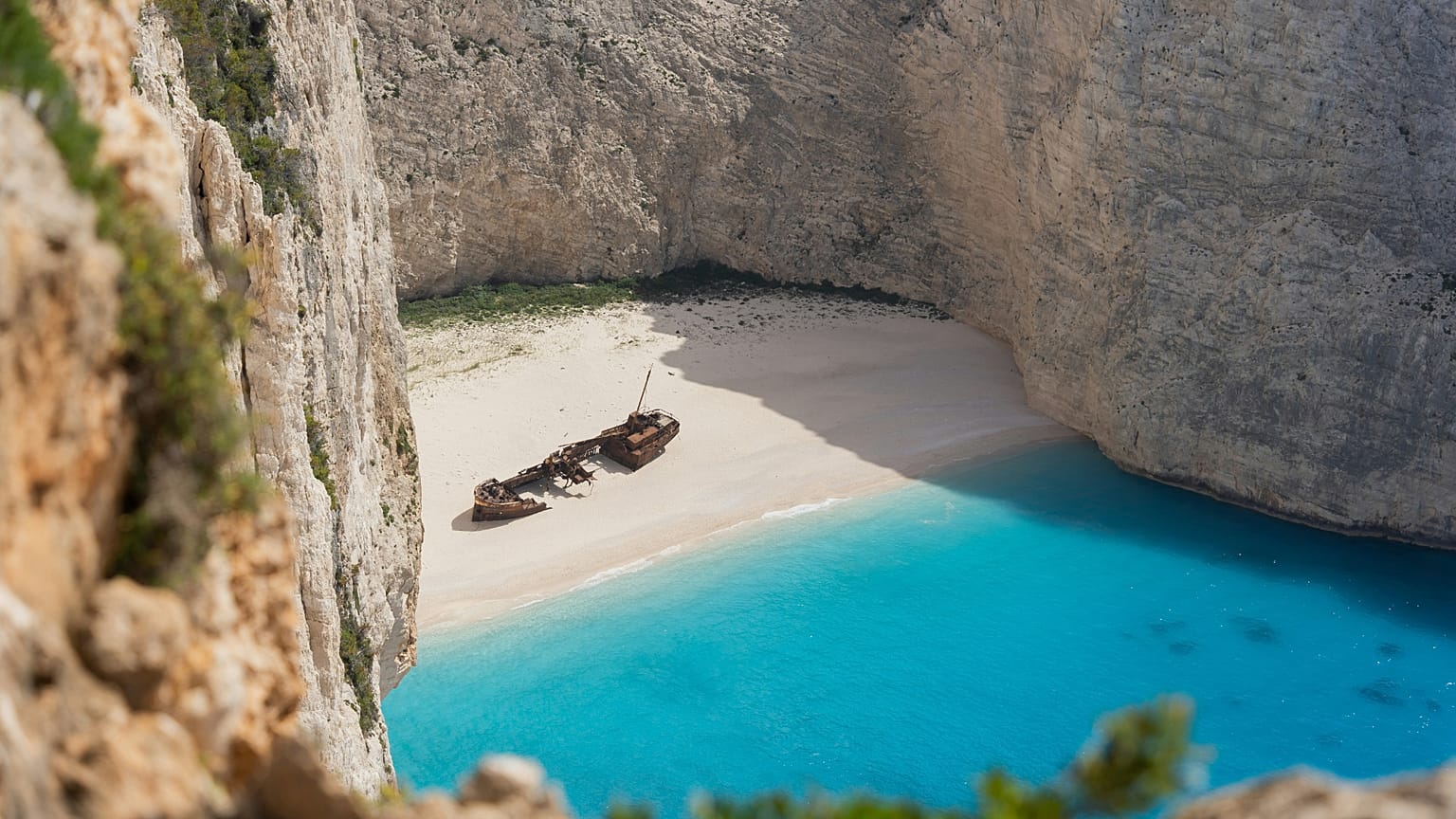













Plans to extend Zakynthos' iconic Navagio Beach by 30 metres aim to preserve its rusting shipwreck for future generations, as visitors continue to be barred from the popular island attraction because of safety concerns.
One of Greece's most iconic beaches is about to undergo its biggest transformation in decades.
 ADVERTISEMENT
ADVERTISEMENT
ADVERTISEMENT
Authorities have unveiled plans to extend Zakynthos' world-famous Navagio Beach in a bid to protect its legendary shipwreck from erosion, while the beauty spot remains closed to visitors over ongoing landslide fears.
Plans are in place to expand the popular beach by 30 metres towards the sea, using gravel.
The announcement comes as the beach remains closed for the 2026 summer season. Greek authorities made the decision to ban boats and swimmers from visiting until 31 October, due to safety concerns.
The move came following inspections conducted by the Earthquake Planning and Protection Organisation (OASP), which identified the area as at risk of extensive landslides.
Navagio Beach was previously closed in 2018, when a cliff collapsed, injuring seven people. In 2022, it was hit with a magnitude 5.4 earthquake which, again, forced its temporary closure.
Visitors to the notoriously busy island are able to admire the beach from above but punishments are in place for individuals attempting to climb down to it.
Greek authorities re-evaluate safety conditions at the beach twice a year, to make informed decisions over access rights.
The ship, which ran aground in October 1980, gave the beautiful spot its nickname of ‘Shipwreck beach’, and it’s since become one of the world’s most photographed coastal landmarks.
Over the years, the wreck has significantly deteriorated, with its metal hull significantly eroded.
Greek authorities hope the extension will protect the vessel from further damage. Currently, it’s some 25 metres from the sea but 45,000 cubic metres of gravel will move it further from the water.
After the extension is completed, restoration work on the shipwreck itself can begin.