
















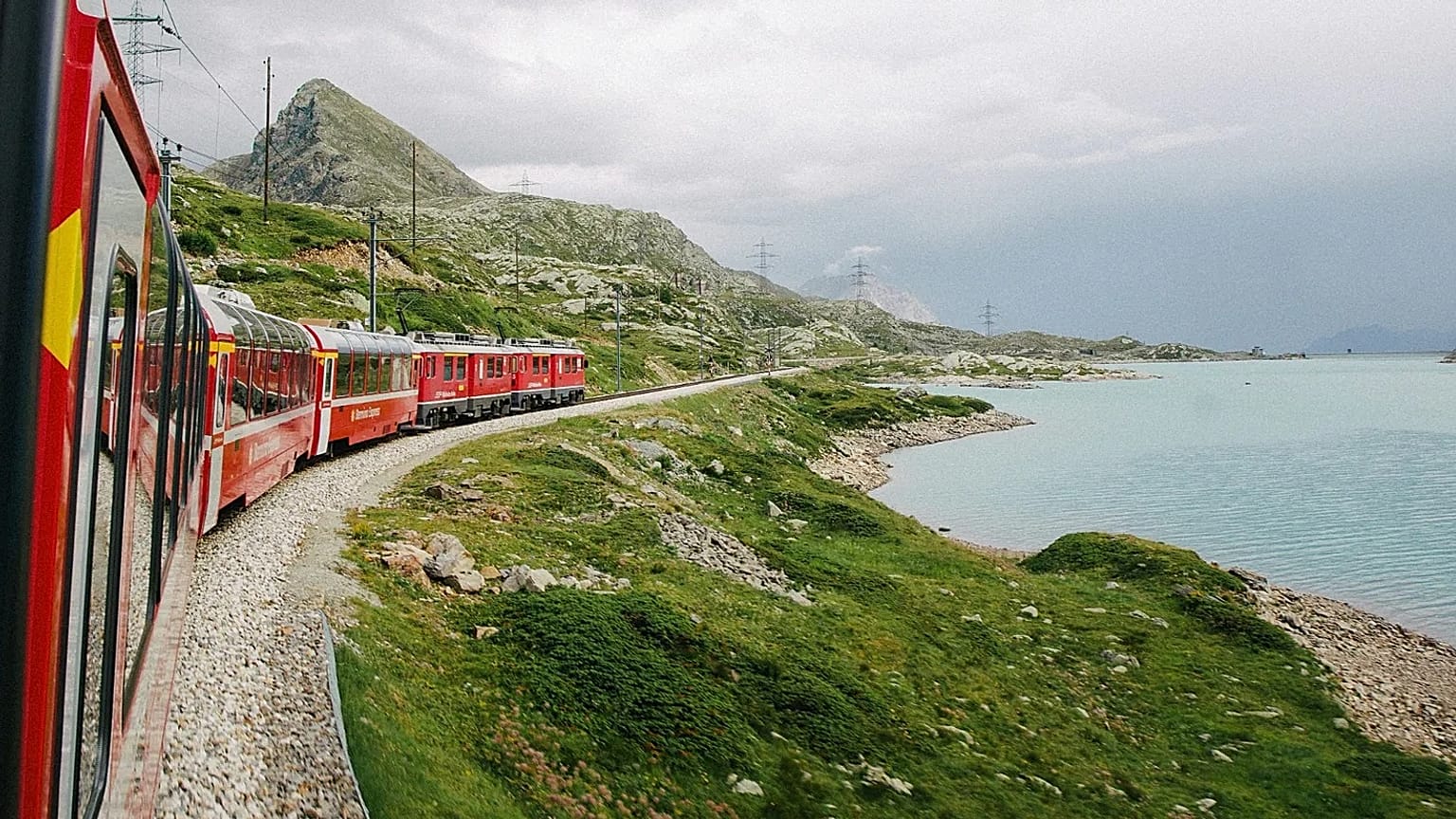













The resurgence has been building for several years, says the CEO and executive chairman of Rail Europe, but is now accelerating as governments and operators invest heavily in the sector.
There’s always been something magical about train travel. From the golden age of luxury carriages to steam-powered journeys through mountains and highlands, railways have long captured travellers’ imaginations.
 ADVERTISEMENT
ADVERTISEMENT
ADVERTISEMENT
In the modern era, rail travel is having a revival – especially in Europe with new routes and itineraries offering a variety of travel options across the continent.
For many passengers, trains are no longer just a practical way to commute between major cities, they are becoming a key part of the European travel experience itself.
This resurgence has been building for several years, says Björn Bender, CEO and executive chairman of Rail Europe, but is now accelerating as governments and operators invest heavily in the sector.
“I guess there are different levers for the last five to ten years,” he says in an interview with Euronews Travel at the ITB Berlin travel trade show. “It started with the sustainability discussion, still pushing, of course, interest and specifically the younger generation into train travel.
“But what is really accelerating now are the investments from the railway carriers from the different countries on the European Union level. Talking about the European Green Deal, for instance, where more than €100 billion is allocated to rail infrastructure and rolling stock and so on.”
The result is an expansion of services across the continent, including new connections, modern trains and the revival of night services.
“So what we see is of course extension of offers, specifically on international routes or cross-border services, new trains, night trains are coming back and so on,” he explains.
“Twenty years back, it was the boring part of transport or mobility. Now it’s a more fancy part and there's a big opportunity that rail is really getting the backbone of European mobility.”
International travellers driving demand
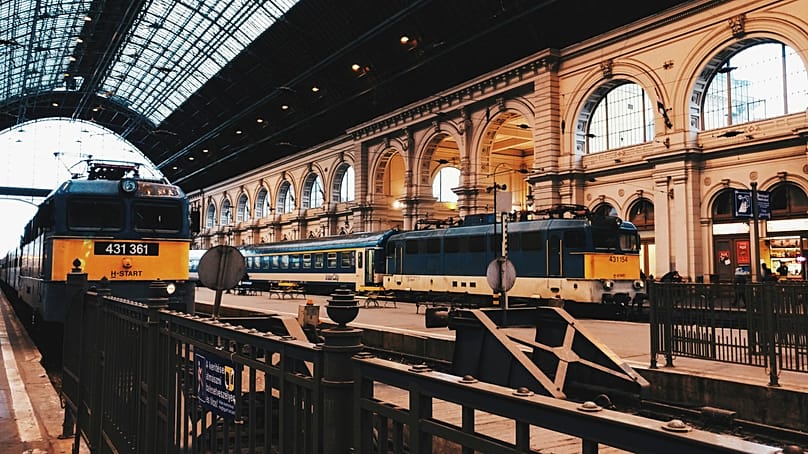
A significant share of this growth is being driven not by daily commuters, but by international travellers exploring Europe by train.
Rail Europe, which specialises in providing train tickets and rail passes for travel in Europe, says most of its customers are travelling outside their home country.
Bender explains that the group serves more than 80% of what it calls "non-domestic travellers". These travellers may be taking cross-border routes such as London to Paris, or using trains within a country after flying into Europe.
“We serve many non-Europeans,” he says. “Talking about the US, talking about India as our primary markets for instance, but also in Europe mainly people who are travelling outside of their comfort zone.”
For these travellers, the train journey itself forms part of the overall experience when visiting Europe for a holiday.
“It’s more about the experience, and experience starts with inspiration. It starts with the right information, and it starts with search, and book, and pay,” Bender says.
Rail Europe’s goal, he adds, is to simplify that process. “Our mission is to make things easy, to simplify and to remove complexity and friction for the customer.”
Going beyond Europe’s capitals
As rail travel grows in popularity, passengers are increasingly venturing beyond Europe’s best-known destinations.
Many visitors have already explored the major capitals, Bender says, and they now want to discover lesser-known cities and regions. “They have seen London, Paris and Rome," he says. "They want to see Budapest, Copenhagen, or Warsaw.”
This shift is creating new opportunities for rail operators and destinations.
While connections between major cities are already well established, improving links to destinations outside of the capitals is becoming a priority.
“On the leisure side, when people are travelling for their holidays, they want to experience tier two, tier three destinations in Europe,” he explains.
Investments across Europe are gradually expanding these connections and improving access to a wider range of places.
Digital platforms simplifying rail travel
One challenge for international train travel has long been the fragmented nature of Europe’s rail networks.
Different national operators, ticketing systems and fare structures have historically made booking cross-border journeys more complicated than booking a flight. Digital platforms are now working to remove that friction.
Rail Europe, for example, integrates hundreds of operators into a single booking system. “We connect all 250 European train carriers which are connected to our system in one search, one book and one payment,” Bender says.
That means travellers can plan complex itineraries across multiple countries in a single transaction.
“If you want to go from Malaga to Copenhagen, you can put this in and we will source from three or four back-end systems, the right routing, the right itinerary,” he explains.
With billions being invested in infrastructure and technology, and a new generation of travellers rediscovering the romance of train travel, Europe’s rail renaissance looks set to continue. “The opportunities are endless,” Bender says.