





























From Washington to Brussels, the fight over who controls artificial intelligence is reaching a turning point, and history suggests the public has always had to wrestle essential technology from completely private control.
What do AI mogul Sam Altman, Democratic Party firebrand Bernie Sanders and Donald Trump all have in common? All three want the public to have a stake in the AI boom.
 ADVERTISEMENT
ADVERTISEMENT
ADVERTISEMENT
What they cannot agree on is how much.
The OpenAI chief executive met the Vermont senator in his Senate office last week at Altman's own request to discuss Sanders' proposal that the public take a 50% ownership stake in AI companies such as OpenAI, with the proceeds used to create a public wealth fund.
Altman told Sanders he supported the general principle but could not back the 50% threshold, according to people with knowledge of the conversation, reported by AP.
The debate is no longer confined to Washington. Just days ago, the European Commission unveiled a proposal that could constitute its most sweeping attempt yet to wrestle back control of the technologies shaping the continent's future.
The package would bar Amazon, Microsoft and Google from the most sensitive EU government contracts and triple European data centre capacity within seven years.
"We cannot afford to depend on others for the technologies that keep our hospitals running, our energy grids stable and our services secure," European Commission President Ursula von der Leyen said.
The UK, meanwhile, launched a £500m (€588m) Sovereign AI Fund in April designed to invest directly in British AI companies and reduce reliance on foreign technology providers.
Trump and Sanders agree?
Speaking to reporters aboard Air Force One on Friday, Trump described a potential partnership "where the American people can benefit from the success of AI" and said executives from leading AI companies would visit the White House this week to discuss the idea.
"There's something very interesting about it, where it almost becomes a partnership with the American public," he said. "It's like you make them partners in this revolution. It would be a beautiful thing."
When reporters noted that Sanders, a self-proclaimed democratic socialist often portrayed as radical leftist in US media reporting, had also proposed public ownership in AI companies, Trump pointed to the similarities between their voter bases.
"As far as economics is concerned," he said, "we have certain things that aren't that far apart."
It is a striking claim given that Sanders is among the president's most vociferous critics.
Trump's statements and actions set him apart from most traditional Republicans when it comes to government investment in private companies.
His administration took a 10% stake in chipmaker Intel last year, with Commerce Secretary Howard Lutnick confirming an $8.9bn (€8.2bn) investment in Intel common stock.
The administration also considered a government bailout for Spirit Airlines that would have given the US government a 90% stake in the carrier, but a deal was never reached and the airline ultimately shut down.
History's lesson
It is not the first time a transformative technology has prompted this kind of standoff between those who built it and those tasked with governing it.
When railroads became the first industry subject to federal regulation in 1887, it came after decades of public fury at "robber barons" who charged punishing rates to farmers and small businesses while offering sweetheart deals to large corporations.
The Sherman Antitrust Act of 1890 is now being invoked again as policymakers weigh the reach of Big Tech, having emerged from a similar era of technological disruption.
Europe has its own version of that history. When the continent lay in ruins after the Second World War, governments moved quickly to bring critical industries under public control on the grounds that infrastructure too powerful to fail was too important to leave in private hands.
In France, the post-Liberation government under Charles de Gaulle nationalised gas, electricity and coal between 1944 and 1946, creating state giants including Électricité de France. In the same sweep, it took control of the four largest commercial banks and dozens of insurance companies.
Before nationalisation, French electricity had been carved up between roughly 200 private generation companies, 100 transport firms and 1,150 distribution operators.
The system was so fragmented that in Lyon, two companies competed directly, one selling alternating current, the other direct current.
The case for consolidation under public control was, at its core, an argument about who should benefit from a technology that had become essential to modern life.
The logic being applied to AI today is strikingly similar.
No deal yet
The nearly hour-long meeting between Altman and Sanders highlighted the growing pressure on Washington to extract some public benefit from the AI industry's rapid expansion, even as Americans remain unconvinced they are seeing any direct gains.
Sanders' spokesperson Jeremy Slevin was clear that no agreement had been reached on the key points, including the 50% stake that would give the public decision-making power.
"Unfortunately, Sam Altman did not commit to any of those," Slevin said.
Altman, emerging from the meeting, described it as "great," adding that the two "obviously don't agree on everything."
About 70% of college students see AI as a threat to their future jobs, according to a 2025 poll by the Institute of Politics at the Harvard Kennedy School.
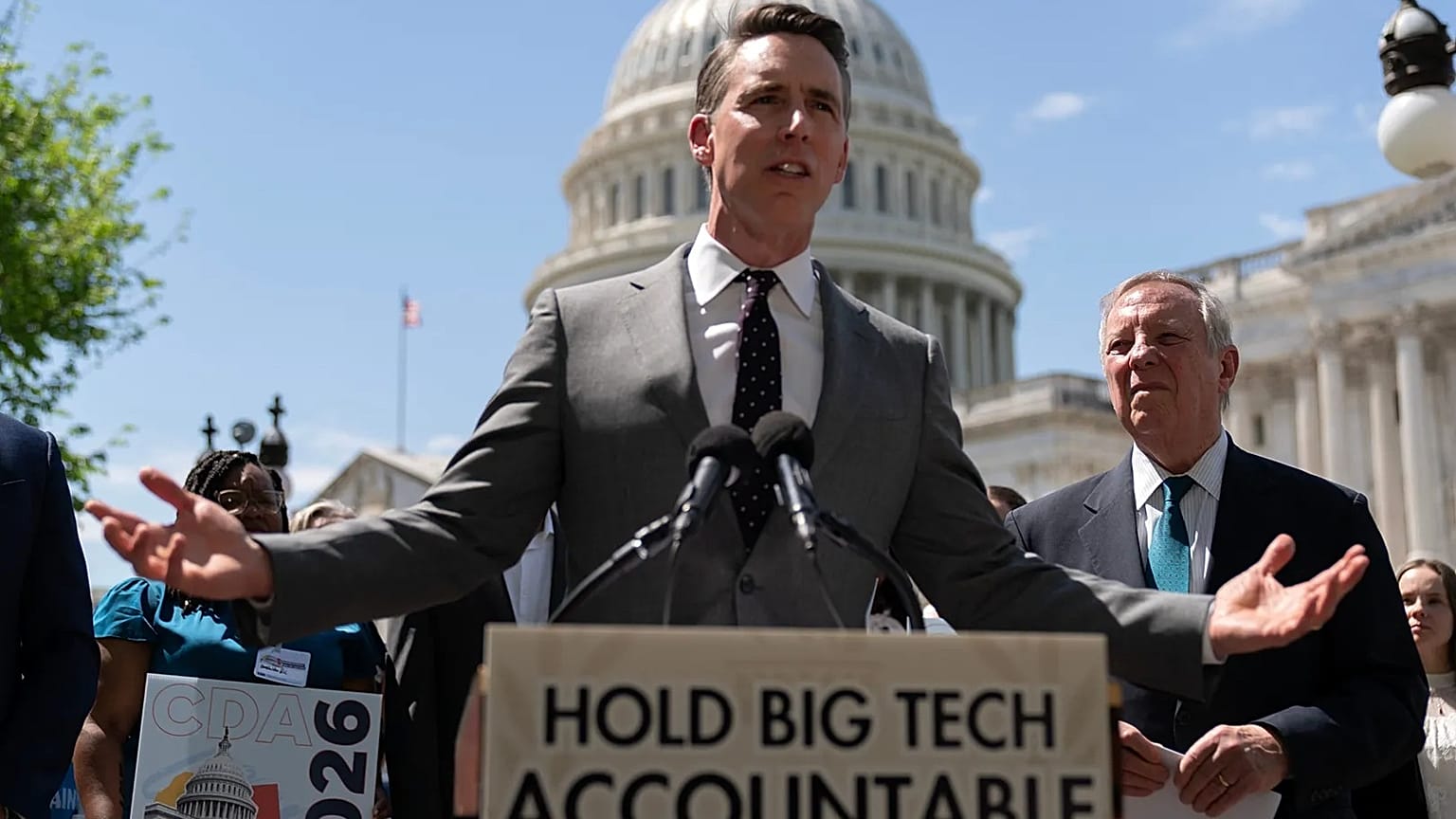
On campuses, commencement speakers have been booed for discussing the technology. Missouri Senator Josh Hawley, a leading Republican critic of Big Tech, called for legislation to halt further data centre development "until they agree to pay for their own electricity, build their own grids and pay for their own water supply."
Altman acknowledged the anxiety. While he said "the impact on jobs has been less than many people in our field expected," he added that he understood "that college students have a lot of anxiety about the future."
Anthropic, one of OpenAI's main rivals, has proposed mechanisms for coordinating pauses on advanced AI development if systems become too powerful.
The Trump administration has also signed an executive order establishing a process for reviewing national security risks posed by advanced AI systems before their public release.
Sanders noted the shift with some satisfaction. "Even these guys are beginning to catch on that there are legitimate concerns that have to be dealt with," he said.