













Block has launched an open-source rival to Slack and GitHub that gives AI agents their own identities and permissions, treating them as colleagues rather than tools.
Twitter co-founder Jack Dorsey's fintech company Block has released Buzz, an open-source workplace platform that treats AI agents as full members of a team, not a browser tab you quietly close when a colleague walks by.
 ADVERTISEMENT
ADVERTISEMENT
ADVERTISEMENT
The platform launched on Tuesday and is available now at buzz.xyz. It combines channels, threads, direct messages, voice, media sharing, code repositories and automated workflows, giving it a similar shape to Slack.
The key difference is how it handles artificial intelligence.
Agents in Buzz get their own cryptographic identities and permissions, letting them post, review code, run automations and take part in conversations alongside human colleagues.
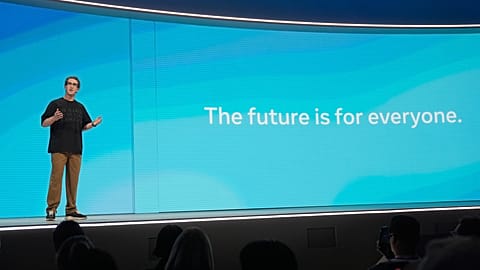
"Every company is going to need a place where humans and agents work together," said Bradley Axen, Block's head of AI capabilities, in the company's announcement.
"The question is whether that place is proprietary or open. We built Buzz because we believe it should be open."
Buzz runs on Nostr, a decentralised protocol that gives every participant, whether human or AI, a cryptographic keypair that belongs to them rather than to the platform.
Block says this means an agent's identity and history are portable and can travel across other Nostr-compatible systems, rather than being tied to one vendor's account system.
The platform is model-agnostic. Teams can plug in agents built on Claude Code, Codex or Block's own goose framework, or bring their own.
Matt Ross, head of investor relations at Block, said he had watched several agents collaborate on a project in real time, producing work that was then instantly available for his team to build on further.
"This is going to completely transform how we work," he said in a post on X.
Block is offering Buzz under an Apache 2.0 licence, meaning developers can inspect, modify and self-host the code freely.
Teams that want to avoid running their own infrastructure can instead sign up for Block's managed hosting through buzz.xyz, though the company has not published pricing for that option.
Block says it open-sourced Buzz because most AI tools right now lock companies into one company's platform and rules, while Buzz will let businesses own their AI setup and modify it accordingly.