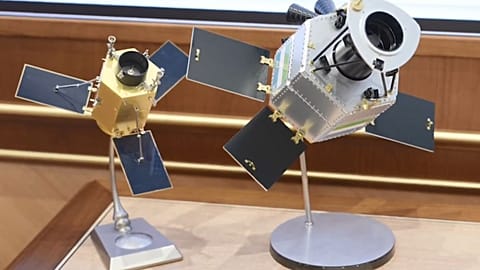

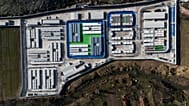





























More than 500 delegates from 32 countries met at the Space Technology Conference 2026, highlighting how satellite technologies are applied to agriculture, water management and environmental monitoring.
More than 500 delegates from 32 countries gathered at a space technology conference in Uzbekistan this week, highlighting how satellite technologies are being applied to agriculture, water management and environmental monitoring across Central Eurasia.
 ADVERTISEMENT
ADVERTISEMENT
ADVERTISEMENT
As the global space economy approaches a projected $1tn (€880bn) by 2030, countries across the region are increasingly using space not as a domain of competition but as a practical tool for cooperation.
Satellite technologies are already being applied to shared regional challenges, including food security, water management, environmental monitoring and digital connectivity, according to participants and companies involved in regional space programmes.
The findings reflect discussions at the fifth Central Eurasia Space Technology Conference (STC 2026) in Uzbekistan, which drew national space agencies, government representatives, satellite operators and private companies including Airbus, Eutelsat, SES, Capella Space, Planet Labs, Hydrosat and Axiom Space.

Technologies in Earth observation, satellite communications and geospatial systems were presented, alongside bilateral meetings focused on regional cooperation and commercial development.
From national ambitions to shared infrastructure
Uzbekistan is integrating satellite-based monitoring into agriculture, environmental protection and geology, according to UzCosmos.
"There was no such platform in our region before," said Muhiddin Ibragimov, deputy director of UzCosmos, adding that Uzbekistan has made significant progress in developing its space industry over the past five years.

Plans include hosting the International Astronautical Congress in 2028, launching the country's first astronaut into space and developing a national satellite constellation, alongside integrating space education into schools.
Kazakhstan is expanding its capabilities in Earth observation, satellite communications and scientific research through national institutions and international partnerships, including joint projects, data exchange and specialist training.
The country is also developing space situational awareness systems while leveraging infrastructure such as the Baikonur Cosmodrome.
Azerbaijan, through Azercosmos, is positioning itself as a regional provider of satellite-based connectivity, offering telecommunications services beyond its borders and taking part in international initiatives on digital access and space-enabled economic development.
Officials from both countries said future growth depends not only on launching satellites but also on integrating space technologies into real-world sectors, from communications to environmental monitoring and data-driven services.
Education and long-term capacity
Christian Feichtinger, executive director of the International Astronautical Federation, said progress in Uzbekistan had been remarkable.
"Hosting one of the world's largest space gatherings in the coming years will put the country and the wider region firmly on the global map," he said.
"It will create new partnerships, drive innovation and deepen integration into the global space ecosystem."

For Turkey's first astronaut, Alper Gezeravcı, the standout development is the growing focus on education.
"I have visited several universities here, and it is inspiring to see how much focus is being placed on preparing young people," he said.
"These steps are essential if countries want to fully realise their potential in the space sector."
Private sector driving data and services
Alongside governments, private companies are increasingly shaping the space economy through data, infrastructure and commercial services.
Planet Labs operates one of the world's largest Earth observation constellations, providing daily imagery used by governments to monitor crops, manage water resources and respond to environmental risks.
Capella Space provides high-resolution radar imagery capable of capturing data regardless of weather conditions or time of day.

Hydrosat uses thermal imaging to measure water stress in agriculture — an issue of growing importance across Central Asia.
Axiom Space, meanwhile, is developing commercial space stations aimed at expanding access to low-Earth orbit for private missions.
Officials and industry participants said cooperation is becoming a central feature of space activity in Central Eurasia, with joint projects, data exchange and cross-border services expanding.
Growth, they added, is increasingly linked to practical applications including communications, environmental monitoring and data services.