















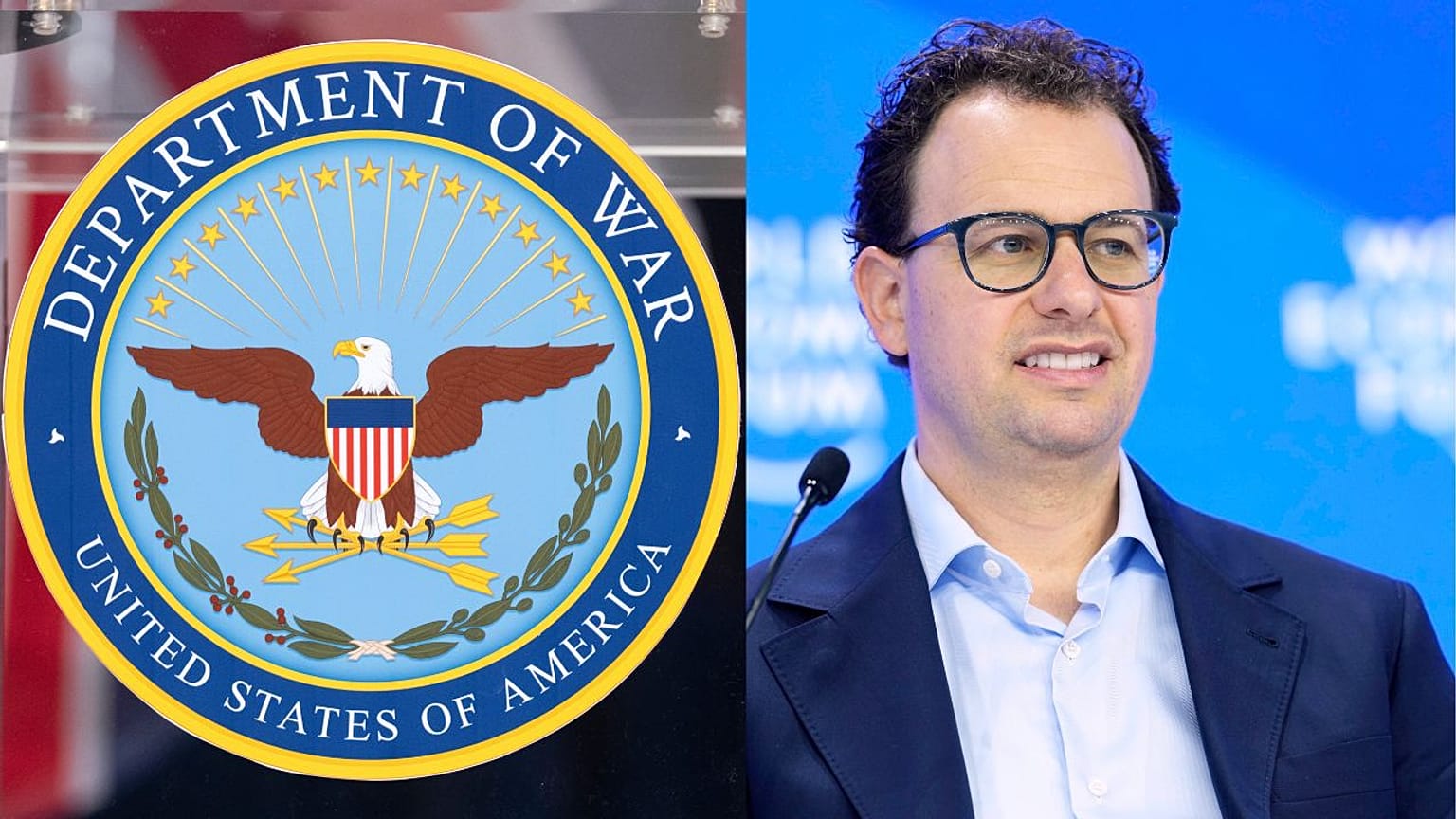













Anthropic heads to a San Francisco federal court on Tuesday to seek an injunction against the US government's decision to blacklist it as a national security risk.
The standoff between Anthropic and the US government is expected to come to a head on Tuesday, when the artificial intelligence company will argue its case for a preliminary injunction against the Department of War and the White House in federal court.
 ADVERTISEMENT
ADVERTISEMENT
ADVERTISEMENT
The move comes after US President Donald Trump and Defense Secretary Pete Hegseth publicly declared in February that it was cutting ties with the artificial intelligence (AI) company after it refused to allow unrestricted military use of its Claude AI model. The restrictions in dispute include the use of lethal autonomous weapons without human oversight and mass surveillance of Americans.
In response, the US government labelled Anthropic a “supply chain risk to national security” and ordered federal agents to stop using Claude.
The case illustrates the ethical, business, and legal crossover of advanced AI and raises questions over who should determine the limits of the technology: the tech companies guided by internal safety principles or public authorities that act in the name of national security and geopolitical interests?
Here is everything to know about the hearing.
The hearing will take place before the US District Judge Rita Lin in San Francisco. The judge fast-tracked the hearing from an April 3 date.
What is Anthropic arguing?
Anthropic is fighting against the designation of being a “supply chain risk,” with the company’s co-founder and CEO Dario Amodei saying that Anthropic has “no choice but to challenge it in court”.
On March 9, Anthropic filed two lawsuits against the government over its designation. One is a case for reconsideration under the existing statute of the Pentagon’s designation.
Anthropic argues the blacklisting is "unprecedented and unlawful,” as historically it had applied only to foreign adversaries such as Huawei and cannot be legally weaponised against a domestic company over a disagreement over policy.
The other lawsuit argues that the blacklisting raises concerns over the First Amendment, meaning the right of free speech and the right to protest.
What does the US Department of War argue?
In 2025, Anthropic signed a $200 million contract with the Pentagon to deploy its technology within classified systems. In negotiations after the contract, Anthropic said it did not want its AI systems to be used for mass surveillance and that its technology was not ready to use for firing decisions of weapons.
In a March 17 court filing, the Department of War said that it was concerned that Anthropic might “attempt to disable its technology or preemptively alter the behaviour of its model” before or during “warfighting operations” if the company “feels that its corporate ‘red lines’ are being crossed”.
Anthropic argued that this concern did not come up during negotiations and only appeared in the government’s court filings.
Euronews Next has reached out to Anthropic but did not receive a reply at the time of publication.
Judge Lin will hear arguments on whether to grant Anthropic temporary relief.
The broader impact
AI scientists and researchers, including those from large companies OpenAI, Google, and Microsoft, as well as legal groups, have filed briefs in support of Anthropic.
The Pentagon has instead shifted its attention to work with other AI companies, including OpenAI, xAI, and Google.