





























The space agency has a six-day launch window at the start of April. If it misses that opportunity, it must stand down until 30 April or early May.
NASA has cleared its Moon rocket for a possible April launch with four astronauts after completing a fresh round of repairs.
 ADVERTISEMENT
ADVERTISEMENT
ADVERTISEMENT
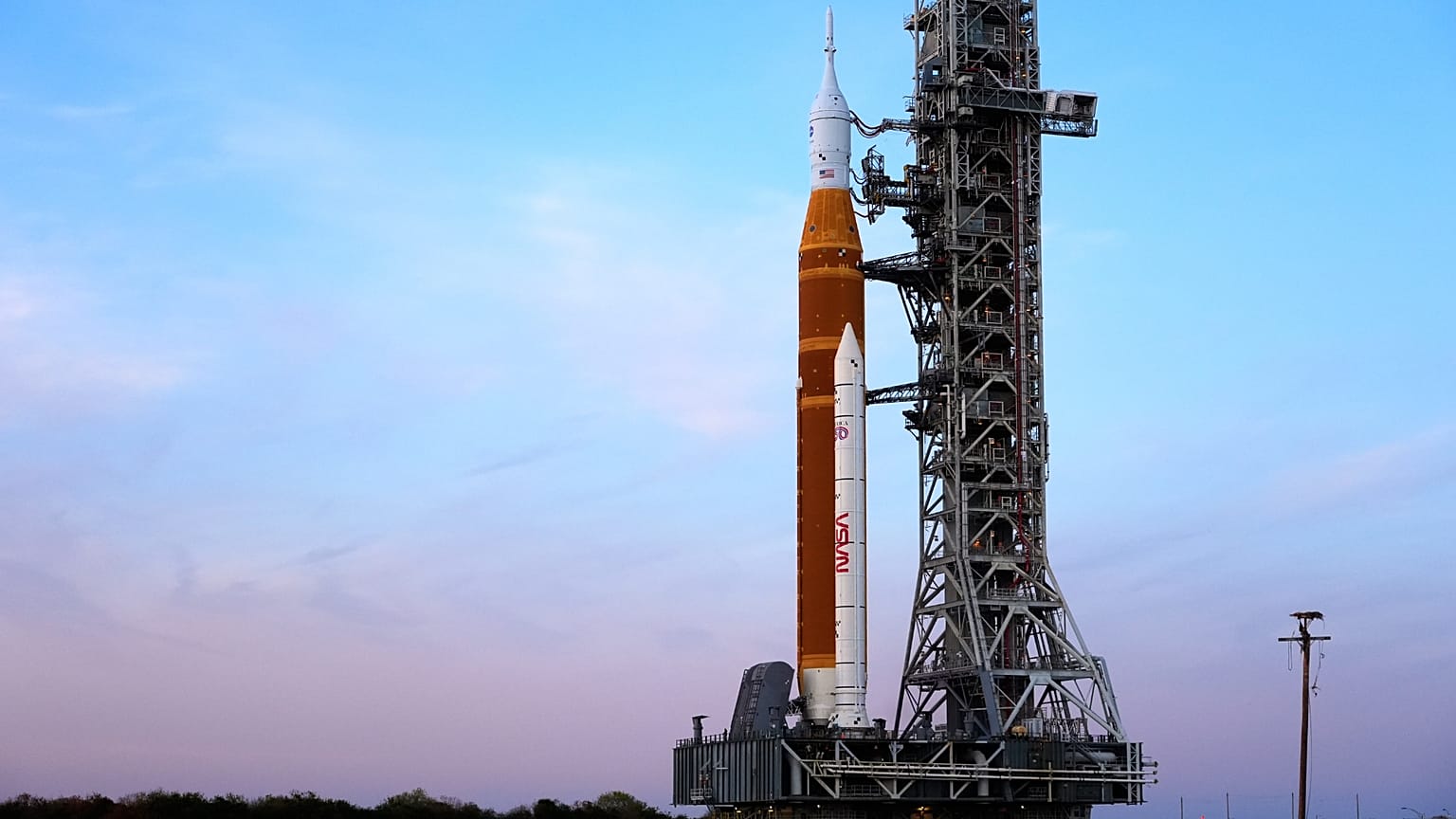
The 98-meter rocket will roll out of the hangar and back to the pad next week at Florida's Kennedy Space Centre, leading to a launch attempt as early as April 1. It will mark humanity's first trip to the moon in more than 50 years.
The Artemis II crew should have blasted off on a lunar flyaround earlier this year, but fuel leaks and other problems with the Space Launch System rocket interfered.
Although NASA managed to plug the hydrogen fuel leaks at the pad in February, a helium-flow issue forced the space agency to return the rocket to the Vehicle Assembly Building for repairs, bumping the mission to April.
The space agency has a six-day launch window at the start of April. If it misses that opportunity, it must stand down until 30 April or early May.
"It's a test flight and it is not without risk, but our team and our hardware are ready,” said Lori Glaze, the Deputy Associate Administrator for NASA's Exploration Systems Development Mission Directorate (ESDMD) at the end of the two-day flight readiness review.
Glaze and other NASA officials declined to provide the risk probabilities for the upcoming mission.
History has shown that a new rocket has a 50 percent chance of success, said John Honeycutt, chair of the mission management team.
There's so much gap since the only other Space Launch System flight, more than three years ago, without anyone on board, that it's difficult to understand any risk assessment numbers, Honeycutt said.
“It's not the first flight," Glaze said. "But we're also not in a regular cadence. So we definitely have significantly more risk than a flight system that's flying all the time.”
Late last month, NASA's new administrator, Jared Isaacman, announced a major overhaul of the Artemis program to speed things up and, by doing so, reduce risk.
Dissatisfied with the slow pace and lengthy gaps between lunar missions, he added an extra practice flight in orbit around Earth for next year. That is now the new Artemis III, with the moon landing by two astronauts shifted to Artemis IV. Isaacman is targeting one and maybe even two lunar landings in 2028.
Meanwhile, NASA’s Office of Inspector General warned in an audit this week that the agency still needs a clear rescue strategy for lunar crews.
Landing near the Moon's south pole would be riskier than for the Apollo astronauts going closer to the equator, given the rough polar terrain, according to the report.
The report cited the lunar landers as the top contributor to the potential loss of crew during the first few Artemis moon landings. It listed the space agency’s loss-of-crew threshold at 1-in-40 for lunar operations and 1-in-30 for Artemis missions overall.
Contracted by NASA to provide the Moon landers for astronauts, Elon Musk's SpaceX and Jeff Bezos' Blue Origin have accelerated work to meet the new 2028 target date. The inspector general's office said many technical challenges remain, including refuelling their landers in orbit around Earth before flying to the Moon.
NASA sent 24 astronauts to the moon during Apollo, 12 of whom landed on it. All but one of the moonshots, Apollo 13, achieved their prime objectives. The programme ended with Apollo 17 in 1972.