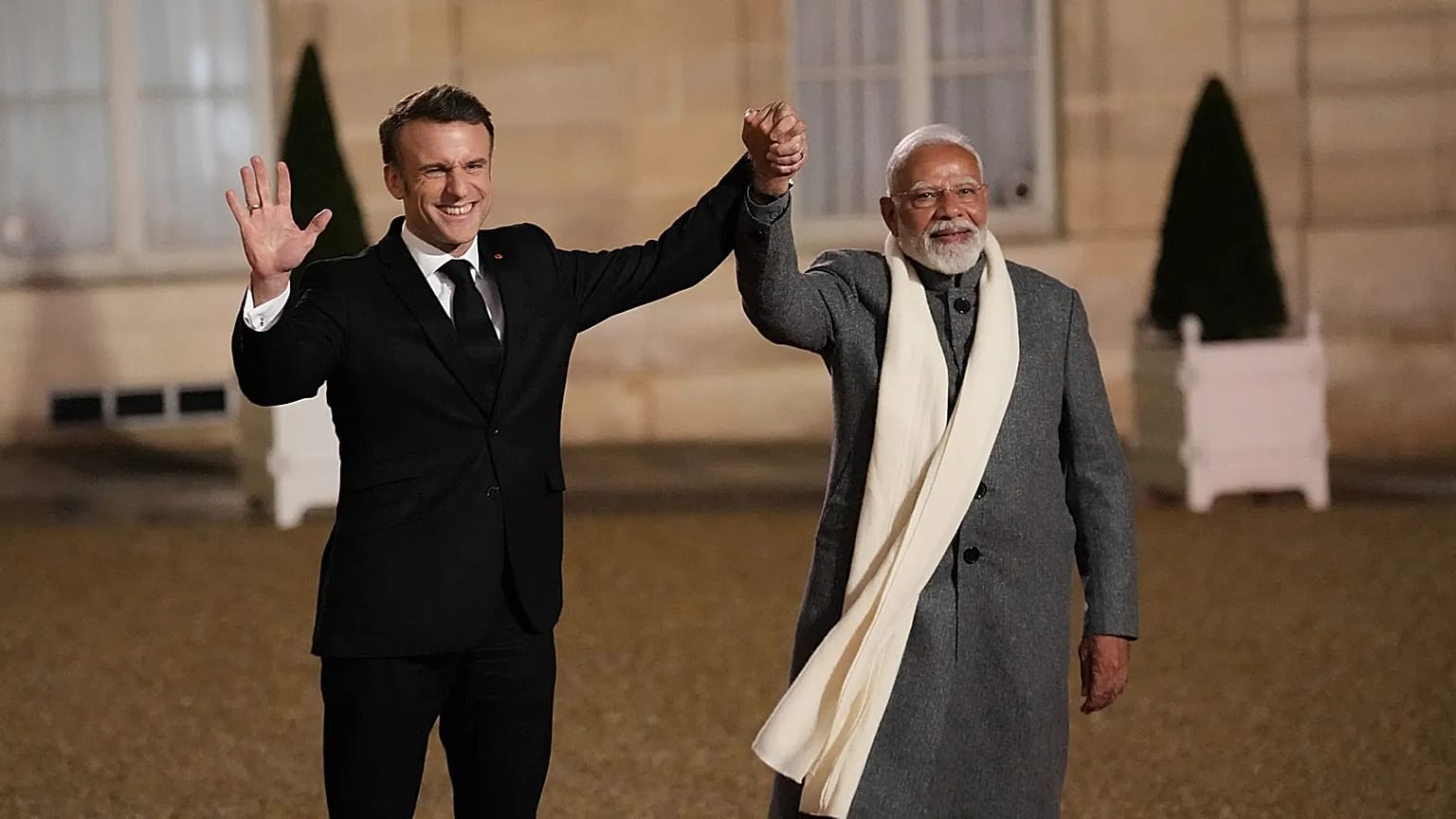













Global leaders such as Emmanuel Macron are gathering in India for an AI Summit to try to agree on AI governance after the Paris AI pledge last year was deemed ‘meaningless’.
World and technology leaders are gathering in India this week for the annual global AI summit, which aims to establish a unified framework for artificial intelligence (AI) governance and international cooperation.
 ADVERTISEMENT
ADVERTISEMENT
ADVERTISEMENT
The AI Impact Summit in New Delhi hopes for a "shared roadmap for global AI governance and collaboration" amid growing concerns from tech insiders about AI safety and increasing pressure from governments to loosen regulatory oversight of the technology.
The summit being held in India marks an important occasion for putting the Global South on the AI map.
But the initiative faces scepticism following last year's event. The AI Action Summit in Paris, which produced a declaration promoting safer and more responsible AI development, was slammed by tech leaders who dismissed it as "devoid of any meaning" and insufficient in addressing the potential risks and harms posed by the technology.
The United Kingdom refused to sign the joint pledge, citing national security concerns. The US was also absent in signing; the country did not specify exactly why it did not sign the doctrine, but the country’s vice president, JD Vance, warned delegates in Paris that too much regulation would stifle innovation.
Here is everything to know about the India summit.
Who is attending?
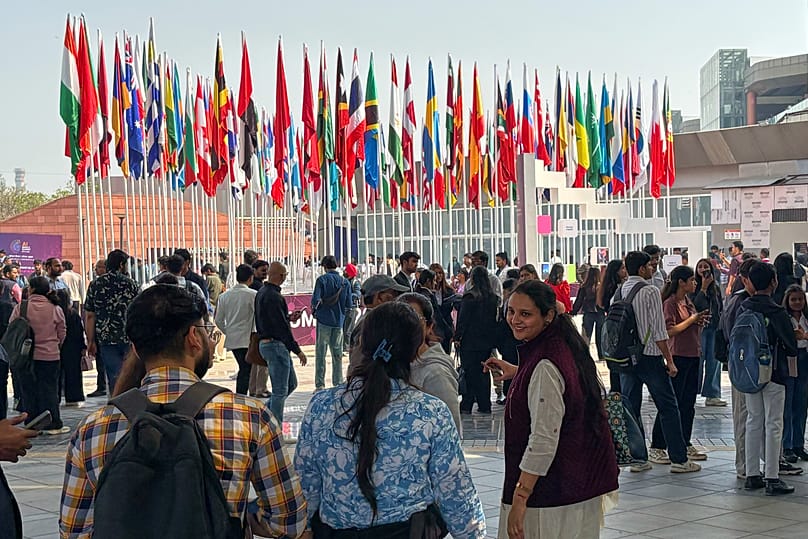
Some 250,000 visitors are expected from researchers, AI companies and governments.
Around 20 national leaders, such as French President Emmanuel Macron, Spain’s Prime Minister Pedro Sanchez, and Brazil’s President Lula da Silva, are expected to attend.
The UK’s Prime Minister and US President Donald Trump do not appear to be attending.
There will also be 45 ministerial-level delegations present at the event.
OpenAI CEO Sam Altman and Alphabet CEO Sundar Pichai are expected to attend, according to CNBC.
Google Chief Executive Sundar Pichai, Qualcomm CEO Cristiano Amon, OpenAI CEO Sam Altman, Microsoft President Brad Smith and the ‘French godfather’ of AI, Yann LeCun, are also expected to attend.
What are the themes?
The Summit has three themes: People, planet and progress, which define India’s approach to cooperation on AI, the government says.
It will be interesting to see how planet is addressed, given the huge energy required to run large language models (LLMs)
The summit may result in a pledge, and not a binding agreement like the previous summits.
The Global South
India, the world’s most populous nation, which has a massive startup community and one of the fastest-growing digital markets, sees the summit as an opportunity for the Global South.
“This occasion is further proof that our country is progressing rapidly in the field of science and technology,” India’s Prime Minister Narendra Modi wrote on the social media platform X on Monday.
“It shows the capability of our country’s youth,” he added.
The summit should not frame innovation and regulation as opposing forces, "the real task is to align them, ensuring ambition is met with accountability", said Gilroy Matthew, chief operating officer at US digital transformation company UST.
“India’s global position enables it to act as a bridge between developing and developed nations, championing a third way for AI – one that prioritises practical impact over existential risk, showing how AI can address challenges in healthcare, education and other public services,” he told Euronews Next.