












After changing its name and going all-in on virtual reality, Meta is scaling back its metaverse operations. But that could be a good thing for VR, experts tell Euronews Next.
The start of 2026 delivered the final nail in the coffin for the metaverse, the digital world once hailed by Mark Zuckerberg as the future of human interaction.
 ADVERTISEMENT
ADVERTISEMENT
ADVERTISEMENT
After putting all his eggs in this one virtual basket, and even changing his company’s name to reflect the central role the metaverse would take in his business, Meta’s CEO has all but abandoned the idea.
Meta announced layoffs in its Reality Labs division at the start of January, shedding 10 percent of jobs, mostly related to metaverse development – including data engineers, software engineers, and game developers.
The company’s fourth-quarter earnings report on Wednesday confirmed the division’s heavy losses – Meta said its virtual reality business haemorrhaged $19.1 billion (€16 billion) last year, with $6.2 billion (€5.2 billion) lost in Q4 alone.
Zuckerberg told investors in the earnings call that Meta would continue to develop its extended reality (XR) business, especially AI wearables like the company’s Ray Ban glasses.
Now that the metaverse’s most visible champion is moving on to greener pastures, where does that leave virtual reality (VR) and digital worlds? Experts told Euronews Next that Meta’s exit might not actually be a bad thing.
Why did the metaverse fail?
When Zuckerberg dived headfirst into the metaverse, the world looked very different. Society was still reeling from the COVID-19 pandemic; remote work was thriving, and social life migrated to digital platforms such as Zoom.
For George Jijiashvili, senior principal analyst at technology research and advisory group Omdia, who has been following VR developments for over a decade, this presented a golden opportunity for Meta to position itself as the leader of the next big computing platform.
“Meta feels really annoyed about the fact that they're entirely dependent on iOS held by Apple and Android and Google Play Store held by Google,” Jijiashvili told Euronews Next.
“So the number one desire from Meta and Mark Zuckerberg is to place a bet that [the metaverse] would be the next computing platform, and to be the company that leads that new, next computing platform,” he added.
The bet didn’t pan out, though, for a number of reasons. First, the technology wasn’t – and still isn’t – mature enough to support a consumer platform such as the one Meta intended.
“The vision of the platform did not coincide with the technological status quo,” said Jijiashvili. “Technologically, the metaverse as a dream required rapid advancements in headsets, eyewear, glasses, smart glasses, that kind of stuff – which is not going to happen that quickly.”
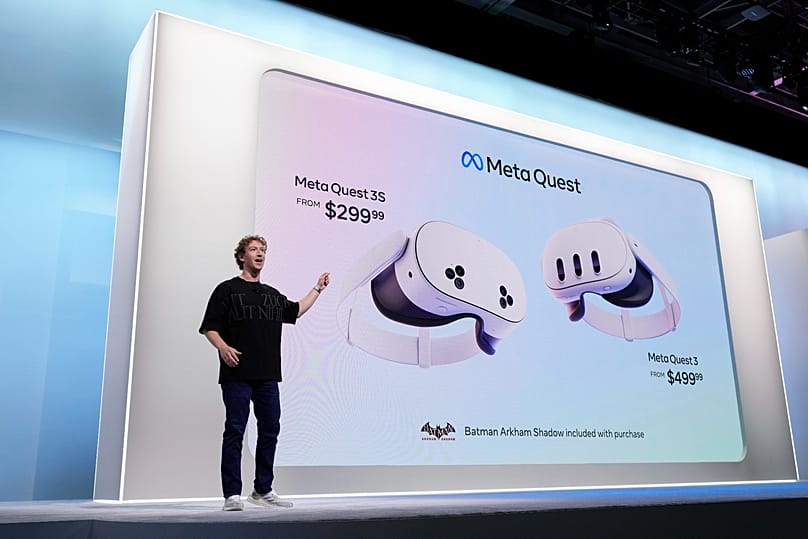
The inconvenience of VR helmets is one of the major obstacles to the metaverse’s development, said Per Ola Kristensson, a professor of interactive systems engineering at the University of Cambridge.
In a 2022 study, he and his research group asked people to spend an entire 40-hour workweek in a virtual workspace, using a VR headset to do their ordinary office work.
“We were interested in whether you can actually do knowledge work [on VR] for an entire work week,” Kristensson told Euronews Next. “The answer is you can, but you will hate it.”
Study participants reported lower perceived productivity, higher frustration, higher anxiety, more simulator sickness, and higher visual fatigue.
“It's not ergonomic, you have to deal with cables, if you want to have a sip of coffee, you have to move [the helmet] up. There are always small, subtle things that don't quite work,” Kristensson said.
In addition to the impractical hardware, Kristensson said the metaverse didn’t offer strong enough incentives for users and businesses.
“I think the metaverse as a pitch was a mistake. The metaverse gave the impression of this virtual reality world where we basically live like in Facebook. I think that’s a pretty poor vision.”
What comes next for virtual reality?
While Meta may be distancing itself from the term “metaverse”, the company’s latest earnings call holds clues about where the VR and XR industries could be heading.
“For Reality Labs, we are directing most of our investment towards glasses and wearables going forward, while focusing on making Horizon a massive success on Mobile and making VR a profitable ecosystem over the coming years,” Zuckerberg said during the call, referring to the company’s metaverse-optimised social platform Meta Horizon.
Other early proponents of the metaverse also pivoted to a broader definition of the term. For example, Gartner Inc., a research and advisory firm that predicted 1 in 4 people would spend at least an hour a day in the metaverse by 2026, said the metaverse is just misunderstood.
“The metaverse is not a single technology, trend, application or use case, but a combination thereof — which requires product leaders to create more targeted business value, while establishing co-innovation and channel partnerships to establish a competitive advantage,” the company wrote in a report published January 5, shared with Euronews Next.
Researchers like Kristensson, who has previously worked as a consultant for Meta, see the pivot as an opening for XR technologies with AI integration to benefit from renewed interest and funding.
“I think talking less about the metaverse and talking more about extended reality and what it can do to help us engage with AI in the physical world would be a very useful conversation,” he said.
“Augmented reality [...] has a lot of compelling use cases. Your glasses become your phone, and your glasses will see what happens in the physical world and can also project digital information into the physical world. So basically, your glasses become an AI interface,” he said.
This technology could be a game-changer for the new generation of general-purpose robotics, according to Kristensson, allowing users to give directions to household robots without clunky voice commands.
Virtual social platforms move users to the centre
As for other “metaverses” or metaverse-adjacent platforms, Meta’s pivot from virtual worlds was hardly a blip on their radar. Some leaders even seemed glad the idea is on its way out.
“We agree that the version of the internet people were calling the metaverse is over,” said Kim Currier, the head of marketing and partnerships at Decentraland Foundation, which runs one of the most popular virtual worlds in the metaverse.
“That idea came with unrealistic expectations and a lot of speculation about a single, massive future platform that we all visit within VR headsets in the future,” she told Euronews Next in an email.
Receiving less attention, especially from corporations and media, has given Decentraland the freedom to nurture its relationships with real users, Currier said.
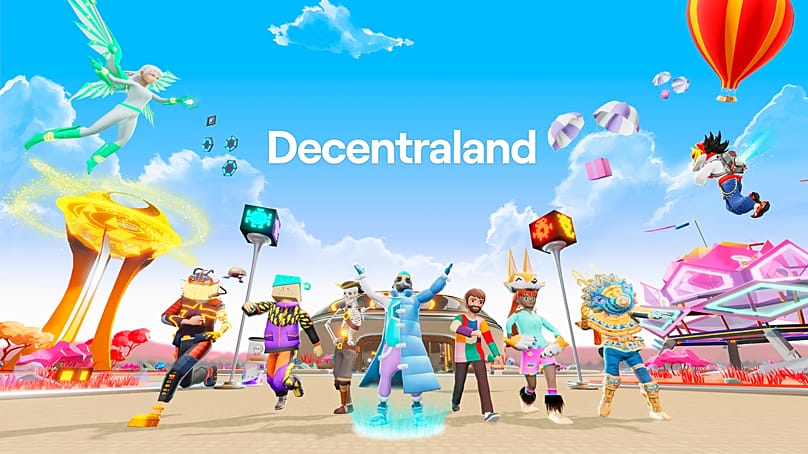
“There has been a clear shift away from corporate experimentation and toward community-led activity,” she said. “More meetups, more recurring gatherings, and more spaces built around shared interests rather than spectacle and ‘moments for the press’.”
Currier said that the platform now features around 24 community-run events every month, showing the appeal of user-led interaction.
“Overall, we are seeing less speculative interest and more people who are genuinely curious about what is possible in this space,” she said. “These are people who want to contribute, not just show up, extract value, and leave.”
A user-centric approach has also led to the explosive success of gaming platforms like Roblox and Fortnite, which are wildly popular with younger generations. Meta’s shift to mobile for its Horizon platform appears to be a direct response to the popularity of these platforms, according to Jijiashvili.
“To Meta's credit, I don't think they were particularly wrong in that people will want this,” Jijiashvili said. “They are right that increasingly our worlds are digital, are more online, more connected. It’s just people did not want Meta’s 2021 version of the metaverse.”
“It’s going to be another version in the future, or it’s going to be an evolution of Fortnite or Roblox, or it’s going to be completely new players.”