












Iran may be using mobile signal jammers similar to those used by Russia in Ukraine, an expert says.
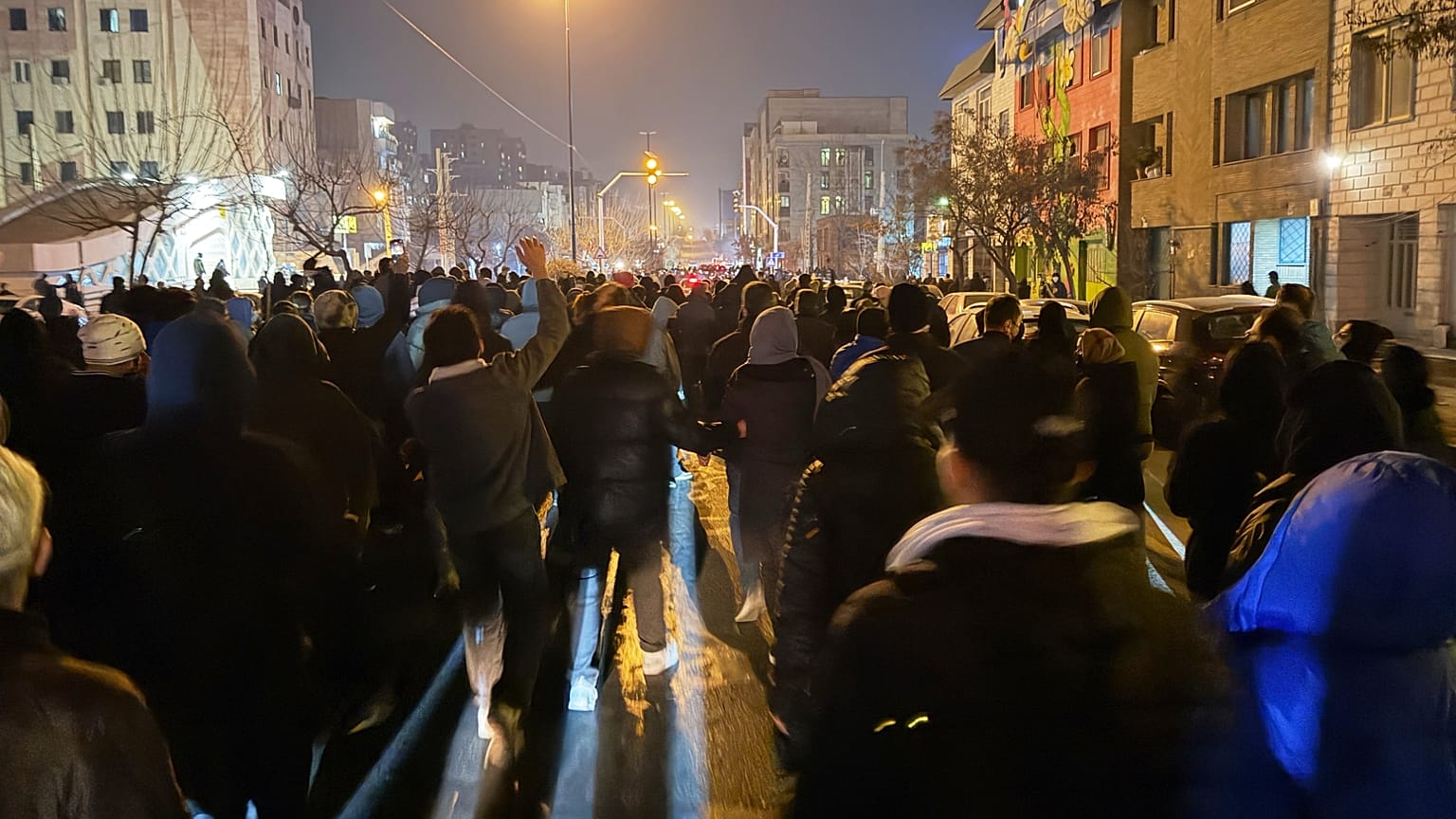
Iran is now in its sixth day of a sweeping, nationwide internet blackout that leaves millions effectively cut off from the outside world.
 ADVERTISEMENT
ADVERTISEMENT
ADVERTISEMENT
With nearly all of the country’s internet traffic funnelled through a single government-controlled choke point, authorities were able to shut down digital communications almost instantly using an automated “kill switch,” said the director of the internet watchdog NetBlocks, Alp Toker.
As conventional networks are offline, Elon Musk’s satellite internet service, Starlink, is one of the few remaining ways for Iranians to get online, despite a nationwide ban on satellite internet providers, enacted after last year’s Twelve-Day-War with Israel.
Under Iranian law, owning a Starlink terminal could result in a prison sentence of six months to two years. Those convicted of importing more than 10 satellite devices face sentences of up to 10 years in prison.
Iranian Internet rights group Filter.Watch reports that the state is jamming satellite signals in some neighbourhoods in Tehran.
Iran likely using mobile jammers, reports say
Starlink satellites orbit the Earth at an altitude of 550 kilometres. They receive radio signals from terminals on the ground and relay that data back to provide internet access.
Jamming blasts interference on those same radio frequencies, which can slow or block connections entirely.
In some areas of Tehran, Starlink users experienced packet loss of up to 40 percent, according to Filter.Watch. That level of disruption means that short messages can be sent, but video calling or web browsing would not be possible.
Filter.Watch’s analysis suggests that interference is coming from mobile jamming units, equipment that can be moved around from neighbourhood to neighbourhood to block Starlink signals.
Toker said the pattern closely mirrors Russian jamming tactics used in Ukraine, where mobile systems were deployed to target satellite terminals on the ground.
“In fact, that’s quite possibly where some of these techniques might have been developed and refined, if there has been information sharing with Iranian authorities,” he said.
Russian technology potentially used in Iran
The Iranian military reportedly discussed acquiring the Russian-made Krasukha-4 electronic warfare system in September, following the war with Israel, according to The Institute of the Study of War, an American non-profit organisation.
The Krashua-4 is a Russian mobile electronic-warfare system designed to jam low-Earth orbit satellites at distances of up to 300 kilometres, according to the United States Armed Forces. It uses multiple antennas that rotate in every direction to flood radio frequencies with interference.
Russia reportedly deployed the Krasuhka-4 in the Donbas region of eastern Ukraine in 2024 to disorient missiles and Patriot missile air defence stations, according to Ukrainian news site The Kyiv Independent. It describes the Krasukha-4 as Russia’s “most advanced” electronic warfare system and the “central element” of its strategy.
Iran reportedly has its own version of this system, called the Cobra V8, according to the Centre for Non-Proliferation Studies (CNS), an American non-profit.
First unveiled in 2023, the Cobra V8 is a “versatile multi-mission electronic warfare system, capable of intercepting, analysing, and jamming enemy radar systems,” according to Iran’s state-run news agency, IRNA.
“While there is no hard evidence, it is not inconceivable that Iran received and reverse-engineered the Krasukha-4 over the past decade,” the CNS study reads.
In 2024, Russia reportedly transferred advanced electronic war systems to Iran that can disrupt military services up to 5,000 kilometres away, according to Israel’s conservative publication, Channel 14 and Telegram channel Ram Reports.
The defence publication Army Recognition and theKyiv Post later identified them as the Murmansk-BN, a long-range communications jammer.