

















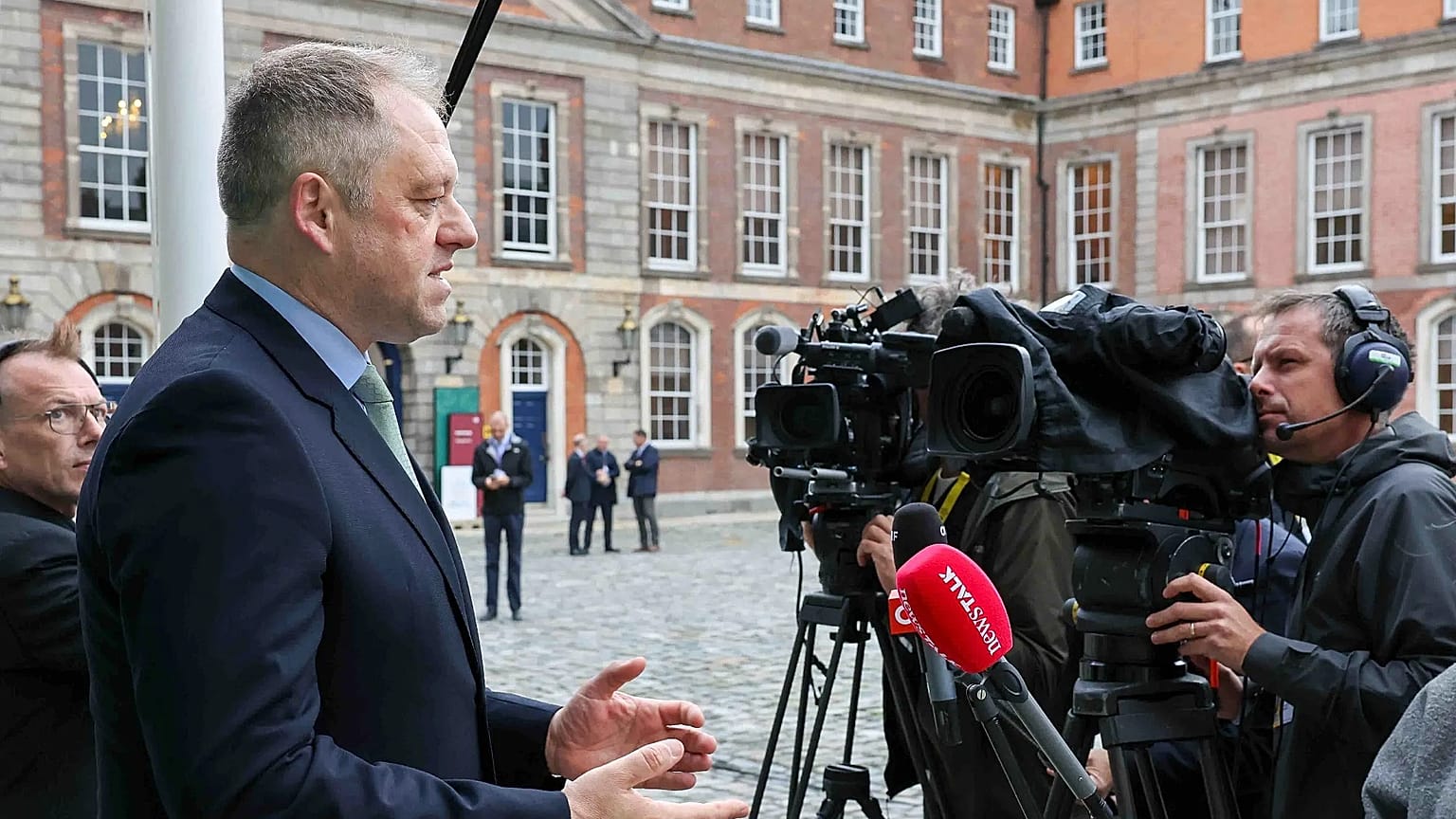













The Irish presidency wants EU member states to set a realistic revenue target for new Europe-wide taxes as it prepares a new compromise proposal on how to fund the next budget.
European Union member states have been asked to specify a realistic volume of revenue to be raised by new Europe-wide taxes, and to outline which adjustments are needed, as Ireland's EU Council presidency irons out a new compromise for the bloc's budget.
 ADVERTISEMENT
ADVERTISEMENT
ADVERTISEMENT
The thorny issue of creating fresh EU taxes, known as own resources, to finance the next long-term budget was on the table at a meeting of European ambassadors on Tuesday, with the Irish presidency testing the ground for a new compromise package.
"The vast majority of member states are willing to engage on a package of new own resources and adjustments to the existing system," reads a note shared ahead of the meeting.
"If each criticism were accounted for, the package would be minuscule. To arrive at a substantial package, compromises will need to be made by all."
At an informal ministerial meeting last week, several senior EU officials reiterated that own resources are an essential part of the next Multiannual Financial Framework (MFF), pushing back on the scepticism of the most "frugal" countries.
Finding the money
The Irish presidency has been holding bilateral meetings with all member states at both ambassadorial and ministerial levels, while European Council President António Costa is touring EU capitals for his annual round of consultations.
The Irish government says that based on what it has heard, of the Commission's original proposals for own resources, the most consensual is Carbon Border Adjustment Mechanism (CBAM), "with many open to increasing the call rate further."
The CBAM puts a carbon price on certain imported goods, such as steel and cement, so foreign producers face a similar carbon cost to EU producers.
The note ahead of Tuesday's talks also states that the tax on electronic waste "receives a broad degree of support, with criticism largely more technical in nature than political, relating to its statistical nature and methodological issues".
By contrast, most member states are critical of the Corporate Resource for Europe, which would require large companies with turnover above a certain threshold to pay a yearly lump sum. The tax is widely seen as running counter to the EU's current pro-business agenda.
The Irish presidency also finds many member states critical of the Tobacco Excise Duty Own Resource. Several countries are raising concerns about a potential rise in the black market and a drop in the quality of tobacco products.
On the Emissions Trading System, the presidency is more optimistic, noting that most EU countries are open to it, though certain countries remain opposed.
On the proposals put forward by the European Parliament, most national governments were either opposed or doubtful they could be implemented by 2028. The Commission has estimated that taxes on online gambling, digital services and cryptocurrency could generate up to €11 billion a year.
According to the note, a small group backed the digital services levy as worth considering, but several member states raised "geopolitical concerns," a reference to the risk of trade retaliation from Washington.
Some capitals put forward their own suggestions for EU-wide revenue streams, including a sugar tax, 5G licences and a financial transactions tax.
"Many member states link their willingness to engage on individual own resources to their overall satisfaction with the MFF, and suggest that balance may in part be found across both the expenditure and revenue sides," the document continues.
The presidency also noted "widespread support" for cutting the retention rate on traditional own resources, the share member states keep to cover collection costs, from 25% to 10%, with only a small number of countries opposed.
Finally, on joint debt, the Irish government says there is "openness" to changing the repayment schedule for Next Generation EU, the post-pandemic stimulus instrument the bloc would otherwise start repaying in 2028.
However, "some other member states were critical or strongly opposed", the document continues, adding there is some support for new borrowing tied to specific instruments.
The own resources issue will be discussed at the next General Affairs Council on 22 September, and at the European Council summit on 15-16 October. The Irish presidency is expected to produce a new compromise text by early October.