




























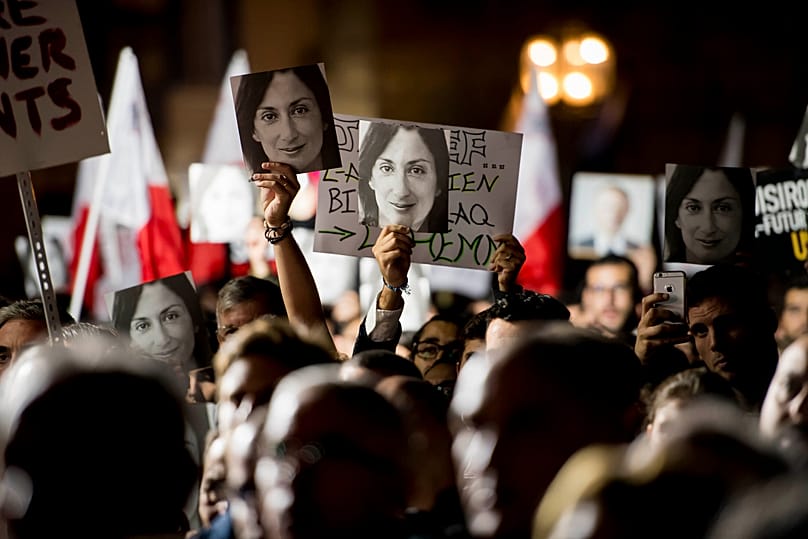
His arrest in 2019, as he was sailing away from Malta on his yacht, sparked a series of mass protests in the country that culminated with Prime Minster Muscat’s resignation.
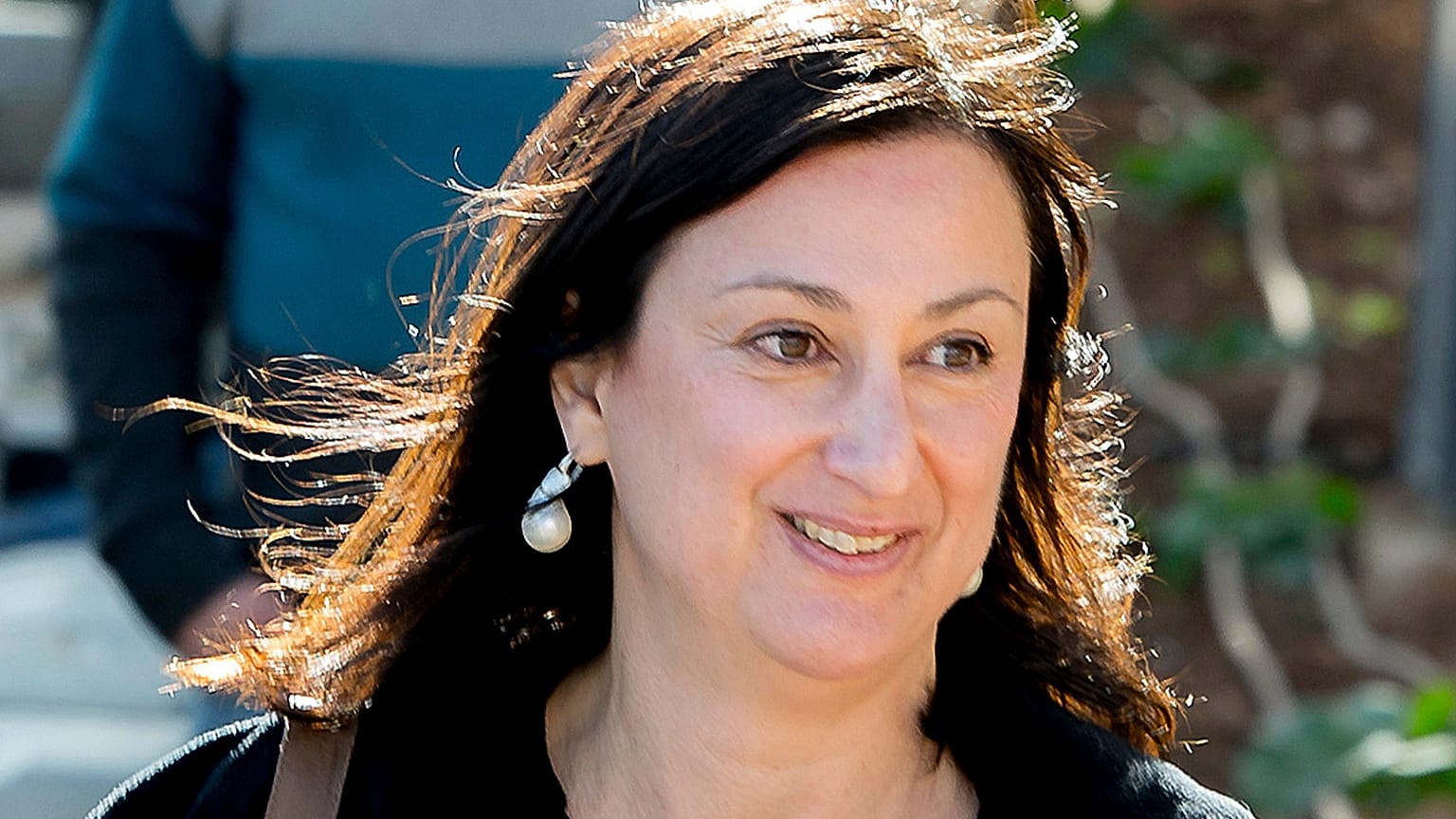
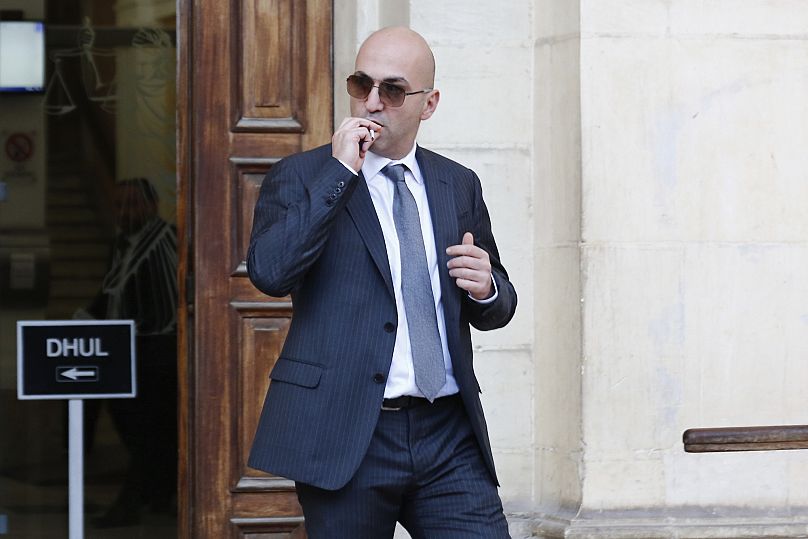
A jury in Malta on Wednesday found Maltese businessman Yorgen Fenech not guilty of charges related to the 2017 car bomb killing of investigative journalist Daphne Caruana Galizia.
 ADVERTISEMENT
ADVERTISEMENT
ADVERTISEMENT
Caruana Galizia's killing shocked Europe, sparked protests that led to the resignation of a prime minister and exposed a culture of impunity in Malta, the European Union's smallest member state.
Fenech, a prominent Maltese businessman, was indicted in 2021 on charges of complicity and criminal conspiracy. He was involved in a consortium that won a controversial contract with the Maltese government to build a power station.
Prosecutors accused Fenech of masterminding the killing and of ordering and paying for it.
Fenech pleaded not guilty, and the jury on Wednesday found him not guilty on both counts. He was the last of a half-dozen people charged over the plot to be prosecuted.
Following the verdicit, he walked out of the Valletta courtroom to a chaotic scene outside, with hecklers yelling as he walked into a waiting car. He made no comment.
Targeted over her anti-corruption investigations
Caruana Galizia, 53, was killed on 16 October 2017 when a car bomb exploded as she was driving near her home.
She had reported extensively on suspected corruption involving political and business figures in Malta.
Her investigations included members of then-Prime Minister Joseph Muscat's inner circle, whom she accused of having offshore companies in tax havens revealed by the Panama Papers. Her reporting also scrutinised opposition figures and Maltese business leaders.
At the time of her death, Caruana Galizia was facing more than 40 libel lawsuits.
An independent inquiry into her killing, published in 2021, concluded that the Maltese state “has to bear responsibility” for the assassination due to a culture of impunity that emanated from the highest levels of government.
Others prosecuted over the killing
In 2022, George Degiorgio and his brother Alfred Degiorgio pleaded guilty to carrying out the killing and were each sentenced to 40 years in prison.
In 2025, Jamie Vella and Robert Agius were sentenced to life in prison, the maximum possible penalty, after being convicted of complicity in the murder. The two men were accused of supplying the bomb that killed Caruana Galizia.
Another man, Vincent Muscat, pleaded guilty in 2021 for his role in the slaying, and was sentenced to 15 years in prison.
Melvin Theuma, a taxi driver who admitted acting as a middleman, was granted a presidential pardon in 2019 in exchange for his testimony.
'Our country failed to protect Daphne'
Caruana Galizia's children were at the forefront in demanding accountability and justice for her death. Her sons were in the courtroom when the verdict was read out but left without commenting.
In a statement later posted to Facebook, the family said the verdict denied Caruana Galizia the “justice she deserves."
“Nine years after Daphne’s brutal assassination, the institutional failures that enabled her murder remain unaddressed and unreformed. Lasting justice means no person should ever face the same risks again," the statement said. "Our country failed to protect Daphne. It owes it to her to prevent other lives being lost.”
No cameras were allowed in the courtroom, as is customary in Maltese criminal trials.