

















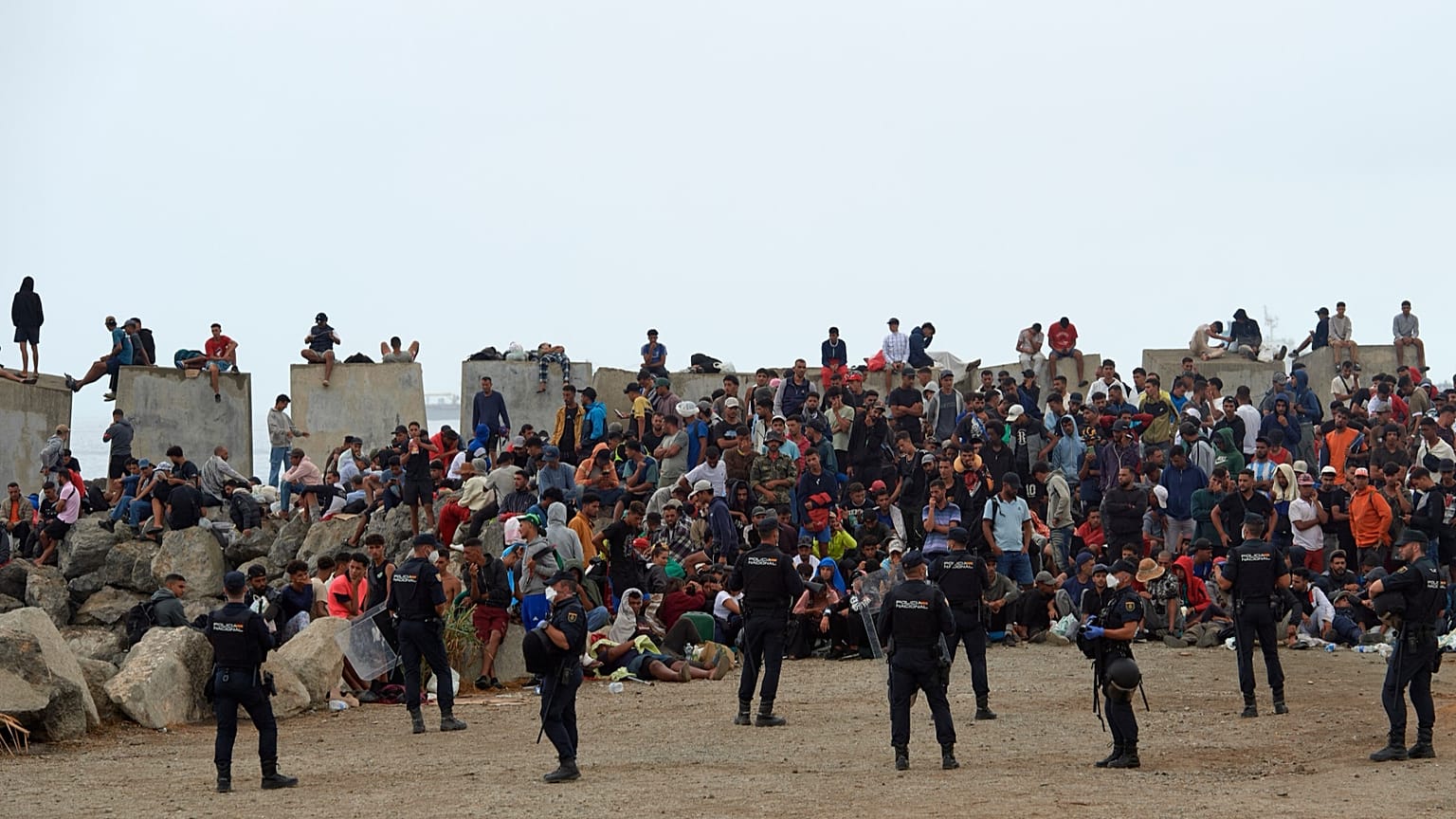













Meanwhile, Spain's interior minister called for calm after Ceuta residents clashed with police during protests against migrants who have remained in the enclave following a mass influx.
Spain has asked the European Commission (EC) for the support from Frontex and Europol to assist with the screening of migrants who are staying irregularly in Ceuta, according to several Spanish media outlets.
 ADVERTISEMENT
ADVERTISEMENT
ADVERTISEMENT
Spain's Interior Minister Fernando Grande-Marlaska has asked the EC for Frontex, Europol and the European Union Agency for Asylum (EUAA) to "reinforce the device set up to address the management of the triage and subsequent processing of the personal files of the immigrants who still remain in Ceuta irregularly."
The Interior Ministry also demanded the extension of Operation Minerva, a joint initiative of the Spanish police and the EU border protection agency Frontex.
Madrid ask that that operation run until 2 September until "the situation created in the autonomous city is resolved."
Madrid also asked for the " assistance of the European Union Agency for Asylum in conducting interviews and providing interpreters" in order to triage migrants.
Due to space limitations in Ceuta, this process is expected to be carried out electronically.

The Interior Ministry announced on Friday that Ceuta's border would be reinforced with a package of "extraordinary" measures such as extending the Tarajal and Benzú breakwaters, a permanent system of maritime containment buoys, aerial surveillance with drones, light intervention vessels and remotely operated underwater devices.
At the same time, Ceuta's Assembly unanimously called on the central government on Friday to act "immediately and without further delay" arguing that the city is in an "extreme situation, on the verge of collapse."
The Board of Spokespersons, together with the non-affiliated MPs, unanimously approved on Friday an institutional declaration calling on the government to adopt urgent measures one month after the mass entry of at least 72,000 migrants from Morocco.
"Ceuta has lost its way of life and its calm. We do not have much time to avert disaster," Ceuta's President Juan Vivas warned.
The declaration calls for a return to their countries, "in accordance with the law" of those who took part in the mass entry and are still in Ceuta. It also backs citizens' right to demonstrate, as long as it is done "peacefully and in an orderly manner," and condemns violent incidents recorded in recent days.
"No one can or should take the law into their own hands. The defence of Ceuta and the interests of its people can only be pursued through legality," Vivas said.
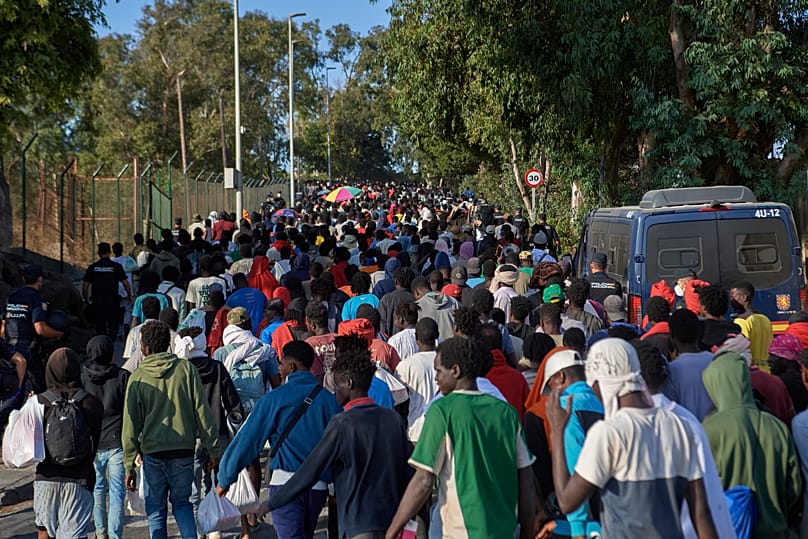
Appeal for calm
Meanwhile, Spain's interior minister called for calm on Friday after residents of Ceuta clashed with police during protests against migrants who have remained in the North African enclave following a mass influx.
Tensions have been high in the territory of 80,000 people since at least 72,000 people crossed into Ceuta over several days in July, triggering a Europe-wide migrant alert.
Spain's leftist government says most have since left the enclave of 18.5 square kilometres but thousands remain wandering the streets and sleeping on beaches.
Demonstrations have intensified in recent days, with some protesters clashing with police on Thursday at a beach where migrants have been sleeping. Some of their belongings were burned.
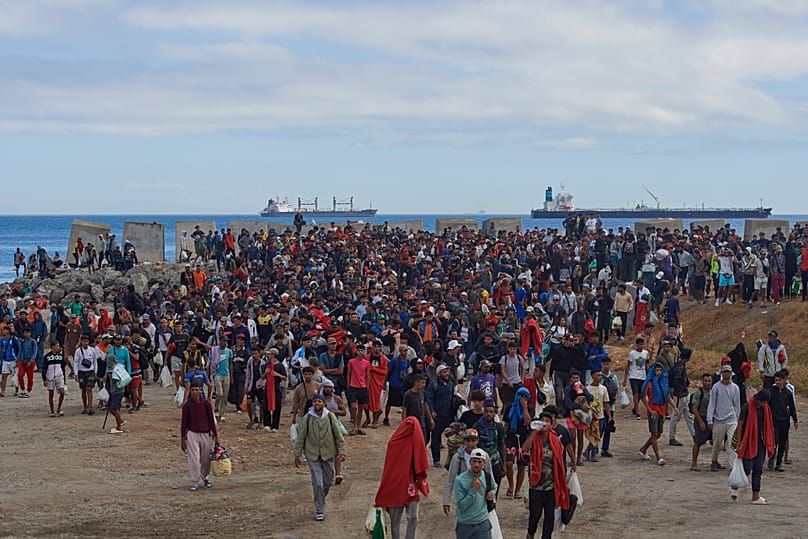
A soldier was injured in a separate incident on Thursday when migrants threw stones at troops, while 12 Moroccan migrants were arrested.
Two more arrests were made after migrants attacked a police officer, sources said.
"Violence is not the answer," Interior Minister Fernando Grande-Marlaska told parliament on Friday.
"I call for calm and an end to any form of violence, because...violence is not the way to resolve any problem with the complexity" of that facing Ceuta, he added.
Right-wing and far-right parties have demanded that all the migrants be rounded up and sent back to their home countries.
Grande-Marlaska accused them of "inciting hatred and confrontation" in Ceuta.
The government has warned that each individual must be identified to determine whether they are entitled to asylum or subject to deportation, while unaccompanied migrant children require special protection.
Ceuta and Melilla, another small Spanish territory in North Africa, form Europe's only land border with Africa.