














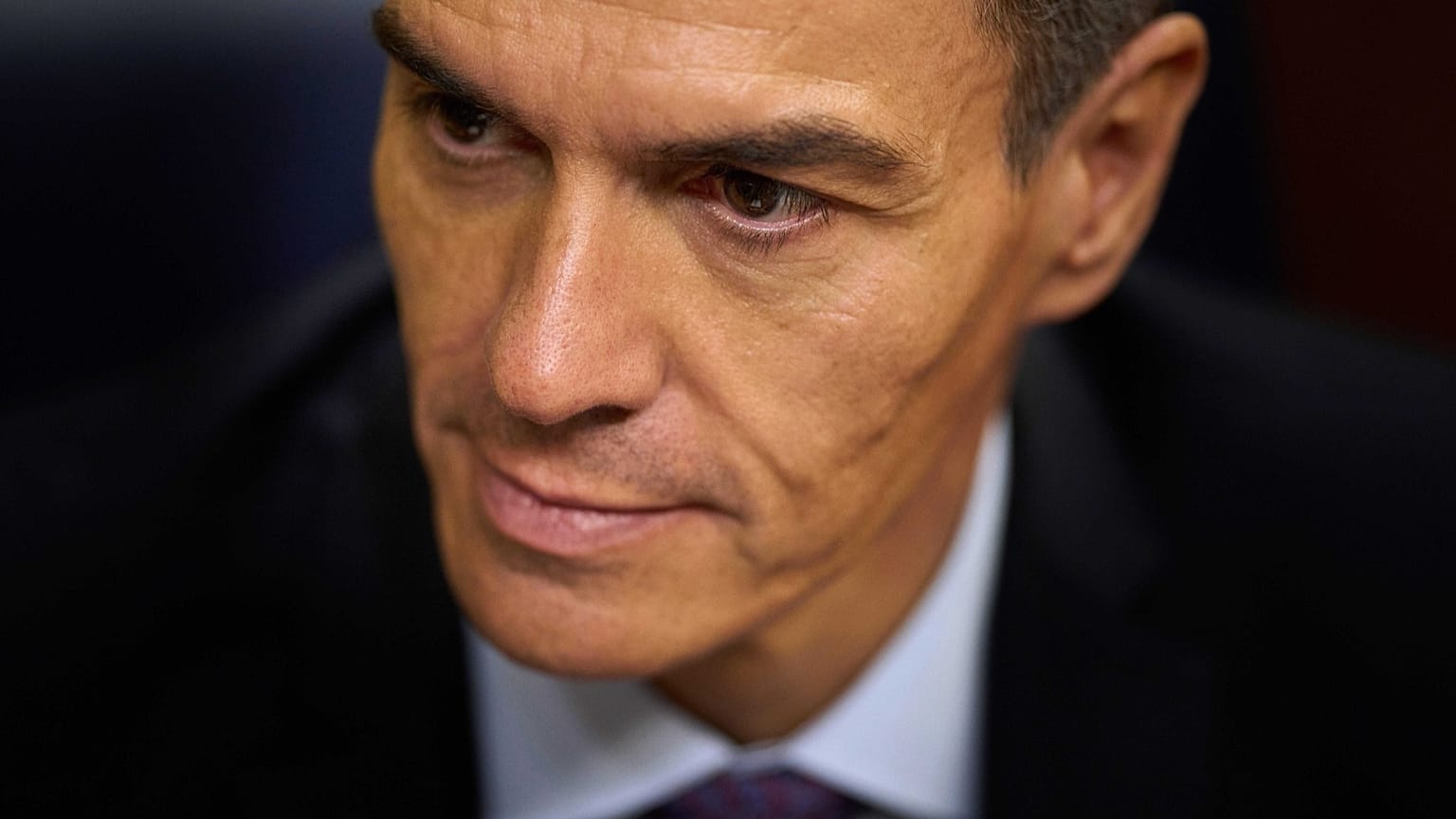













The Ceuta crisis exposed Spain’s growing marginalisation within Europe. Analysts say Sánchez’s disputes with EU partners over security, migration, China and defence are reinforcing perceptions of an increasingly isolated Madrid.
The European outrage at Spain over the crisis in Ceuta has subsided on the surface, but the incident has revived a broader question in Brussels: is Spanish Prime Minister Pedro Sánchez becoming what Danish MEP Henrik Dahl called Europe's "red Orbán" — a left-wing leader increasingly isolated from the EU mainstream?
 ADVERTISEMENT
ADVERTISEMENT
ADVERTISEMENT
Though the merit of the "red Orbán" label is debatable, the Ceuta crisis has become the clearest sign yet of the growing isolation of Spain and Sánchez within the European political landscape.
“Like Orban, he is seen as a spoiler,” said Dahl, a member of the European People’s Party, Europe's largest conservative party. "Sánchez is not on the same page as almost everybody else, and he’s seen as free-riding and really negligent on security issues."
Unlike Viktor Orbán, who used his time as prime minister of Hungary to obstruct EU programmes, such as sanctions packages, financial support for Ukraine and other measures, Sánchez hasn’t continuously vetoed European legislation.
Nonetheless, Dahl cited a number of policies exposing Spain's divergence from the 26 other European leaders, including Madrid's softer position on China, its rejection of new NATO defence spending targets, its "humane" approach to migration, and balancing support for Palestine with criticism of Israel.
“He is on a totally different page than almost everybody else with China,” Dahl said of Sánchez, using Beijing as an example of one the wedges. “He is seen as someone who simply does not understand that China is weaponising globalisation.”
Spain previously called on Brussels to “reconsider” tariffs on Chinese electric cars, exposing divisions in how the bloc approaches Beijing over trade.
A trip by Spain’s King Felipe VI to the Chinese capital in November, the first such visit in 18 years, also ruffled feathers in Brussels, as the bloc continues to look for ways to keep economic pace with the superpower.
“NATO is obviously another issue because Spain is the only country that has not agreed to the 5 percent target, and this is being seen as not very constructive,” Dahl added.
NATO defence expenditure data from 2026 shows that Spain is expected to spend around 2 percent of its GDP on defence this year. Countries like Slovenia and Croatia will spend less than that, and Italy will only spend 2.1 percent.
But the biggest point of difference between Spain and the rest of Europe is migration.
The Ceuta crisis, which saw roughly 72,000 people from Morocco cross into the Spanish exclave late last week, crystallised concerns that Spain's policies are putting it increasingly at odds with its European neighbours, despite the country’s growing influence in Brussels under Sánchez.
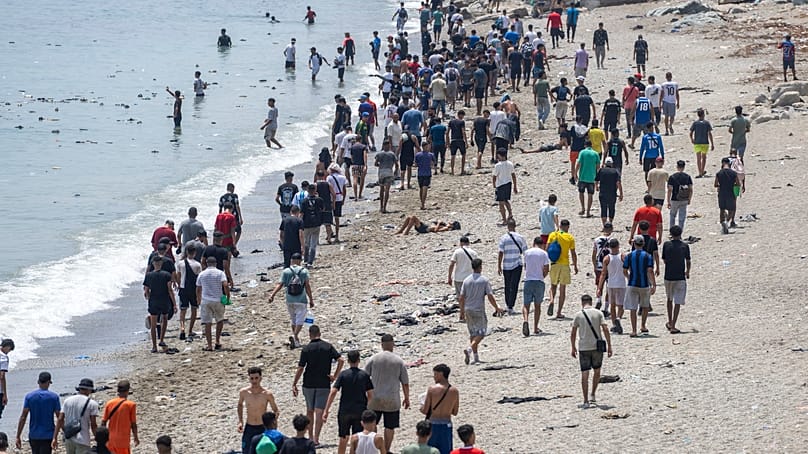
Madrid's recent migrant regularisation has deepened tensions with European partners over migration policy, with critics claiming it as a factor behind the mass arrivals in Ceuta.
On Saturday, 22 heads of state sent a joint letter to European Commission President Ursula von der Leyen and European Council President António Costa to express their “serious concern” over the incident and Sánchez’s migration policies.
“We recognise that the recent ruling of the Spanish Supreme Court has been used to trigger this attack and abuse our migration and asylum system,” the letter read.
“We have a duty to effectively deter and relentlessly combat illegal migration, by coordinating our action, strengthening our external borders and addressing all policies that can serve as pull factors, such as the regularisation of (a) very large number of irregular migrants.”
As Dahl noted, if 22 of the EU’s 27 leaders signed a letter expressing their frustration, they were not voicing a minority position: they represented the majority.
One EU diplomat told Euronews that most of the fury stemmed from the need to appease the leaders’ own electorates. At least half a dozen of those that signed the letter are facing national elections in 2027.
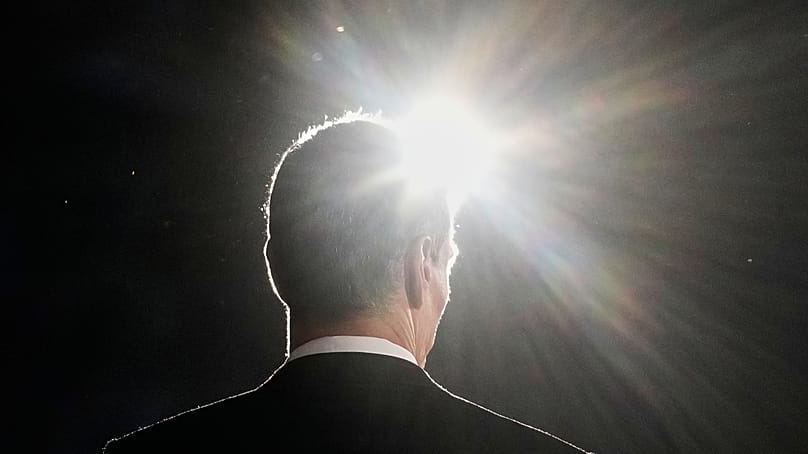
“The fact that he is isolated is a reality,” said Spanish economist Alicia García-Herrero, who also advises the government in Madrid. “I believe that Sánchez has felt isolated for a long time."
García-Herrero said that the speed in which this letter was written, and signed by 22 leaders, demonstrates leaders were harbouring certain feelings towards Sánchez regarding other policies. “This just hit him on the face, this letter,” she said.
García-Herrero believes potential disunity, and further isolation for Spain, could be on display at the upcoming European Council summit in October. But the anger directed at Sánchez could in fact spur him on. “If he feels isolated, he may feel like he has nothing to lose," she said.
Migration is set to dominate the summit, and European leaders are expected to choose a new course of action to tackle the problem.
Still, others reject the idea that Spain is isolated in Europe, arguing that the country remains an essential counterweight on a continent that has shifted increasingly to the right.
Vice President of the European Parliament Javi López, a Spanish MEP from the Socialists and Democrats group, categorically refuted the notion that the Spanish prime minister is "the red Orbán”, blasting it as an "insane" comparison.
"We are an important part to ensure and guarantee the political equilibrium of Brussels," he said. "Without us, it would mean a collapse of the European institutions."
López insisted that Sánchez supports European unity and the rules-based order, and is "the most important" leader of the European centre-left.
He also reiterated that European Council President António Costa and other senior leaders from the European Commission, such as European Commission Executive Vice-President Teresa Ribera, hail from the left of the political aisle.
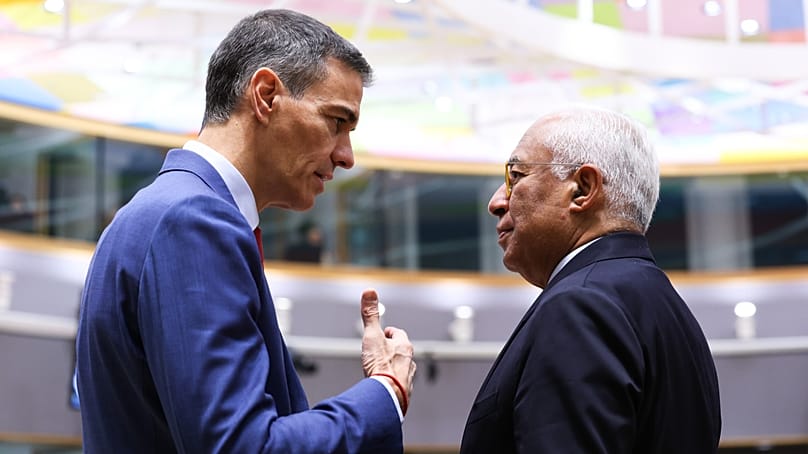
For López, Spain is not isolated but leading the way on policies that often go on to win broader European support. He pointed to the way Madrid has stood out in Europe for its criticism of US foreign policy, the Israel-Hamas war, and Iran’s crackdown on anti-government protests.
"We were the first ones to say what is going on in Iran is a clear violation of international law," he said. "After months saying that Europe was paying the energy, economic, and geopolitical bill of this in Europe, of this war initiated by United States, more people are defending us."
"And now we have a majority in the council asking for the suspension of parts of the (EU-Israel) Association Agreement."
As Sánchez said this himself in March at a Spanish Socialist Workers' Party rally in the city of Soria: “We are not alone. We are the first.”