





























The massive migrant influx that began on Thursday could be the largest irregular crossing attempt into the EU in such a short period of time.
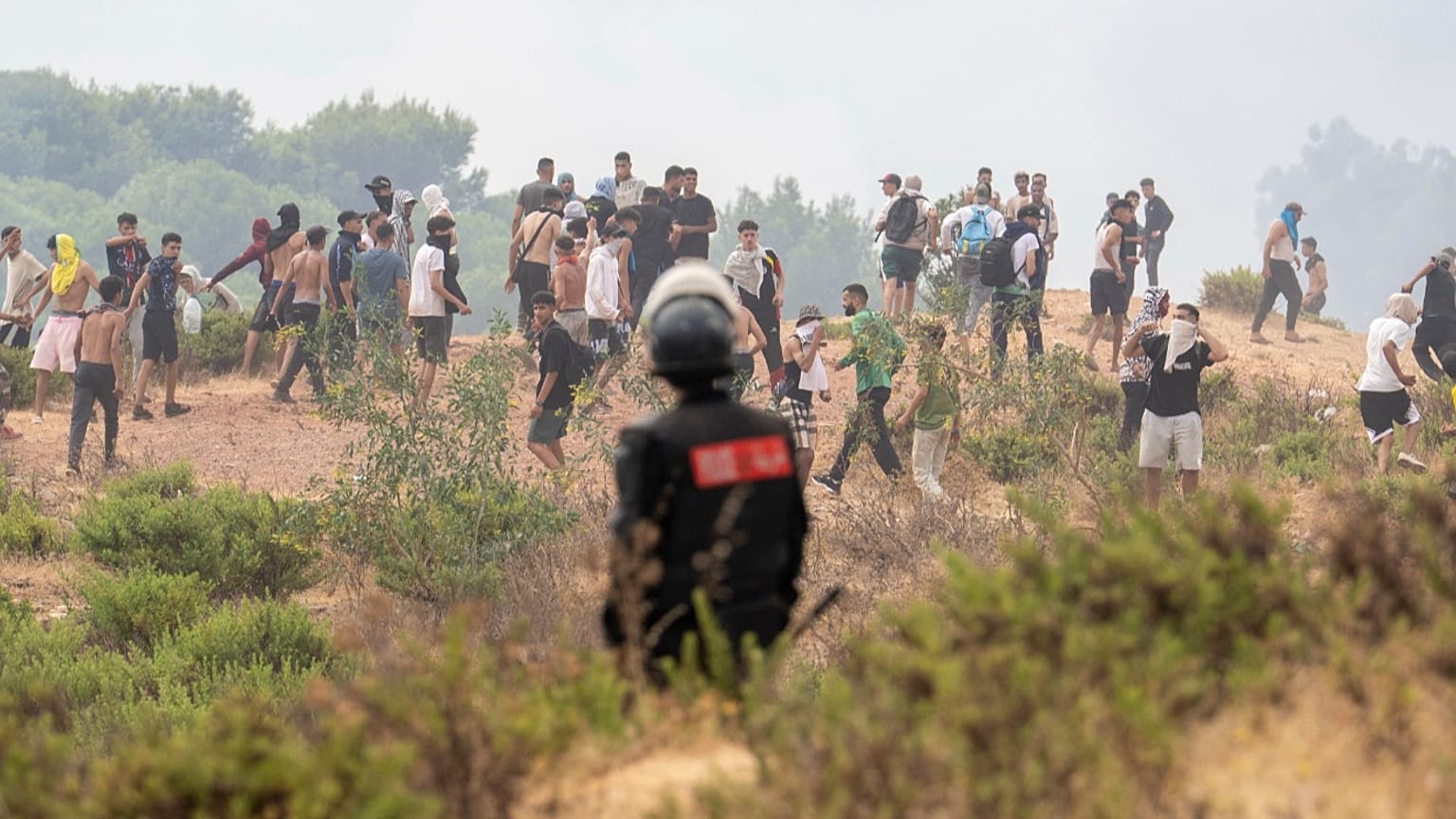
Since Thursday, thousands of migrants have crossed from Morocco into the North African Spanish enclave of Ceuta.
 ADVERTISEMENT
ADVERTISEMENT
ADVERTISEMENT
The latest estimates by the Spanish government set the number at around 60,000.
If the figures are confirmed, the event would be the largest single surge in irregular arrivals ever recorded on EU territory.
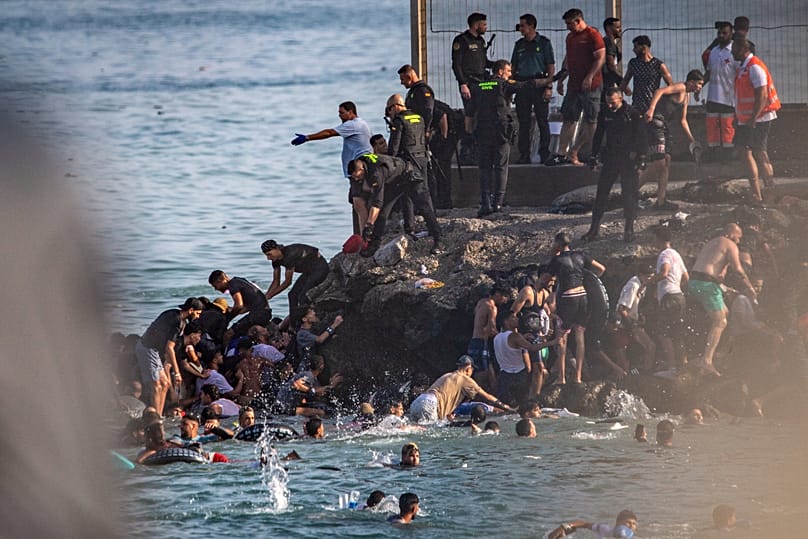
Most migrants came by sea, swimming from the Moroccan border town of Fnideq. They reached several beaches, especially El Tarajal, one of the closest to the border.
At least 80 people have died in the attempt, many of whom in a stampede while trying to cross breakwater fences.
In an address to the nation, Spanish Prime Minister Pedro Sanchez called the event an attack on the country's territorial integrity," which "deserves our most resounding and energetic condemnation."
Sanchez blamed it on migrant trafficking, citing a July Spanish Supreme Court ruling which the gangs allegedly misinterpreted as a ban on returning migrants who arrive via sea without prior trial.
How does the current Ceuta migrant crisis compare to others?
Ceuta has already experienced similar pressure in 2021, when around 8,000 migrants broke into the enclave in just 48 hours, between 17 and 18 May.
At the time, Morocco's reported "border relaxation" was widely interpreted as political retaliation over Spain's decision to allow into the country for medical treatment Brahim Ghali, the leader of Western Sahara's pro-independence front, Polisario.
But over the past decades, Europe witnessed several other spikes, often linked to wars and diplomatic rifts, rather than long-term migration trends.
The last major crisis took place in 2015 and 2016, sparked by the war in Syria.
At the time, Hungary had become one of the main countries of transit, with almost 400,000 irregular crossings reported in 2015, mainly from the Western Balkan route. It prompted Budapest to erect a four-meter-high fence on its southern border with Serbia.
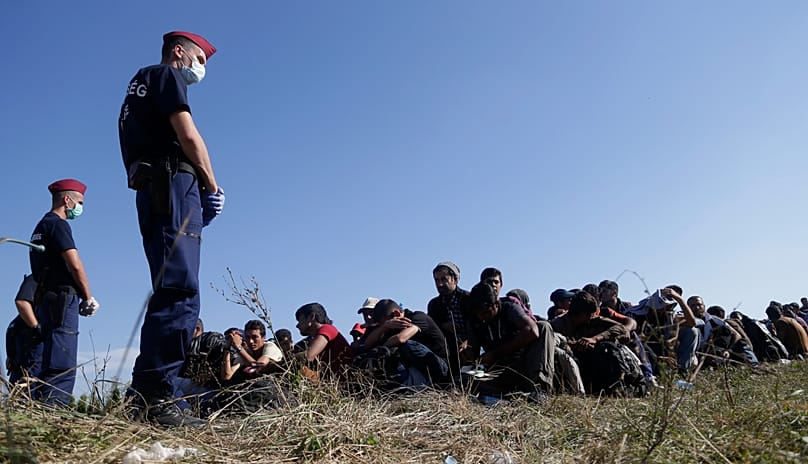
Yet, daily arrivals at the peak of the exodus - from 4,000 to over 8,000 - were nowhere near what Ceuta's been experiencing since Thursday.
During the same period, the Greek island of Lesbos also came under extreme pressure, receiving almost half a million arrivals in the same year, according to the UNHCR.
Greece faced another major challenge in 2020, when Turkey announced it would no longer prevent migrants from reaching Europe, following the killing of 33 Turkish soldiers in Syria's Idlib province during an attack by the Syrian government against rebels.
At the time, Turkey claimed it had opened the border to 80,000 migrants, who then headed towards Greece along the Evros River. The flows lasted for a month, leading to a tense standoff between Athens and Ankara.
Which other European borders are most fragile or under pressure?
Following Russia's full-scale invasion of Ukraine, new flows of illegal migrants into the EU - mainly Poland, Latvia and Lithuania - started coming from Belarus. Minsk was accused of relaxing its border control in the context of hybrid pro-Russia warfare.
In 2025, Frontex, the EU border-control agency, detected nearly 11,000 irregular border crossings. However, figures have been declining since 2024 and remain far below the numbers recorded on other busy EU migration routes, namely the eastern Mediterranean (51,000 detections in 2025) and the central Mediterranean (roughly 66,000 in 2025).
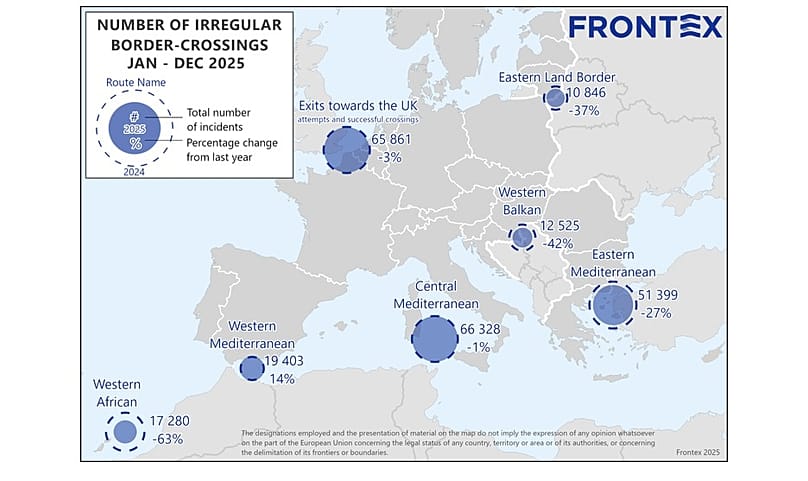
When it comes to pressure on EU borders, Italy often found itself on the frontline.
One of the most striking recent surges occurred in Lampedusa, a small island between Tunisia and Sicily, where 7,000 migrants arrived in just two days in September 2023.
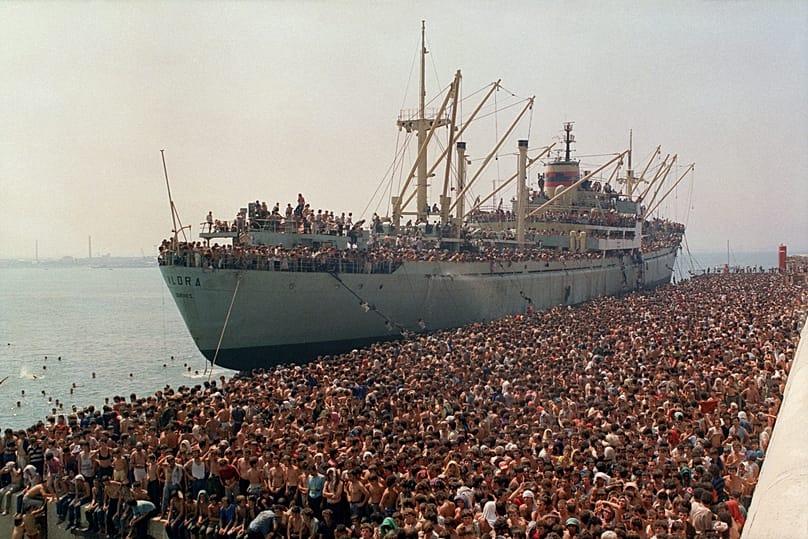
But perhaps what remains most etched in Italy's collective memory dates back to 1991, when a ship reached Bari carrying around 20,000 Albanian refugees, following the collapse of the country's communist regime.