













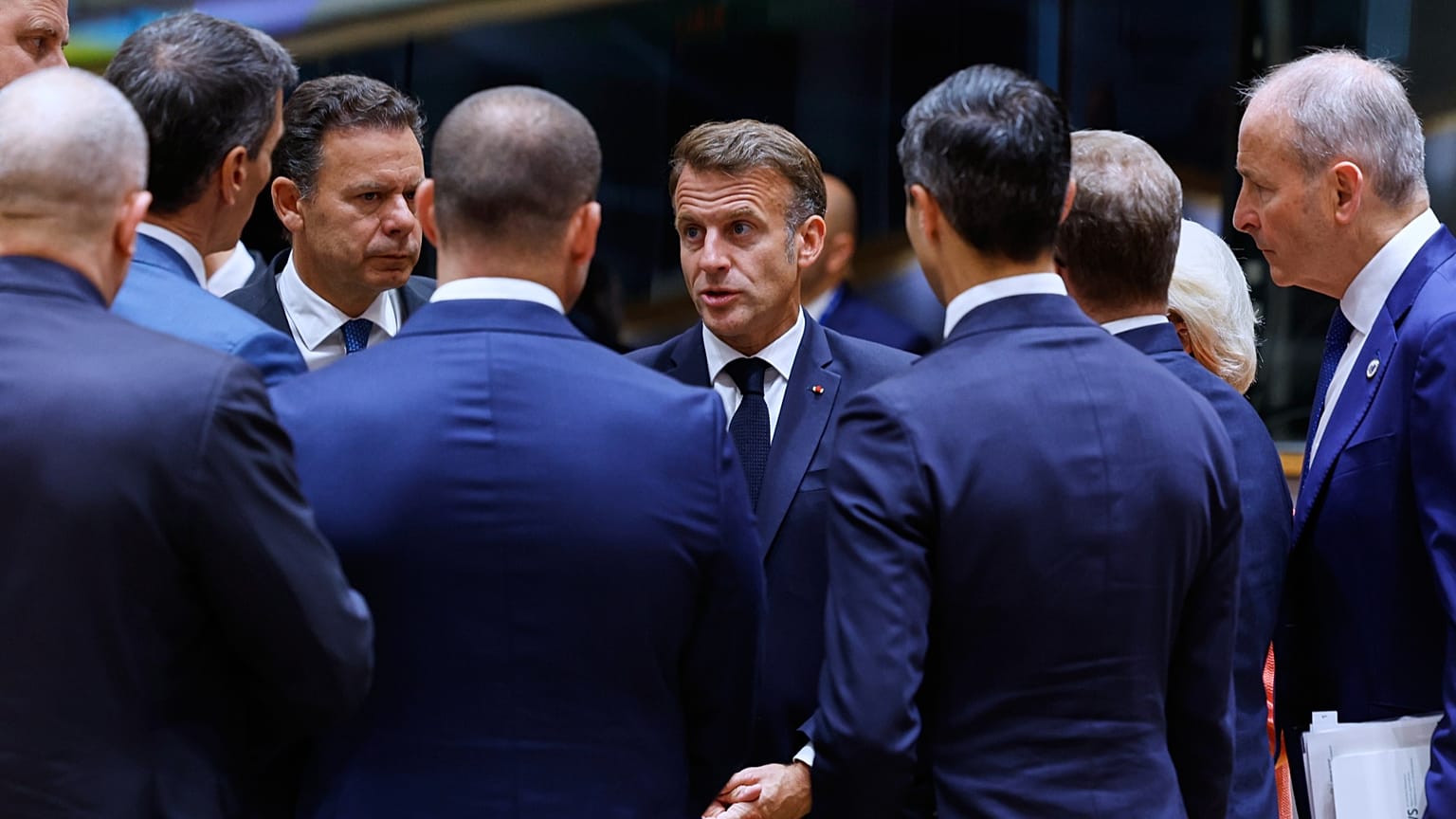














The second day of the EU summit has come to an end in Brussels. The European leaders discussed the bloc's long-term budget, the Middle East, and relations with Israel.
EU leaders spent the morning debating the next long-term budget and moved on to discuss the situation in the Middle East and possible measures targeting Israel over its actions in the West Bank and Gaza.
 ADVERTISEMENT
ADVERTISEMENT
ADVERTISEMENT
The budgetary discussions went as expected, with the bloc's member states split between so-called frugal countries who want to scale down their financial commitments and those who want an ambitious budget to finance traditional financial programs like cohesion policy and the common agricultural policy.
On the Middle East, the focus of the discussion was to examine the consequences of the US-Iran deal, including a potential naval mission to secure the international flow of vessels in the Strait of Hormuz.
Leaders also discussed possible restrictive measures targeting Israeli settlements in the Palestinian occupied territories.
Here's how the day unfolded.

 ${title}
Live ended
And just like that, it's over
The EU summit has come to an end, and so has our live blog.
Together with the G7 summit, it's been five consecutive days of Euronews live-blogging the twists and turns of geopolitics, which never cease to fascinate us.
Thank you for reading us and enjoy the weekend!
Hungary's Magyar argues against opening multiply clusters with Ukraine
Hungarian Prime Minister Péter Magyar has pushed back against the "fast-tracking" of Ukraine's EU accession, making his mark at his first European Council summit since his election victory in April.
Speaking to reporters after the meeting, Magyar said he had successfully pushed for the removal of language from the summit's closing statement that called for Ukraine's admission to the EU "as soon as possible" and for the opening of all six negotiating clusters with Kyiv.
"We don't think this is a good idea. First, because the first cluster has just opened — the ink hasn't dried on it yet. And second, it sends the wrong message to the Western Balkan countries, which have been working for years to achieve membership," Magyar said.
He reiterated that the accession process must remain merit-based.
Macron and Sánchez slam 'ineffective' return hubs for migrants
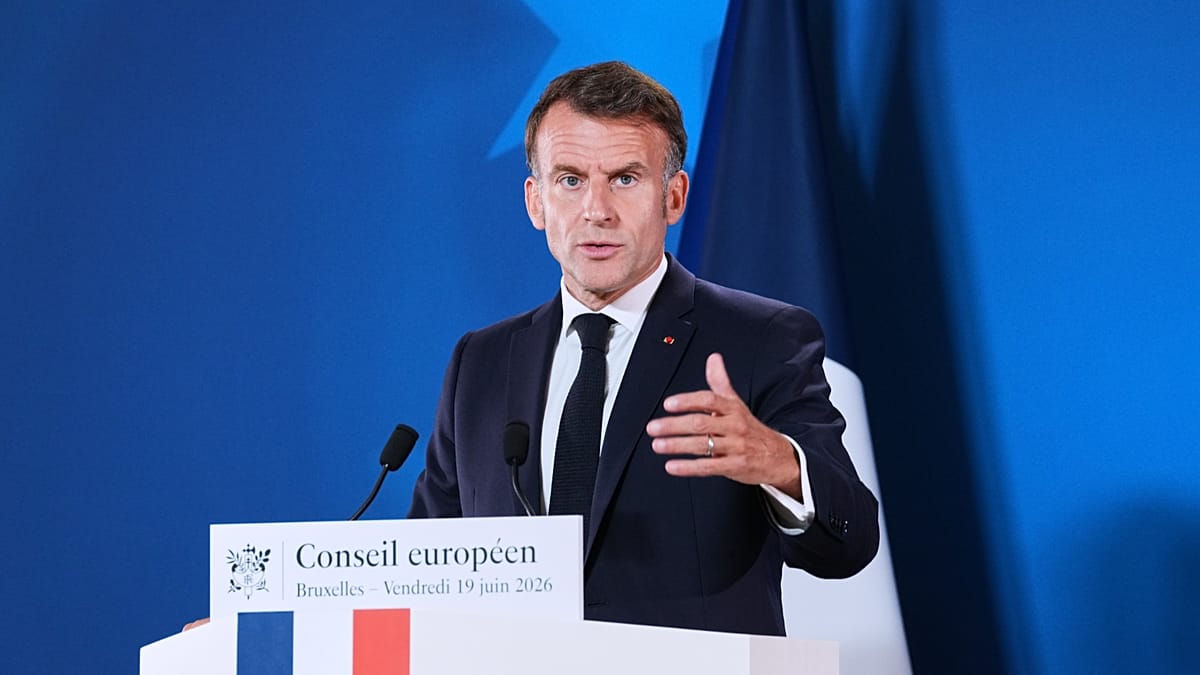
French President Emmanuel Macron issued a sharp rebuke against return hubs to be built outside the European Union, a solution pursued by the majority of EU countries.
While 19 EU leaders across the bloc signed a joint declaration calling to make "full use" of a new European law that enables the construction of deportation centres for irregular migrants in third countries, Macron believes this path runs counter to European values.
"I am not sure that this is our Europe. I don't know if these are the fundamental principles on which our Europe was built," the French leader said at the end of the summit on Friday. "And I don't think it's effective, either. The proof is that I have not seen anyone make it work so far," he went on, underlining his profound displeasure.
Macron says he disagrees, "both pragmatically and in principle," with the idea to send migrant people to countries they have never been to, if they cannot be returned to their country of origin. "I invite you to consider what it is (in practice): this means that people who do not want to return to their country of origin or who cannot get back to their country of origin will be pushed into a third country, which will accept them in return for money," Macron said.
‘Not our Europe’: Macron and Sánchez slam return hubs for migrants
“I don’t know if these are the fundamental principles on which our Europe was built,” Emmanuel Macron said as he strongly criticized the increasingly popular p…
Belgium wants a coordinated response to tackle drugs trade
The booming European drugs market is causing so many problems that for the first time, challenges linked to the use and trafficking of drugs were discussed at the EU leaders' level.
"Our answer to this threat must not end at the borders," Bart De Wever, Belgium's Prime Minister, told reporters after the meeting.
Our health reporter Giedre Peseckyte has more.
EU leaders eye coordinated response to growing drug trade
European leaders on Friday urged the European Commission, EU countries and relevant agencies to strengthen coordination in a fight against a €31 billion-worth…
Costa did ‘nothing wrong’ opening diplomatic backchannel with Russia, De Wever says
The Belgian Prime Minister, Bart de Wever, has defended European Council President, António Costa, opening a diplomatic backchannel to the Kremlin in hopes of bringing an end to Russia’s invasion of Ukraine. De Wever said he “did not know” this was occurring, but also said Costa, “did nothing wrong”.
“I think it's completely normal that the president of the European Council opens a diplomatic channel that the possibility to receive or send out messages,” de Wever told reporters after a Council meeting in Brussels. “Discretion is, of course, a virtue that is better respected if you keep it for yourself.”
De Wever said a discussion of the matter on Thursday night at the meeting took up only “two minutes” of a five-hour long meeting. He said he heard “no criticism whatsoever”.
“I live under the impression that you, honorable members of the media, are turning indeed this into something that is bigger than it actually is in reality,” he said in response to a question asked by Euronews.
Macron hails EU willingness to turn words into action on China
Emmanuel Macron has confirmed that the European Commission was given a new mandate to develop stronger tools to contain China's overcapacities and market-distorting subsidies, suggesting Brussels is starting to take a harder line against Beijing.
"We gave a mandate to the European Commission because, in fact, things are going so fast," Macron said. "There are so many (European) sectors affected that it is legitimate to ask the question: What are the most effective approaches? I would add: What happens sector by sector?"
"We want to modernise these (trade) tools, and the Commission now has this mandate to be able to respond more quickly and say that as soon as there is a suspicion of unfair competition or when we see positions that pose problems, we must be able to react and protect."
The French president stressed that the EU approach should remain focused on de-risking rather than de-coupling.
'A billion-euro trade deficit per day with China is simply unsustainable', Costa says
"We want to engage in dialogue (with China), but we need to address the challenge that we are facing," Costa tells reporters.
"When a billion-dollar trade deficit per day is simply unsustainable and we cannot continue to raise these issues without any concrete results. Unfortunately, China hasn't delivered until now. That's why leaders asked the Commission to review our toolbox and see what we can do immediately and what we need to do to develop it."
Sánchez dismisses return hubs for migrants as "a sleight of hand"
Spanish Prime Minister Pedro Sánchez slammed the return hubs for irregular migrants to be built outside the EU, calling them "a political sleight of hand, which simply will waste financial resources."
"We need to collaborate with countries of transit [of migrants], because they are also suffering from irregular migration and therefore need cooperation from Europe, rather than the message ‘this is your problem."
His remarks come a few days after the final approval in the European Parliament of the return regulation, which allows EU countries to build controversial return centres outside the EU. Nineteen EU countries, led by Italy and Denmark, signed a letter, expressing the need to "make full use" of those hubs and to "move forward with solutions based in third countries as soon as possible.”
Spain's Prime Minister also said he had expressed solidarity to Meloni after Donald Trump claimed that she had begged for a picture with him at G7. "I do not even know how to qualify this attack, which is neither political nor personal," he said.
'Europe must be one of the architects of a just and lasting peace,' von der Leyen says
At the press conference closing the European Council summit, the EU Commission chief defended the idea that Europe needed to be involved in the peace negotiations with Russia.
"The only one consistently choosing violence is Russia. Our entire continent is at risk. And this is why Europe must be one of the architects of a just and lasting peace," von der Leyen said, adding that "Ukraine is in the driver's seat."
She also stressed that, sooner or later, Russia will have to come to the negotiation table and, when the time comes, the EU will stand by Ukraine.
'We must be able to convey our own messages directly to Russia,' Costa says
European Council President Antonio Costa defended his recent decision to instruct his chief of staff to establish a diplomatic channel, which caused a backlash from several EU capitals that had not been consulted before.
'What I’m doing is to establish a diplomatic channel. We cannot depend only on others to interpret Russian messages. We must be able to convey our own messages directly to Russia," Costa said in response to a Euronews question during the summit's concluding press briefing on Friday.
"I see no contradiction nor competition between different actors and formats; they are complementary. Only Ukraine can negotiate on its own behalf. For sure, the coalition of the willing and its leaders will also need to play a role regarding security guarantees," Costa added.
Sánchez backs Costa's attempt to open diplomatic channel with Russia
"Opening a diplomatic channel with Russia is absolutely understandable and, from Spain's point of view, even necessary," Spanish Prime Minister Pedro Sánchez said at a press conference after the EU summit, backing António Costa's initiative.
Earlier this week, Costa instructed his chief of staff to initiate a diplomatic channel with the Kremlin, reaching out to a senior aide to Vladimir Putin, without consulting EU governments in advance, a move that drew some criticism during the summit.
But Costa's approach was supported by EU Commission President Ursula von der Leyen, as reported by Euronews.
Sánchez said he considers the Council's president to be the best representative for the EU in the "institutional part" of the future peace talks with Russia, though he acknowledged that national governments should be involved when it comes to discussing the security guarantees to be provided to Ukraine.
Spain's prime minister also underlined that in future peace talks, the EU cannot act as a mediator.
"We have a stake in the matter, because we are not only talking about Ukraine, but also about the European security architecture," he said.
EU leaders express mixed reactions on Kallas-Israel clash
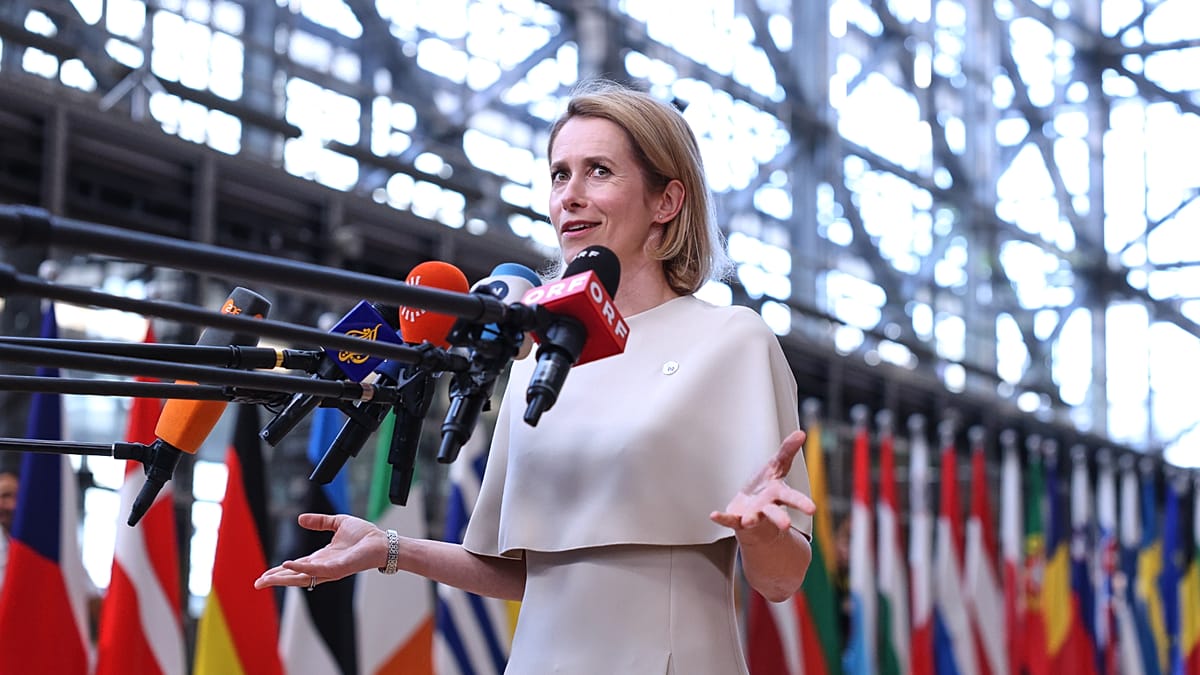
EU leaders have expressed conflicting views on the ongoing clash between EU foreign policy chief Kaja Kallas and Israel over alleged remarks comparing Israel to apartheid South Africa.
As a result, Israeli Foreign Minister Gideon Sa'ar cut off all communications with Kallas, who has neither denied nor confirmed the remarks. Israel's reaction has been dubbed "unacceptable" by Ireland, as the spat crystallises internal divisions on how member states approach the country.
"I don't share this characterisation. We need to talk about this at some point, but I don't share this characterisation at all," German Chancellor Friedrich Merz said.
The diplomatic clash arrives at a delicate moment for Kallas, following media reports that suggest ideas on a potential overhaul of her own diplomatic branch.
Kallas-Israel spat draws mixed reactions from EU leaders
EU’s foreign policy chief Kaja Kallas faced a mixed reaction at the Brussels summit over alleged remarks comparing Israel to apartheid South Africa, after Isra…
EU leaders have agreed on long-term budget 'architecture' – von der Leyen
The 27 EU leaders have reached a common understanding on how the upcoming EU long-term budget 2028-2034 should look like, Ursula von der Leyen said at a press conference.
The architecture, proposed by the European Commission, includes three main priorities: economic competitiveness, security and defence. The real difference between the proposal and the current budget is that agriculture and regional funds are inserted within national plans for each member states.
EU leaders are now entering a crucial phase of the negotiations, as the bloc needs to find a common understanding on the spending and revenues, a debate that puts several member states at odds.
Macron won't say if Costa consulted with him before opening channel with Moscow
Emmanuel Macron was asked during the press conference if Antonio Costa had consulted him before opening a diplomatic channel with Moscow, a move that many other leaders perceived as unilateral and uncoordinated.
Macron did not say, but he stressed his "confidence" in both Antonio Costa and Ursula von der Leyen.
"If we decide to have pointless debates in complex situations, we can waste a lot of time," he told a reporter who asked for confirmation. "I tell you what I think, and I tell you what I do: I have confidence in my partners. And so I work with the heads of state and government who are around the table, with President Costa and President von der Leyen, in pursuit of the same objectives. We all agree on that."
'We need to deepen partnerships with Gulf states' – von der Leyen
Ursula von der Leyen said that the crisis triggered by the disruption in the Middle East has underscored an "important lesson".
"We must not allow the global economy to be held hostage, we need to build other corridors and we will deepen our partnerships with the Gulf States," she told a press conference.
"A stable Middle East also requires a stable Lebanon. We support the disarmament of Hezbollah, and at the same time, it is important that Israel respects both the sovereignty and integrity of Lebanon," she said.
Commission will work on diversification instrument, von der Leyen says
The European Commission will work on new tools to counter macroeconomic imbalances, most notably the growing and "unsustainable" trade deficit with China, including a diversification instrument, President Ursula von der Leyen said.
"Europe has already built an extensive toolbox in recent years. Now we must use it more proactively and more strategically to defend our European interests," she said.
The Commission chief said that, during the European Council summit, EU leaders showed unity and clear support for a European response to the current situation, while also stressing that dialogue with China remains crucial.
Merz defends his plan for ‘associate membership’ for Ukraine
German Chancellor Friedrich Merz has defended a proposal he made last month to provide Ukraine with so-called associate EU membership before the country becomes a fully-fledged member state.
He told reporters that as his proposal would work without amending the EU treaties, any other solution is an "illusion" as the bloc is not in a position to achieve treaty change at this time.
"A country at war like Ukraine cannot become a country of the EU, but it can be an associate member, and later on a member," Merz explained.
Yet several member states have voiced scepticism about the German proposal, while Ukrainian President Volodymyr Zelenskyy has rejected "any alternative to full membership".
Merz said he had requested a debate on how to accelerate the accession process at the European Council summit in October.
Europe must be represented in Russia talks, Macron says
Emmanuel Macron has just addressed António Costa's decision to open a diplomatic channel with Russia, which has taken most member states by surprise and drew some backlash.
"We are not mediators. We stand with Ukraine," Macron said. "When negotiations take place, Europeans must be close to home, because Europe's interests are at stake. Europe is bound up with what is happening in Ukraine, through the assistance we have provided regarding enlargement, which concerns Europeans, and also through the financial support and loans we have made in its financial settlement."
"Therefore, the European Union should be represented, and President Costa understands that it will have a defined role. There will be a place," he went on.
"However, the member states will also have their place, and we cannot represent them when it comes to security guarantees, which will be a key element of any negotiation."
Macron said that the push for direct talks had been accelerated by pleas from President Zelenskyy, who asked Europeans to appoint a representative, but that the conversation shifted at the G7 summit this week when Donald Trump agreed to join a statement in defence of Ukraine.
"Things have changed these past few days because the Americans, for the first time since the election of President Trump, have said, 'We're on board with you, we support Ukraine'," Macron told reporters.
"And so the question today is not who, when, or how to negotiate with Russia. We have clarified our position. So it is up to Russia, to whom many offers have been made in recent months, to say when it will be ready to negotiate. And the negotiation will first take place between Russia and Ukraine, and it must bring the Americans and Europeans to the table."
Costa: Irish Presidency must strike 'own resources' deal by December
“We need to ensure that the EU has the resources it needs to deliver on what European expect from us: a more competitive, innovative, cohesive, autonomous and safer Europe," Costa said in his latest remarks. "Today, leaders agreed to task our Irish friends to accelerate work on new own resources in order to reach a deal in December."
The Irish Presidency takes the helm on 1 July.
Leaders gave mandate to complement EU's trade defence toolbox, Costa says
EU leaders gave the European Commission a political mandate to work on two tasks, European Council President António Costa said after the press conference closing the two-day summit on Friday.
The first is to continue constructive dialogue with the bloc's main economic partners to defend Europe's economic and security interests.
"Second, to develop and eventually complement our toolbox in the area of trade, defence and industrial policy. To make sure that the European Union has all the instruments it needs to defend its interests and de-risk its economic relations in the current context," Costa said.
Last night, EU leaders discussed global macroeconomic imbalances, most notably with regard to the flood of heavily subsidised goods coming into the EU market that are undermining European companies.
Merz won't play 'blame game' with China, but imbalances must be addressed
Speaking to reporters at the end of the summit, German Chancellor Friedrich Merz said leaders agreed on the need to "protect ourselves against imbalances and practices that distort the market", but that talks with China need to be constructive.
"We don't want to play the blame game," he said, but added that the EU needs to "remove these imbalances", in a reference to the bloc's ballooning trade deficit with China.
"We’re talking about distortion of competitiveness that is not acceptable"
He also referred to Beijing's artificial suppression of the Renminbi, its official currency, saying that he had raised the issue at the G7 meeting and that it also "affected the United States".
The European Commission President Ursula von der Leyen now has a mandate to prepare options for the EU's response to Chinese overcapacity, which is threatening to deal a fatal blow to many of Europe's strategic, homegrown industries.
Germany is considered one of the countries most sceptical of an assertive stance towards China. Berlin is wary to avoid an all-out trade war, some of its own industries are reliant on Chinese exports of components and materials.
Costa calls for deal on long-term budget by end of year
The EU member states should find an agreement on the financing of the bloc's long-term budget 2028-2034 by the end of the year, European Council President Antonio Costa told journalists on Friday during a press conference.
"We need those additional revenues to reach a deal in December," Costa said.
First presented in July 2025 by the European Commission, the €2 trillion budget will determine the political priorities for the next seven years. EU leaders entered the substantive phase of the negotiations during this week's summit.
'We must strengthen our capacity to invest,' Costa says
"In the face of growing external pressures on our competitiveness and prosperity, it is more important than ever to accelerate its own economic homework," António Costa told reporters. "We must strengthen our capacity to invest to become more competitive and autonomous."
"We have been moving our competitiveness and simplification agenda with one target in mind: making Europe more attractive for investment," he added.
The EU summit has ended
The two-day EU summit has come to an end.
Italian and Spanish leaders set out conflicting views on migration during debate, sources say
Italian Prime Minister Giorgia Meloni and Spanish Prime Minister Pedro Sánchez aired their differences during the leaders' closed-door debate on migration, according to two diplomatic sources.
Sánchez took the floor after Danish Prime Minister Mette Frederiksen steered the debate towards the EU's controversial recently-approved laws on migrant returns, which will allow member states to return rejected asylum seekers to so-called return hubs outside migrant territory.
A diplomat told Euronews Sánchez expressed scepticism and advocated instead for Spain's approach. His government has announced it will regularise 500,000 undocumented migrants, going against an EU-wide trend in migration policy.
Other leaders are said to have voiced their misgivings over Spain's mass regularisation, with Meloni the most vocal critic. According to one diplomat, Meloni said that Spain's move directly impacted other EU countries.
However, sources say the exchange was "not confrontational".
Euronews exclusive: Von der Leyen told EU leaders to consider mandate for talks with Russia
During yesterday's debate on Ukraine, Ursula von der Leyen told the 27 EU leaders that this is the right time to consider a mandate for negotiations with Russia. But she also insisted that Ukraine remain in the driving seat of the diplomatic process.
Read our exclusive story.
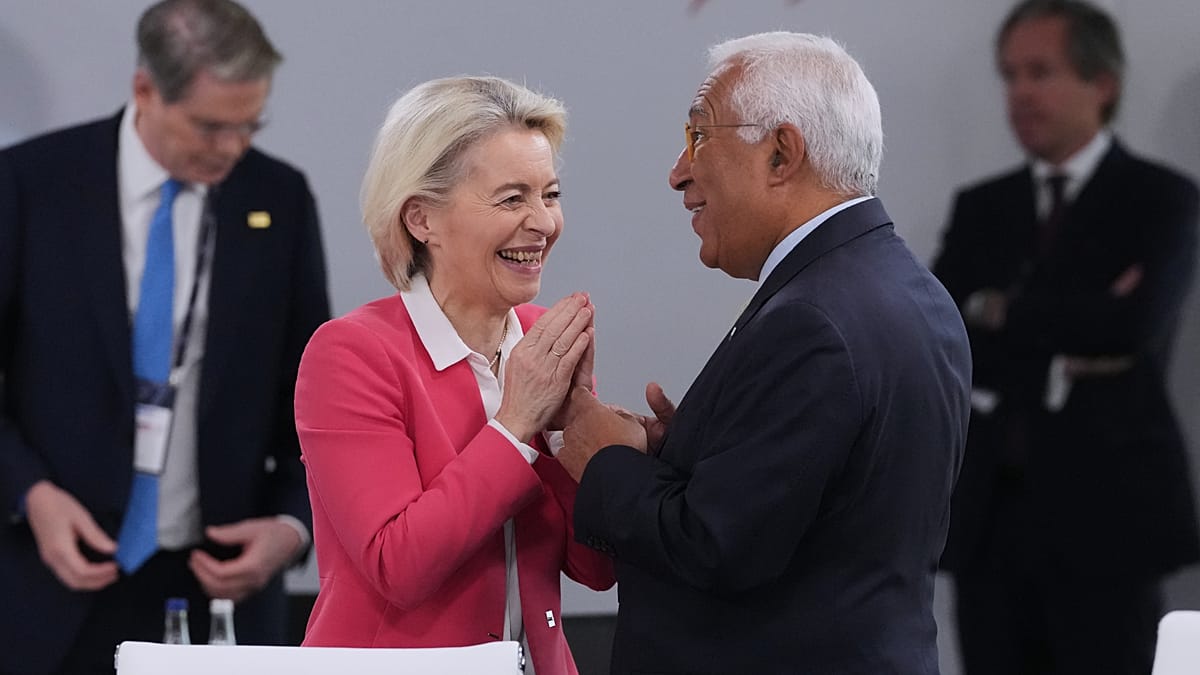
Von der Leyen backed EU mandate for talks with Russia
European Commission President von der Leyen told EU leaders it is time to be prepared and consider an EU mandate to negotiate with Russia on Ukraine, as Costa’…
Serbia ‘prepared’ to join the EU, and ‘channel needed’ between EU and Russia, Fico says
Slovak Prime Minister, Robert Fico, said while he was not against Ukraine joining the European Union, there were three clear frontrunners that are more suited.
“For me, at this moment, the absolute priority is three states, namely Serbia, Montenegro, Albania, which are the best prepared,” he told journalists at a briefing.
The contentious comments come as Montenegro and Albania are widely perceived to be top contenders for joining the European Union.
Serbia’s bid, on the other hand, has been threatened by the country’s close ties with the Kremlin and President Aleksandar Vučić’s rule of law issues.
Meanwhile, Fico said that discussion on Thursday at the European Council was dominated by chatter that the President of the European Council, António Costa, had created a “diplomatic communication channel” with the Russians.
“We need this channel,” he said.
“We are not talking about negotiations, I am talking about communication. That is a big difference.”
Swedish prime minister is ready for Midsommar
Who said a crown of flowers didn't fit in EU summits?
Sweden's Ulf Kristersson is more than ready for Midsommar (or Midsummer), the celebration of the summer solstice.
Credit: Associated Press
EU long-term budget: revised proposal expected in October
After talks on the EU's long-term budget for 2028-2034, EU leaders have declared that a new compromise text can be expected in October.
A €2 trillion budget was proposed by the European Commission in July 2025. EU leaders have now asked the Irish presidency, which will chair the discussions among Member States from 1 July, to propose "a new nego box in October", an EU official said, referring to a new text with expenses and revenues, known as "own resources".
"An ambitious and balanced package on new own resources by the October European Council," is also expected, an EU official said.
Fico touts Slovakia's China relations
Robert Fico has said he's "absolutely aware" of the reality of Chinese policies because his country maintains a "strategic partnership" with Beijing.
"I had the opportunity, perhaps one other prime minister did not, to meet repeatedly with the Chinese president, Mr Xi Jinping," Fico said. "I believe the moment will come when the president visits the Slovak Republic as well."
"We realise that this is a superpower that is pursuing its goals in the world, and lamentation will not help here. It's just that we made a gross mistake at home and now we're paying for it and crying."
'EU energy policies are harming industry,' Fico says
Slovakian Prime Minister Roberto Fico criticised the EU's energy transition policies, which he blames for the closure of a major plant that once produced 17 percent of the bloc’s primary aluminium.
While emphasising that Slovakia generates about 85 percent of its electricity from low-carbon sources, has strong cross-border energy connections and is even a net exporter of electricity, Fico complained in remarks this afternoon that electricity prices remain extremely high, making it impossible for even highly efficient and environmentally friendly factories to remain competitive.
"The result? We import aluminium from China. Not to mention that the emissions footprint in China is five or six times higher than in Žiar nad Hronom, where huge amounts of money have been invested," Fico said, referring to a Slovak industrial city.
Kremlin (again) blames Kyiv for no peace talks as Moscow keeps up war
Russia has again signalled it is unwilling to end its full‑scale war on Ukraine while blaming Ukraine for the lack of peace talks, despite Kyiv's numerous attempts to negotiate with Moscow.
Kremlin spokesperson Dmitry Peskov today accused Ukraine of taking a “non‑negotiating” position even as Russian forces continue their invasion, which is now in its fifth year.
Peskov said Ukraine “continues its line”, claiming this is “not a negotiating position”, in comments following Ukraine’s large‑scale drone attack on a Moscow oil refinery, even as Russia pounds Ukrainian cities day in, day out with hundreds of drones and ballistic missiles targeting civilians.
Kremlin mocks EU’s claim to be negotiating from position of 'strength'
The Kremlin has dismissed the EU's approach to Russia, accusing Brussels of misreading the balance of power and attempting to engage from a position of supposed strength.
“They would do well to acquaint themselves with the real state of affairs, including on the battlefield in Ukraine,” Kremlin spokesperson Dmitry Peskov said.
Peskov's remarks come as Moscow pushes back against what it claims are Western efforts to pressure it into talks on unfavourable terms.
“If there are indeed forces that recognise the need to resume dialogue with Russia – not to lecture us, still less to issue ultimatums, but to engage in a genuine exchange – then Putin and the Russian side will, of course, be open to such contacts,” Peskov said.
Italian foreign minister cancels visit to US over Trump's remarks
Italian Foreign Minister Antonio Tajani has cancelled an official visit to the US scheduled for the end of June after Donald Trump reportedly said Italian Prime Minister Giorgia Meloni "begged him" for a picture during the G7 in Évian this week.
"President Trump’s harsh and offensive remarks toward Prime Minister Giorgia Meloni are an insult to all of Italy," Tajani wrote on X.
Other Italian Ministers also came out in defence of Meloni.
"I cannot imagine Meloni asking anyone for a picture. Not even under threat," Defence Minister Guido Crosetto wrote on X, adding: "these sort of remarks are neither good for the US, nor for Italy, nor for the alliance."
Debate on budget is over, leaders switch to Middle East
The 27 EU leaders have closed their debate on the next EU budget.
Now, it's time for lunch with a focus on the Middle East, including the implications of the US-Iran deal and Israel's actions in Lebanon, the West Bank and Gaza.
Meloni accuses Trump of spreading fake news over 'photo request' claim
Giorgia Meloni has accused Donald Trump of spreading fake news with his claim that she had "begged" him to take a photo together.
"I don't know what to tell you! She begged me to take a picture with her! She wanted a picture with me so badly. I was actually going to say no, but I felt sorry for her," Trump told the Italian TV La7.
Meloni reacted immediately. "The statement by Donald Trump is completely invented," the Italian Prime Minister said in a video spread on social media on Friday. "I'm frankly stunned. I don't know why the President of the United States behaves this way toward his allies."
"Italy and I never beg."
Unity on Ukraine, but fast-tracked accession remains contentious
Thursday saw a great display of unity about Ukraine, with joint conclusions signed by all 27 leaders for the first time since March 2025. The economic sanctions on Russia were prolonged for 12 months, and it was all smiles when President Volodymyr Zelenskyy joined the room.
But there remains a point of friction: Zelenskyy is still calling for Ukraine's fast-tracked accession to the bloc. He said it during the G7 summit earlier this week, and he said it again after leaving Brussels. Behind closed doors, EU officials and diplomats are dismayed by his insistence.
The road to membership is long, complex and arduous: candidates are asked to align their domestic systems with EU rules and standards, which requires the approval of hundreds of laws. Those on the waiting list need to demonstrate that they fully deserve to enter the single market and enjoy the four freedoms that come with it; the implications of enlargement are enormous, and EU leaders have to make a credible case to their voters. That's before taking into account that Ukraine is still at war, with its territory partially occupied by a nuclear power.
All of this makes the prospect of accelerated membership simply untenable, even for Kyiv's staunchest supporters.
"There's only one track, and that's the track of merit, and we know what merit is," a senior diplomat said ahead of the summit. "If you become an EU member, you sit around the table and decide upon 30 percent of the national legislation. So I want only countries around that table that have the same rule-of-law values as others to decide on legislation that touches people."
EU leaders call for accelerated energy reforms
EU leaders are calling to speed up work on environmental measures. In a joint statement today, the Council notes "the need to accelerate work on lowering energy prices, on the clean transition and decarbonisation, taking into account technological neutrality, and on strengthening our resilience".
They also note the European Commission intends to produce a "concrete proposal" on the review of the Emissions Trading System by mid-July, and will "present a separate proposal to address concerns expressed by some industrial sectors on ETS benchmarks, while preserving the essential role of the ETS in the climate and energy transition".
The war in the Middle East hit Europe hard with energy price surges. The European Central Bank raised interest rates last week to try and tame inflation, which is not expected to go down to the 2 percent target level until 2027.
Von der Leyen finally got her China mandate. What now?
Let's go back to last night for one second. After their dinner discussing economic imbalances, the 27 leaders gave the European Commission a two-pronged task: to continue engaging in dialogue with China, the main culprit behind the imbalances, and to develop its trade toolbox to defend the bloc's interests.
This is exactly the mandate that Ursula von der Leyen had long been waiting for. In a way, it's a moment of vindication for the Commission president.
More than three years ago, she delivered a wide-ranging speech laying out the formidable, multifaceted threats posed by Beijing's state-led economy, but it mostly fell on deaf ears. EU-China trade flows continued as usual, and the lopsided trade balance worsened dramatically. Last year was the first time on record that every one of the 27 member states posed a deficit with China, something that von der Leyen says is "not sustainable" any more.
The dinner on Thursday proved her grim diagnosis is now widely shared. And even before the summit, the Commission was already laying the groundwork to harden the approach to China, and Brussels officials are taking a critical look at the trade tools already in their arsenal. The famous Anti-Coercion Instrument, which was designed with Beijing in mind, has proved excessively cumbersome, while safeguards and tariffs are too sectoral.
This is why the Commission is working on brand-new tools with broader scope and faster activation. No proposal is imminent, but keep an eye out for more in von der Leyen's State of the Union speech in September.
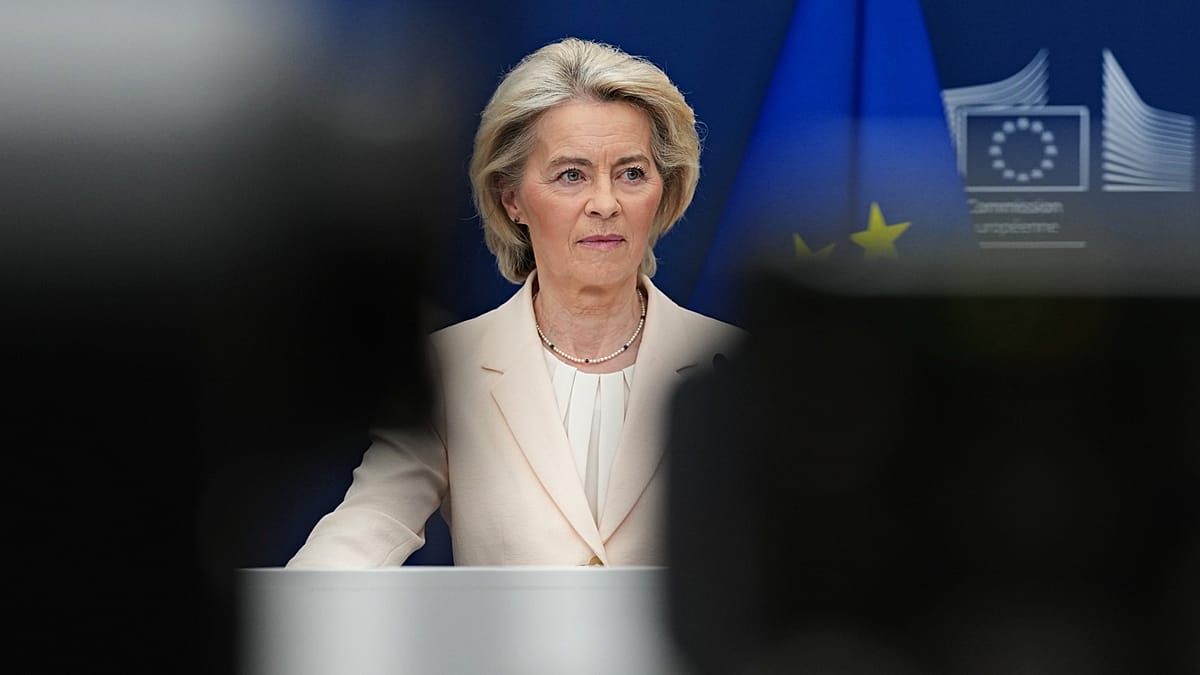
Von der Leyen warned about China. Europe didn’t listen. Will it now?
Three years ago, Ursula von der Leyen set an assertive tone in a landmark speech about EU-China relations. Today, she is on the verge of turning her words into…
Too early for the EU to speak to Putin, senior European official says
Many European leaders believe it is too early to open diplomatic channels between Brussels and the Kremlin, a senior government official briefed about discussions among European leaders on Thursday night in Brussels said.
The official, speaking on condition of anonymity, added that Russian President Vladimir Putin has shown no willingness to sit at the negotiating table with Ukraine, and the focus should be on supporting the country's president, Volodymyr Zelenskyy, on the battlefield but also in the field of politics.
They could not say whether French President Emmanuel Macron was for or against European Council President Antonio Costa being the person to speak to the Kremlin.
The official added it was also not their understanding that Zelenskyy wanted Costa to pick up the phone and personally open those diplomatic channels, but reiterated they were not in the room for the talks.
'Putin is not ready to negotiate,' Austrian Chancellor says
Austrian Chancellor Christian Stocker said Russian President Vladimir Putin is not ready to initiate peace talks to end the war in Ukraine, but he welcomed the EU's first steps to make contact with diplomats in Moscow.
"It's good to be prepared and to have channels when the time comes," Stocker said, adding that "there has been no criticism of Costa".
"We are preparing ourselves for a situation when negotiations take place, so that the European Union can weigh its interests in these negotiations," he added.
EUCO's second day of meetings has started
Euronews understands the second day of EUCO talks have officially started.
Credit: Associated Press
Austrian Chancellor says MFF's current design is 'insufficient' and needs a 'significant reduction'
Austrian Chancellor Christian Stocker said the EU's multi-annual budget's design is 'insufficient' because the "volume is much too high", as EU leaders will try to agree on budgets across several sectors for the years 2028-2034.
"The budget covers almost seven years, and only then can you see the length of the decision. (...) The current design needs a significant reduction of the volume," Stocker said.
Stocker said that for Austria, it is "especially important that sufficient resources are provided for agriculture and for the regions".
"And of course, it is important for us to bring the question of the discount into this multi-year financial framework to create a fair balance," Stocker added.
Israel cutting off communications with EU chief diplomat Kallas 'unacceptable,' Irish PM says
Irish Prime Minister Micheál Martin came out in defence of EU foreign policy chief Kaja Kallas during the second day of the European Council on Friday.
"It's unacceptable. Kaja Kallas is the High Representative of the European Union," he said.
The remarks come after the Foreign Minister of Israel, Gideon Sa'ar, said he would cut off all communications with Kallas, following media reports that she had allegedly compared Israel's treatment of Palestinians to the South African apartheid regime.
Kallas has neither denied nor confirmed the allegations, and called for dialogue to remain open.
German Chancellor says MFF numbers 'too high' and 'have to go down'
German Chancellor Friedrich Merz said the proposal on the table for the EU's multi-annual budget 2028-2034 is "clearly too high" and "the numbers have to go down", in response to the deal struck by the EU Cypriot Presidency, which the so-called frugal nations have considered too much.
"We have to talk about the European Union's income, because we can only spend as much money as we have," Merz said, maintaining that joint borrowing that would bring more debt to the EU is "not allowed".
"We have to come to a consistent result. And that is why I assume that we are discussing this very controversial topic in the spirit of good European cooperation today," the German Chancellor added.
"There must be a new proposal on the table, and then we have to talk about revenue and structure of the expenditure, and that will be a very exciting discussion."
Irish Taoiseach expects 'progress' when the EU and UK hold summit in late July
The Irish Taoiseach Micheál Martin has just told reporters he's "looking forward" to the EU-UK summit which will take place in Brussels on July 22 -- when Ireland holds the rotating presidency of the Council of the EU -- and that he expects "progress'" on a range of agreements designed to restore post-Brexit ties.
"We believe a lot can happen," he said, teasing a potential deal on agri-food exports known as a Sanitary and Phytosanitary (SPS) agreement and on linking the EU and the UK's emissions trading systems.
He also said that "perhaps progress can be made" on plans to bring the UK into the EU's internal electricity market.
Officials from London and Brussels are also in negotiations to agree on a new youth experience scheme which would grant special visas for young people on both sides to live, study and work. The talks have become fraught with difficulty, with a cap on the number of visas allowed under the programme and their length exposing divisions between both sides.
The UK's Minister for EU relations, Nick Thomas Symonds, speaking to Euronews in London earlier this week, said he was "very confident" the UK could strike a series of deals at the July summit -- this despite Prime Minister Keir Starmer facing a likely imminent leadership challenge.
On Thursday, Andy Burnham won a by-election in the Manchester constituency of Makerfield, and is widely expected to formally challenge Starmer's leadership along with former health secretary Wes Streeting as early as the coming days.
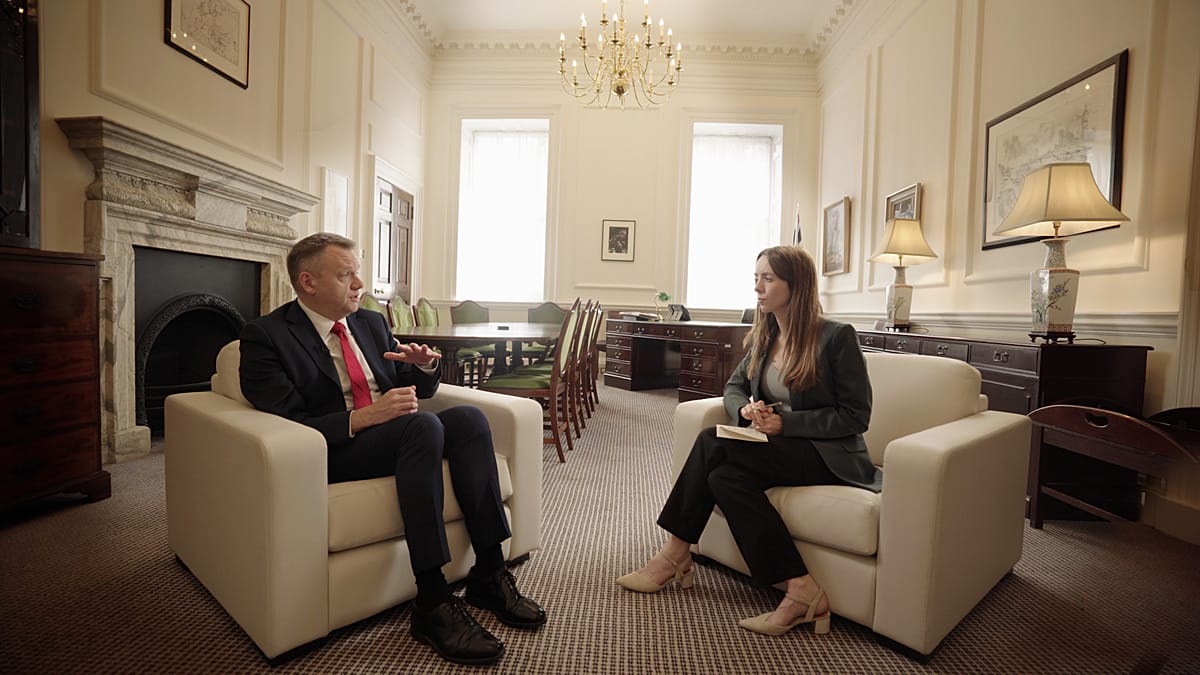
UK minister ‘very confident’ of triple EU reset deal at July summit
Nick Thomas-Symonds tells Euronews he’s “very confident” London and Brussels will close new pacts on agri-food exports, electricity and youth mobility when the…
Opening a channel with Moscow 'not a mistake,' Martin says
For the Prime Minister of Ireland, Micheál Martin, it is not a mistake to try to open up a diplomatic channel with Russia for when it will be ready to negotiate a peace deal with Ukraine.
The comment comes after it emerged earlier this week that European Council President Antonio Costa had given a mandate to a close collaborator to reach out to the Kremlin.
"Opening up a channel is not a mistake in our view. And I trust Antonio Costa," Martin said.
"Insofar as [there] are European competences, in the event of negotiations starting, he would obviously represent the Union. But there's some distance to go before we get there. But, opening up channels, in my view, given our own experience in conflict resolution, is not something that we would criticise or be negative about."
EU budget is going to be 'very difficult,' Irish PM says
Irish Prime Minister Micheál Martin is expecting the discussions on the budget to be "very challenging," as Ireland braces to take over the rotating presidency of the EU Council for the second half of the year.
"There are a lot of competing demands," Martin said, pointing out that there is a front that wants to still reduce the budget significantly and there are those who want money for defence, cohesion policy and agriculture. "It's going to be very, very difficult to resolve that fundamental question as to the size of the budget."
He singled out, in particular, countries on Europe's eastern flank that see Russia as an existential threat, and are consequently in dire need to invest in defence capabilities, which is putting huge pressure on national budgets.
Asked whether he had any red lines on the issue of own resources, new taxes that would finance the EU budget directly, he said that, as the upcoming presidency, Ireland does not have red lines, but acknowledged that there are objections across the board.
The reference was to the European Parliament's proposal to introduce a digital levy, since Ireland hosts most of the European headquarters of US tech companies.
19 countries encourage ‘willing’ member states to set up return hubs, among other migration initiatives
A total of 19 EU countries have signed a letter sent to all members of the European Council to pursue opportunities as part of the recently rubber-stamped returns regulation, which allows EU countries to set-up return hubs outside the bloc.
The letter, spearheaded by Danish Prime Minister Mette Frederiksen and Italian Prime Minister Giorgia Meloni, emphasises the need to “show concrete results” and “move forward with solutions based in third countries as soon as possible”.
“We need to make full use of the new possibilities and be ready to deal with any remaining obstacles effectively to ensure that we make the new solutions a reality,” the document states.
It adds some parts of the framework are already in operation, such as the Italy-Albania agreement, with other countries “working to implement the new possibilities.”
The letter was published following a migration breakfast attended by some EU heads of state in Brussels.
It was signed by Denmark, Italy, Austria, Bulgaria, Czechia, Greece, Latvia, Malta, Poland, Slovakia, Sweden, Belgium, Cyprus, Estonia, Hungary, Lithuania, Netherlands, Romania and Slovenia.
EU budget needs to modernise to face new challenges, Dutch PM says
Dutch Prime Minister Rob Jetten stressed that the EU budget needs to reflect emerging priorities rather than remain stuck in traditional policies, ahead of a key discussion on Friday morning.
"If we want to build an economy for the next decade, then we can't do it with the budget from the 1990s. So it's very important that we focus on the priorities of security and greater competitiveness, and that the budget also supports those modernisations," he said.
"We all want a Europe that's more secure, and that's more competitive. Then we also need a budget that reflects that."
Macron arrives at high-stake summit after G7 success
France's President Emmanuel Macron has arrived on the second day of the European Council summit in Brussels. The high-level meeting is taking place in Brussels after the French leader successfully hosted a G7 summit in Évian-les-Bains earlier this week.
The G7, one of the last opportunities for Macron to shine on the global stage before he leaves office next year, was marked by a much-appreciated return to unity among Western leaders, as US President Donald Trump decided to play ball, especially on Ukraine.
In case you missed the G7, Euronews prepared a wrap-up on everything you need to know.
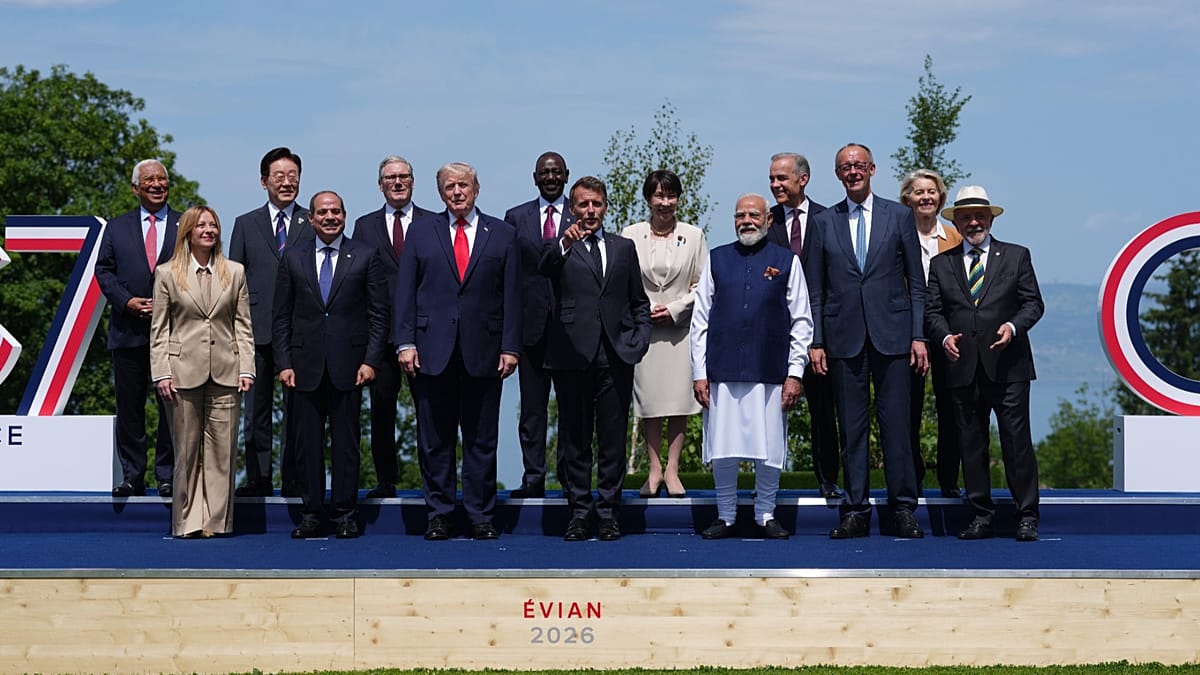
Six takeaways from the G7 summit in Évian
G7 leaders gathered in France for a high-stakes meeting over the last three days to discuss Ukraine, the Middle East and world challenges. Here is what you nee…
Leaders will not fight over who will represent the EU in talks with Russia, Jetten says
Europeans will stand together when the time comes to negotiate with Russia, Rob Jetten, Prime Minister of the Netherlands, told the press ahead of the European Council's second day of summit.
"Putin is not willing to negotiate at the moment," the Dutch PM said, adding that, until that is the case, Europe should give full support to Ukraine and exert maximum pressure on Russia.
"As soon as there's willingness to negotiate, obviously, the European Union also stands ready to negotiate on the security guarantees that we all need and the future relationship between the EU and Russia. We will not fight on, who will be the man or woman negotiating on behalf of the EU," he said.
The Council is 'unable' to decide on a possible Russia envoy, Czechia's PM says
Speaking about a potential EU envoy to Russia, Czech Prime Minister Andrej Babiš said there had been criticism that European Council President António Costa had already established diplomatic contacts.
However, he argued that it would be “nonsense” for only Ukrainian President Volodymyr Zelenskyy to be present at the table, given that “Europe pays for it all.”
"Meloni is a great leader who has rational ideas, and we have absolutely the same views, almost on everything," Babis said, hinting at the Italian PM as a potential mediator.
Babiš said the European Council is unable to decide even whether to reach agreement or who should be involved in agreeing it.
"So, a long debate, with no result," he said in reference to the evening negotiations among EU leaders.
Magyar told EU peers he doesn't want to be 'popular,' but to 'represent the Hungarian people'
Hungarian Prime Minister Péter Magyar has described his first European Council meeting, saying that in his opening remarks he urged EU leaders to embrace “honesty” and move beyond "political correctness and doublespeak."
"I emphasised that I did not want to be popular in the hall and in Brussels, but to represent the Hungarian people at all times. I respect that and expect the same from my country," Magyar wrote in a social media post, adding that his remarks were met with a round of applause.
The Prime Minister also said he backed further tightening of EU rules on illegal migration.
‘They call me the Emissions Trading System in the European Council’ Czechia’s PM says
Czech Republic's Prime Minister Andrej Babiš said EU leaders call him ‘ETS’, which stands for Emissions Trading System, the bloc’s carbon market that makes polluters pay for the CO2 emissions linked to their production.
His 'nickname' is linked to his outspokenness as he says the European Commission should scrap the ETS, or else European industries will lose even greater competitiveness.
At stake is the latest proposal from the EU executive to reduce free allowances for industries, which has been met with apprehension, even among ETS supporters.
"It is not at all that the Commission is willing to review the direction. That we have managed to move the permits to a certain time horizon, that we are actually fighting for the benchmarks to be rational, that the volume of permits will not be reduced, as it was originally planned,” Babis said, noting Germany has problems in the automotive industry.
The Commission will propose a revised ETS on 15 July.
Czech Republic's PM doubts the EU could strike a trade deal with China
Czech Republic's Prime Minister Andrej Babiš said that the EU’s dependence on China for strategic resources is “quite dramatic” as the EU leaders gather to discuss growing trade imbalances between Beijing and Washington vis-à-vis the European Union.
"I am quite skeptical that the European Union would be able to unite with China in the same way we have with Mercosur or with other European states, Babis said, recognizing the work that Trade Commissioner Maros Sefcovis has been doing in forging commercial agreements abroad.
Latvian PM critical of Costa as Russia whisperer, voices concerns over MFF
Latvian Prime Minister, Andris Kulbergs, has doubled down on his opposition to European Council President, António Costa, speaking on behalf of the European Union to the Russian President, Vladimir Putin.
“There have to be clear signs that Russia is ready for that. Today, there are no signs of that,” Kulbergs told reporters upon arrival at the second day of a European Council meeting in Brussels.
“There is no point in seeking diplomatic channels if there is no reason to hold talks.”
His comments came off the back of chatter that Costa has opened a channel of communication with Putin’s office at the behest of Ukrainian President Volodymyr Zelenskyy — a notion that has divided the bloc.
Meanwhile, Kulbergs said the upcoming Multi-Annual Financial Framework, also known as the long-term budget, must pay “special attention” to regions along Europe’s eastern flank. Many Baltic leaders have voiced their concern that certain communities are emptying out due to their geographical proximity to Russia’s war with Ukraine.
“We need schools, healthcare, and housing,” Kulbergs said.
“The problem is, we cannot allow people to leave the area because of geopolitics. That makes our borders weaker.”
The 'frugals' vs the 'friends of cohesion' - who is who?
Friday's second day of the European Council summit is set to be all about the EU's long-term budget, the Multiannual Financial Framework (MFF) in Brussels jargon. The negotiations are shaping up as a standoff between the so-called “frugal” countries and the “friends of cohesion.” But what do these groupings actually mean?
The frugals include most of the net contributors, namely: Germany, the Netherlands, Denmark, Sweden, Finland and Austria. These characteristics make them a relatively small but very assertive group.
This front is asking for a reduction in the overall EU budget and a refocusing away from traditional financial instruments, like cohesion policy and the common agricultural policy, toward emerging priorities such as economic competitiveness and defence. For this reason, they would rather be called the "modernisers."
By contrast, the "friends of cohesion" club is much more numerous, and it includes 17 countries: Bulgaria, Croatia, Cyprus, Estonia, Greece, Italy, Latvia, Lithuania, Malta, Poland, Portugal, the Czech Republic, Romania, Slovenia, Slovakia, Spain and Hungary.
These countries are broadly in favour of a more ambitious EU budget, and want to maintain funding for Europe's poorest regions and agriculture. However, the budget needs to be adopted unanimously, meaning all the member states involved need to greenlight it, and leaders are still very far from a consensus.
Italian PM Meloni meets Commission chief VDL, preps migration meeting
Italian Prime Minister Giorgia Meloni is meeting with European Commission President Ursula von der Leyen on the sidelines of the European Council summit in Brussels on Friday morning.
The meeting takes place ahead of the formal start of the summit’s second day, which is set to begin with a breakfast discussion on innovative approaches to migration. The event was organised jointly by Italy, Denmark and the Netherlands.
How does the EU’s seven-year budget come to fruition?
The 27 EU leaders have gathered in Brussels for what is expected to be a heated debate over the European Commission’s proposed €2 trillion long-term budget. Here is everything you need to know, at a glance.
- 16 July 2025: The EU executive proposes €2 trillion for the 2028—2034 Multi-Annual Financial Framework (MFF), aka the long-term budget.
- 26 May 2026: 16 countries sign a document calling for an increase in the MFF’s proposed agricultural and regional funding, describing themselves as the "Friends of Cohesion". They complain in the document about the reduction in funds for the Cohesion Policy, Common Agriculture Policy (CAP) and Common Fisheries Policy (CFP), which they describe as "the most visible EU policies for EU citizens".
- 11 June 2026: Cyprus, holding the rotating EU Council Presidency and aiming to speak on behalf of the 27 EU member states, proposes a 2% cut — worth €32.8bn — to the EU's draft €2 trillion budget proposal. This is bid to bridge the gap between "frugals" and cohesion-minded member states.
- Future: Any agreement on the budget will require unanimous support from all 27 member states, as well as the consent of the European Parliament.
EU leaders start arriving at the second day of high-stakes summit
European heads of state and government have begun arriving in Brussels for the second day of the European Council meeting.
So far, arrivals have included Czech Prime Minister Andrej Babiš, European Commission President Ursula von der Leyen, and Swedish Prime Minister Ulf Kristersson.
Italy's Giorgia Meloni, Belgium's Bart De Wever, Bulgaria's Rumen Radev and Slovenia's Janez Janša have also arrived.
The new Prime Minister of Hungary, Péter Magyar, at its debute in an EU leaders' meeting, has cancelled his doorstep statement before the work resumes.
EU leaders brace for heated discussion on bloc's next long-term budget
The EU's long-term budget is on the agenda as European leaders gather in Brussels for a second day of a high-stakes summit.
The discussion is expected to be a heated one. The so-called 'frugals,' or modernisers as they preferred to be called, are fuming over the recent budgetary proposal of the Cypriot presidency, which reduced the overall budget by only 2%, focusing the cuts on the funding for competitiveness and defence.
"This proposal goes in the trash bin," Dutch PM Rob Jetten said when arriving yesterday. The tone sums up the mood of the net contributors, who argue that the latest proposal disproportionately benefits the so-called “friends of cohesion” countries, including Cyprus.
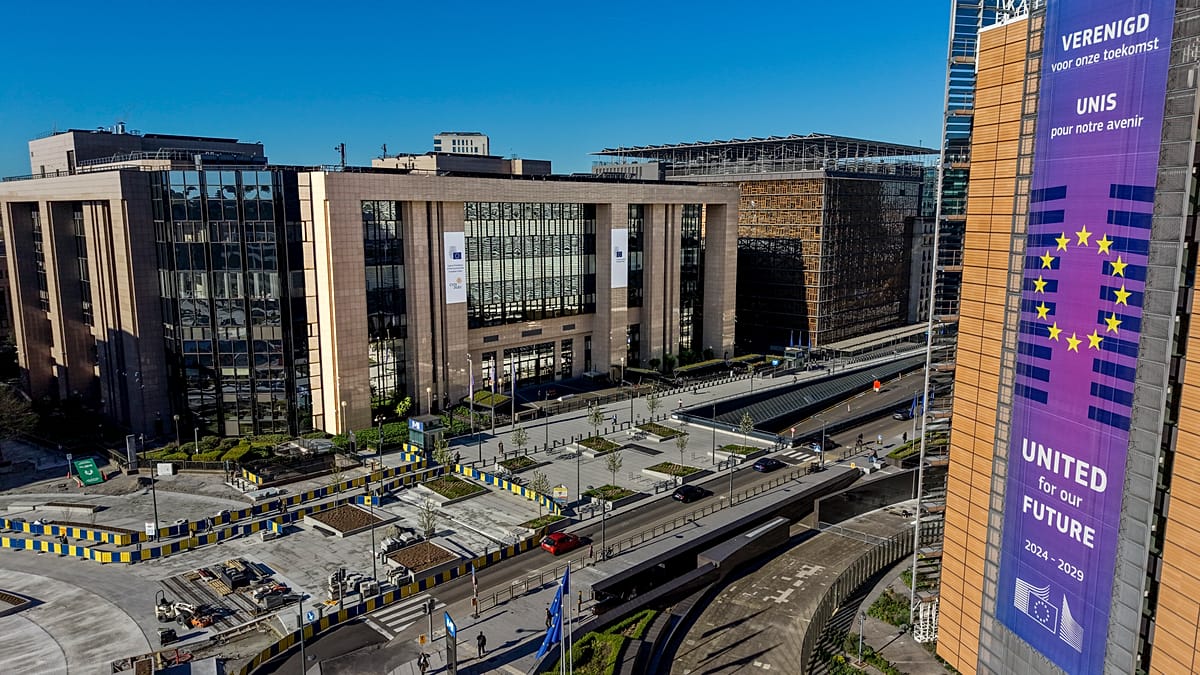
EU leaders hold talks on common budget in battle for cash
EU governments will hold substantial negotiations on how to allocate €2 trillion of the European common budget over the next seven years, pitting frugals calli…
EUCO day two about to start
Good morning EU aficionados,
Day two of the European Council summit kicks off in Brussels today, with arrival statements by some of the 27 EU heads of state expected to start at around 8:35 CET.
On the agenda: leaders will discuss migration over breakfast. Then, there will be further talks throughout the day centred on the EU’s long-term budget, with a press conference scheduled for the afternoon.
This is officially what is on the cards. Yesterday was meant to focus on how the EU should address “macroeconomic concerns” — shorthand for the EU’s trade deficit with China — but much of the attention was diverted by the news that European Council President Antonio Costa opened up communication channels with Russian President Vladimir Putin at the behest of his Ukrainian counterpart, Volodymyr Zelenskyy.