































As Poland and Lithuania prepare to finalise nearly €50 billion in defence loans on Friday – just one day before Russia’s controversial Victory Day parade – the EU’s defence chief said the timing is symbolic. But despite the show of resolve, he warned Europe is still not moving fast enough.
European Commissioner for Defence Andrius Kubilius and European Commissioner for Budget Piotr Serafin are due to travel to the capitals of Poland and Lithuania on Friday to finalise EU defence loan agreements with both countries.
 ADVERTISEMENT
ADVERTISEMENT
ADVERTISEMENT
The loans form part of the EU’s SAFE (Security Action for Europe) programme, an initiative spearheaded by the European Commission to strengthen the continent’s defence capabilities against external threats, particularly Russia. Poland is set to receive the largest share, worth €43 billion, while Lithuania will receive €6 billion.
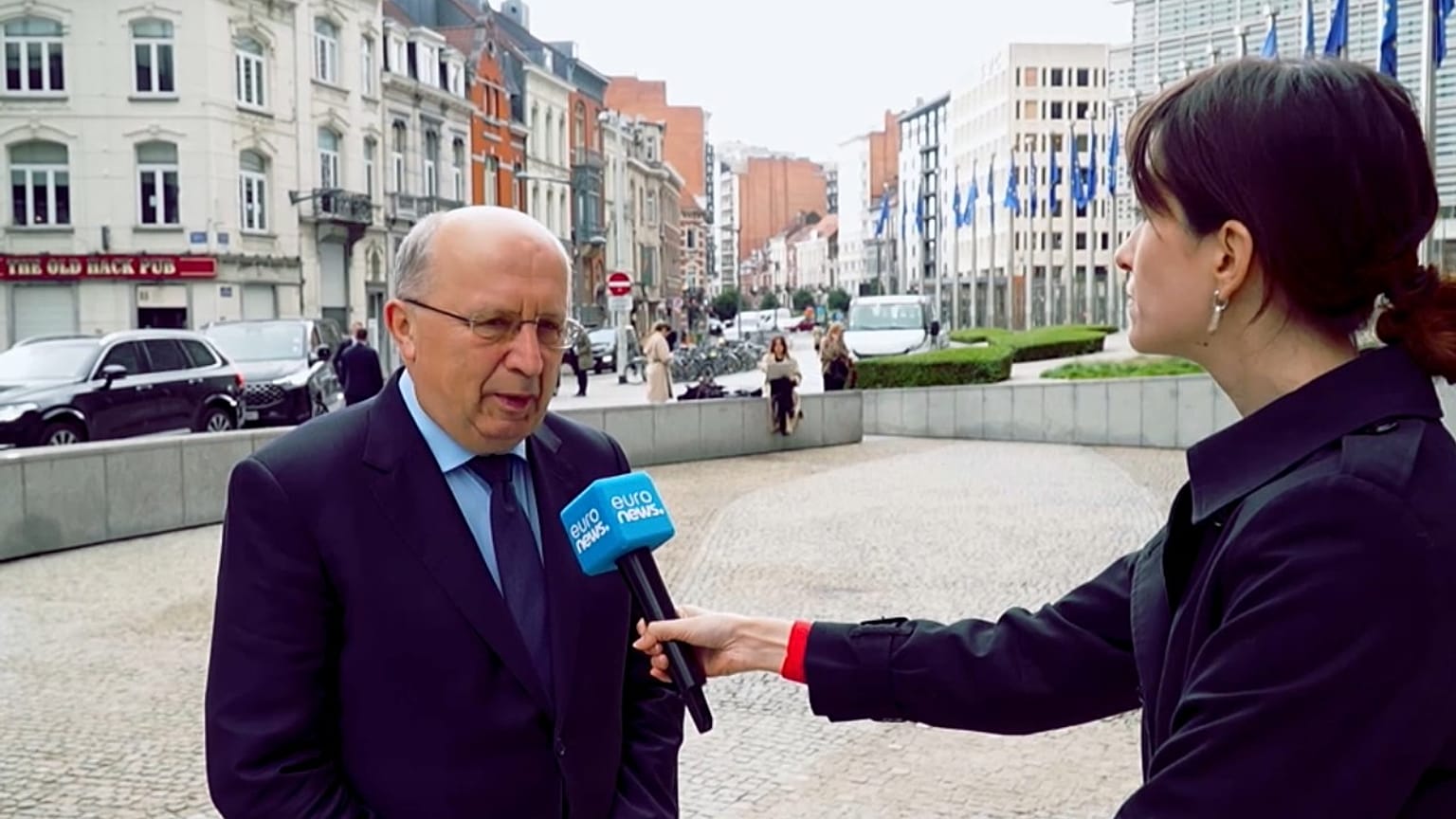
Ahead of his departure to Warsaw and Vilnius to sign the agreements, Kubilius told Euronews’ Europe Today that Russia’s rapidly expanding military production should raise alarm across the bloc.
“Russia is outproducing us, and quite heavily, so that is what worries us,” he said.
“What still needs to be done is for our industries to ramp up and produce more, and to do so more quickly.”
Kubilius said the defence industry is increasing production, but warned concerns remain among governments that manufacturers are still not scaling up quickly enough to meet urgent demand.
NATO Secretary General Mark Rutte has previously warned that Russia produces as much ammunition in three months as the alliance’s 32 member states manufacture in a year.
Several EU officials, including Kubilius, have also warned that Russia could be capable of attacking Europe within five years.
Reiterating that concern to Euronews, he said: “In Europe, we see very clearly that the possibility of Russian aggression against EU or NATO member states is real.”
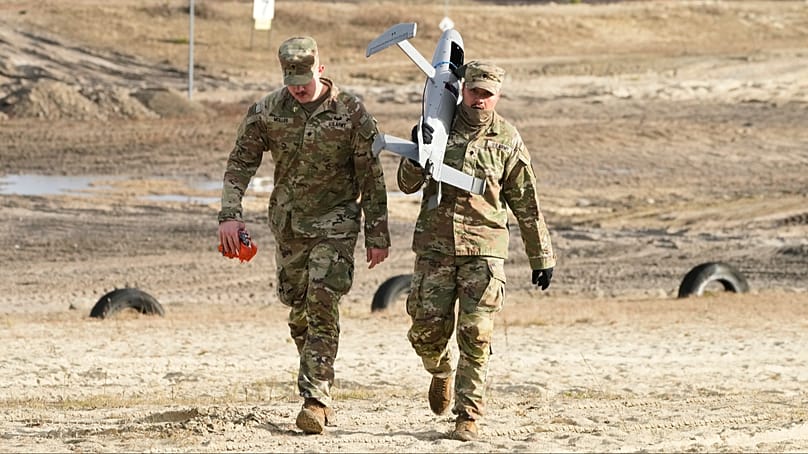
Around 15% of the SAFE funds allocated to Poland and Lithuania will be disbursed by the end of May, with the remaining payments to be released every six months, provided the member states comply with the European Commission’s conditions. All funds must be spent by 2030.
Kubilius said Friday's signing is relevant, as it comes one day before Russia's annual propaganda event, Victory Day, and occurs in Warsaw. "It is showing really that we're ready to deter and to defend ourselves," he said.
“It is very symbolic that we are doing this in Poland, because Poland is the country taking on the greatest responsibility and receiving the largest share of these loans,” Kubilius said.
Last year, 20 drones entered the airspace of Poland, prompting a NATO response involving Spanish, Dutch and Italian fighter jets. Polish Prime Minister Donald Tusk described the Russian drones — some of which were shot down — as a “direct threat”.
Poland plans to spend €46 billion across four flagship programmes, ranging from strengthening drone defences to reinforcing its 400-kilometre border with Belarus. The Polish government said it aims to direct at least 80% of the funding towards domestic spending, supporting around 12,000 businesses.
“A well-armed Poland, as self-reliant as possible while cooperating closely with allies in a modern way — this is the absolute number one priority,” Tusk previously said.
“There is no more important issue today. Every month, week and hour will affect the level of our security, that of the region and of the wider world.”
Lithuania will use its €6 billion allocation to strengthen its land forces division through new combat capabilities, logistics systems and increased firepower.
Lithuanian Defence Minister Robertas Kaunas said the funding would “accelerate the formation process, pay for the required ammunition stocks, modernise weapons systems and contribute to the Baltic Defence Line”.
“The decision by the European Commission to approve more than €6.3 billion for Lithuania is a critical boost to our efforts to strengthen our defensive capabilities. It is not just financial assistance, but also a clear sign of trust in Lithuania and in our strategy to enhance deterrence and defence.”
Lithuanian President Gitanas Nausėda said part of the funding would also be used to purchase and produce defence equipment for Ukraine, as the country continues to endure Russia’s full-scale invasion.
18 member states applied for a slice of the €150 billion SAFE funding pool, including Hungary. Despite Budapest's application being placed on the back burner by the incoming Hungarian Prime Minister Péter Magyar, citing corruption concerns, Kubilius is confident that the application will get over the line, and that reviews are normal.
"That is a normal practice – that such a big responsibility, such a big obligation from the government side should be taken when the new government is established," he said.