




























Tensions between Meloni and Trump do not seem to threaten the privileged axis between Rome and Washington, shored up by US bases in Italy and Italian contracts.
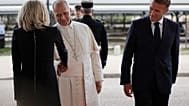
The United States’ announcement that it will withdraw 5,000 troops from Germany and the threats aimed in the same direction at Italy and Spain last week have raised doubts about the future of the roughly 12,000 US military personnel stationed on Italian soil and led Giorgia Meloni to schedule a meeting on Friday with Marco Rubio, after the visit on Thursday by the US Secretary of State to Pope Leo XIV in the Vatican.
 ADVERTISEMENT
ADVERTISEMENT
ADVERTISEMENT
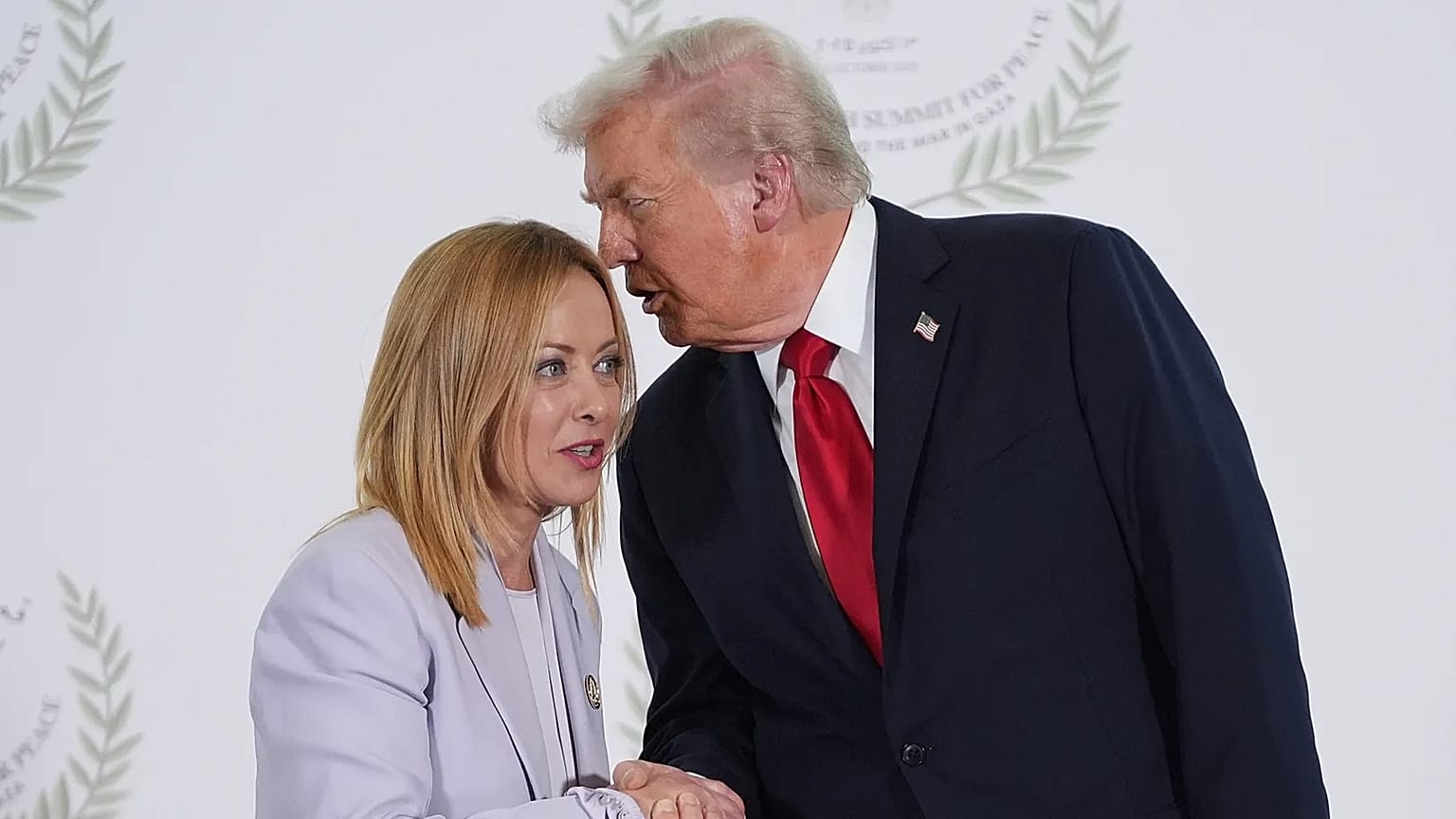
The privileged relationship between the Italian prime minister and the US president since his return to the White House fell into crisis rapidly last month, after Meloni described as unacceptable Donald Trump’s accusations of “weakness” directed at the Pontiff and he in turn accused her of a lack of courage for not having helped his ally in the war against Iran.
“Italy has always honoured the commitments it has undertaken within NATO”, the prime minister underlined on Monday, on the sidelines of the European Political Community summit in Armenia, “and a downsizing of the US presence would not be something we could support”, just as the decision to go to war in the Middle East was not.
The decision not to expand the use of the US base at Sigonella to offensive operations against Iran has irritated Trump, but several factors suggest that this spat will not lead to a rupture between the two NATO allies and that Italy will be able to continue to act as a privileged interlocutor for the White House in Europe.
Why a US withdrawal from Italy is unlikely
Trump’s “verbal outbursts” should remain on the surface and not damage relations between Washington and Rome for historical, strategic and economic reasons, according to Gregory Alegi, professor of History and Politics of the United States at Luiss University in Rome.
“Italy and the United States have had extremely solid relations for 80 years, in the interests of both sides, and no Italian government has ever been anti-American,” Alegi told Euronews. “Just think what would happen if Sigonella were closed: you would need two or three aircraft carriers in the Mediterranean. The US has a strategic interest in maintaining its position in Italy.”
In fact, the professor notes, for decades there has been talk of a strategic reorientation towards Asia, ever since the collapse of the Soviet Union left the United States without a main adversary to measure itself against.
Donald Trump’s hot-headed and “transactional_"_ behaviour, as an old businessman who used to juggle deals and purchases, does not therefore bring with it a change of strategy.
“For the United States, what is privileged in Europe is the quality of its presence, thanks to technological capabilities that only it possesses, such as space and command centres and cyber capabilities,” Alegi explains, “and that does not change with the withdrawal of 5,000 troops.”
As an example of this technological edge, the academic cites the Alliance Ground Surveillance (AGS), NATO’s programme for aerial reconnaissance and intelligence using aircraft and radar stations (source in Italian), which relies on US installations in Sicily.
“The AGS system at Sigonella has no alternatives and Italy has done a good job in creating the regulatory framework that allows these UAVs – the unmanned aircraft involved in these operations – to coexist with conventional aviation.”

The role of defence contracts and Crosetto’s trip to Washington
Like the rest of Europe, “Italy has always spent on social programmes and relied on other people’s defence”, but “the context has clearly changed” with the wars in Ukraine and the Middle East, which have led Europe to rearm, argues Alegi, who has just edited the volume (source in Italian) What Defence for Europe, published by Rubbettino.
“There is a need for a cultural leap, to make people understand that spending on defence and security is not unproductive, but a service for citizens and a sector with high added value,” he continues.
The orders placed by the US Navy with Fincantieri and the investments in the United States by another partly state-owned company such as Leonardo bear witness to this, but military interdependence with Italy could grow further in the near future.
Defence Minister Guido Crosetto is in fact preparing a visit to Washington, and his institutional meetings could include discussion of several old and new defence contracts.
“One example is the M-346 training aircraft, which could be acquired by the US Navy. If the deal were to go through, it would be like receiving a mark of quality and would give the United States the possibility of selling it on in other markets that would otherwise be difficult to access,” the Luiss professor explains, “as happened with the purchase of the C-27 by Australia.”
The M-346 is a twin-seater aircraft used to train pilots to fly new-generation fighters, already in service in Italy, Poland, Greece, Israel, Qatar and Singapore. The C-27J Spartan, also produced by Leonardo, is a tactical transport aircraft in service with numerous countries, including the United States.
“Consider also the F-35 production line in Cameri, which has become a key hub for the delivery and maintenance of these fighters,” the academic adds, referring to the Italian Air Force base in the province of Novara, where one of the two assembly and checkout lines for the F-35 outside the United States is based (the other is in Nagoya, Japan).
Rubio’s stopover at the Vatican
For Alegy, the Secretary of State’s meetings on Thursday and Friday will not be a visit with consequences for Italy, but are linked to the discontent of the Catholic electorate towards the Trump administration ahead of next November’s mid-term elections, and to the positions adopted by Leo so far, which are closer to those of Francis than to those of Benedict XVI, as American conservatives had hoped.
The latest attack by Trump on the Pope on Wednesday could, however, make the task of the Catholic Rubio more difficult. In response to the previous broadside, Prevost had said he was “not afraid” of the US administration and wanted to continue to “speak out loudly against the war”, as he was “not a politician”.
The Secretary of State’s meeting with the Pope will include a “frank conversation” about the Trump administration’s policies, US ambassador to the Holy See Brian Burch said on Wednesday.
Rubio is on his third visit to Italy (and his second to the Vatican with Leo) in the past year and will also meet Foreign Minister Antonio Tajani and Defence Minister Crosetto, as well as the Holy See’s Secretary of State, Pietro Parolin.