

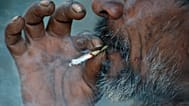






























Poczobut, a correspondent for the influential Polish newspaper Gazeta Wyborcza, was serving eight years in prison in a case condemned as politically motivated.
Prominent journalist Andrzej Poczobut has been released from jail in Belarus in a swap with Poland that also saw a total of 10 prisoners released as the leader of Belarus seeks improved relations with the West, officials in both countries said on Tuesday.
 ADVERTISEMENT
ADVERTISEMENT
ADVERTISEMENT
Poczobut, a correspondent for the influential Polish newspaper Gazeta Wyborcza and a leading figure among Belarus’ Polish minority, was serving eight years in a penal colony for "harming Belarus' national security" in a case condemned as politically motivated.
His arrest in 2021 drew widespread criticism from Europe and he was later awarded the European Union’s most prestigious human rights award, the Sakharov Prize for Freedom of Thought.
The swap is the latest in a series of US-negotiated prisoner releases that have marked stronger relations between Minsk and the West during US President Donald Trump's second term.
A spokesperson for the Polish foreign ministry said three of the five prisoners released by Belarus came to Poland in exchange for three sent by Poland to Belarus, with a total of 10 involving other countries.
The exchanges saw Poland release a jailed Russian archaeologist, Alexander Butyagin, who was wanted by Ukraine.
"As a result of an exchange carried out on the Belarusian-Polish section of the border, two citizens of our country were returned to their homeland," state media cited the FSB security service as saying, naming one of them as Butyagin.
The head of the archaeology department at the famed Hermitage Museum in St. Petersburg, Butyagin faced extradition to Ukraine for conducting excavations in Crimea, which has been occupied by Russia since 2014.
In March, Belarus' President Aliaksandr Lukashenka ordered the release of 250 political prisoners as part of a deal with Washington that saw some US sanctions lifted.
The release came as the Trump administration sought to improve communications with Russian President Vladimir Putin.
A close ally of Russia, Belarus has faced isolation for years and has been repeatedly sanctioned by Western countries, both for its crackdown on human rights and for allowing Moscow to use its territory in the full-scale invasion of Ukraine in 2022.

Writing on X, Trump's special envoy for Belarus, John Coale, said three Poles and two Moldovans had been released as part of the swap.
"We thank Poland, Moldova and Romania for their invaluable support in this effort, as well as President Lukashenka’s willingness to pursue constructive engagement with the United States," he wrote.
Health issues
Poczobut, 52, suffers from a serious heart condition and was placed in solitary confinement several times, sometimes for stretches of up to six months, human rights activists have said.
His newspaper said it hoped that the Sarakhov Prize would "be a pebble that will trigger an avalanche of events. That it will lead to the imminent release of our Belarusian correspondent. Andrzej's fate has finally ceased to be a game between Lukashenka’s special services and Poland. It is a matter for the whole of Europe."
Aliaksandr Lukashenka, nicknamed "Europe's last dictator," has ruled Belarus for over three decades, maintaining his grip on power through elections dismissed by the West as neither free nor fair and violent crackdowns on dissent.
Following mass protests after the 2020 presidential election that saw hundreds of thousands take to the streets, more than 65,000 people were arrested, thousands were beaten and hundreds of independent media outlets and NGOs were closed and outlawed.